

James D. Watson 1990 (Image courtesy of Cold Spring Harbor Laboratory Archives).
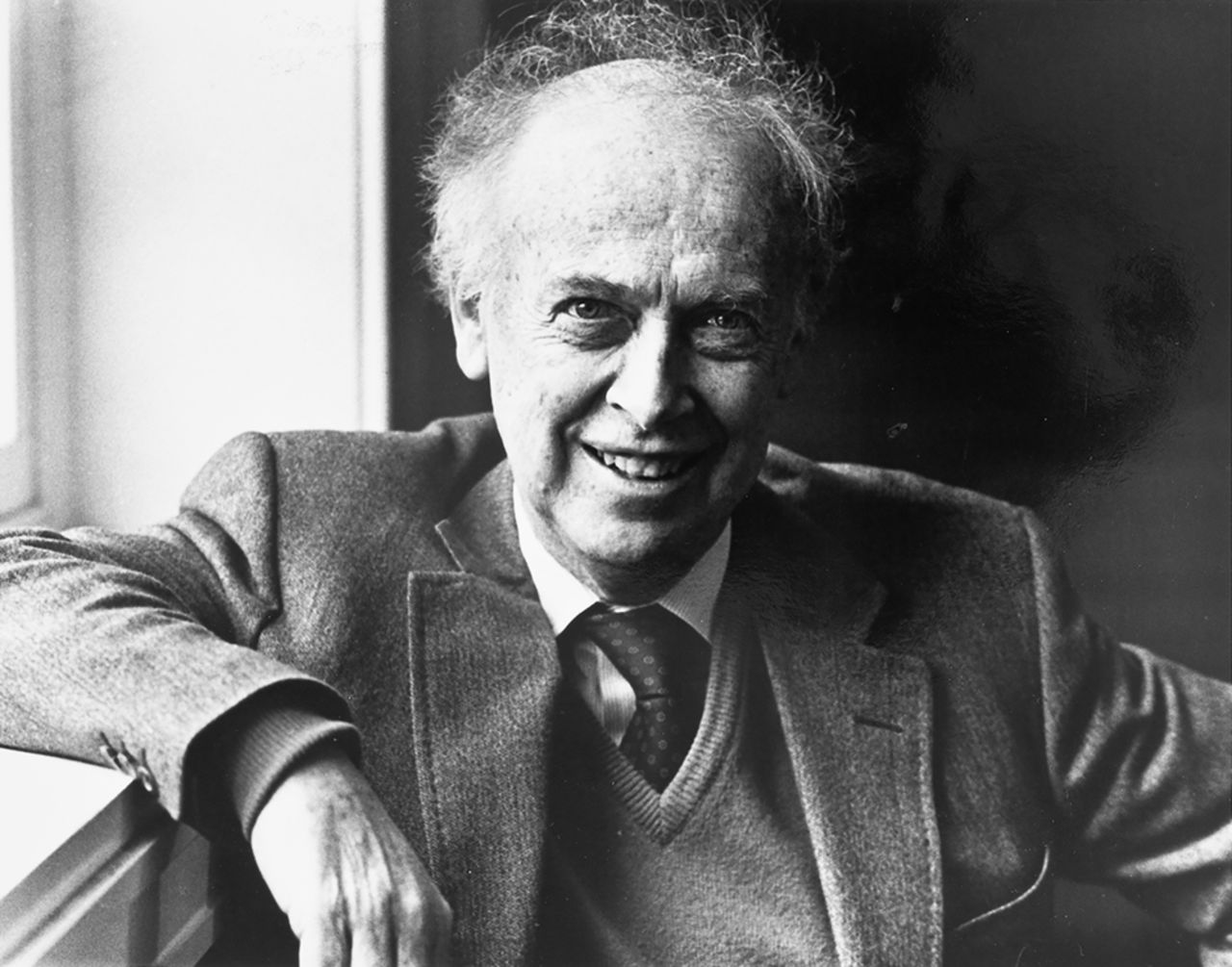
Since James (Jim) Watson's passing on November 6, 2025, many remembrances have highlighted his long list of contributions to genetics and biology, as well as his controversial views and statements. As Editors of Genome Research and part of the Cold Spring Harbor Laboratory Press, here we emphasize his impact in genomics, with a focus on the Human Genome Project (HGP), in addition to genetics education and communication.
Jim Watson and Francis Crick shot to fame through their modeling of the structure of DNA as a double helix (Watson and Crick 1953), a discovery now regarded as one of the most (if not the most) significant biological advances of the 20th century. Their Nature paper was published alongside others by Rosalind Franklin, Maurice Wilkins, and their collaborators (Franklin and Gosling 1953; Wilkins et al. 1953), launching the new field of molecular biology. Watson and Crick's single-page paper is iconic. It began modestly “We wish to suggest a structure for the salt of deoxyribose nucleic acid (D.N.A.)” and ended with the prescient claim “It has not escaped our notice that the specific pairing we have postulated immediately suggests a possible copying mechanism for the genetic material.” This paper remains required reading for biologists, not only for its content and historical importance but also for its unique style.
In 1956, Jim accepted a position at Harvard University that required him to teach the new molecular biology course to undergraduate students. His lecture notes became the foundation for the textbook, Molecular Biology of the Gene, first published in 1965 (Watson 1965). His intent was that the book should explain how the new discoveries of molecular biology were revealing the nature of cells and how they divide in normalcy and disease (e.g., cancer). In it, Jim emphasized and illustrated underlying principles rather than just focusing on the experiments from which they were established. This innovative style changed the nature of science textbooks and became widely emulated in subsequent biochemistry and cell biology textbooks. Molecular Biology of the Gene eventually went through seven editions, which collectively helped to teach generations of biologists the fundamentals of molecular genetics.
Jim was an exceptional writer. He worked hard to develop his craft and wanted to be known as much for his books as for his science. Over his career, Jim authored or co-authored more than a dozen books that spanned textbooks, memoirs, and works examining the implications of genetics for society. In The Double Helix (Watson 1968), he weaved together an enticing scientific story of how DNA's structure was discovered, interspersed with the personalities, habits, and foibles of the scientists involved. It was captivating to read even for nonscientists, to whom it offered an unprecedented glimpse of how science happens and revealed the human side of scientists. It also irked many in the scientific establishment for uprooting the conventional expectations for a scientific memoir (see, e.g., Chargaff 1968). The Double Helix became a perennial bestseller and was lauded as one of the 20th century's most important books. Through Jim's vivid telling, the visceral thrill of genetics and molecular biology's discoveries came to be seen as science's “Rock and Roll.”
In 1968, Jim became Director of Cold Spring Harbor Laboratory (CSHL). The impact of Jim's leadership as Director and later President of the Laboratory cannot be overstated. He transformed the small research center into a world-class institution for molecular biology and genetics, expanding its scientific mission and influence. Part of the vision he had for the lab involved training new generations of scientists and, to this end, he is generally credited with the idea of establishing a graduate school at CSHL. With Jim at the helm, the Laboratory's scientific meetings and courses also became internationally renowned. Among the most notable was the May 1986 Cold Spring Harbor Symposium, for which Jim chose the theme “The Molecular Biology of Homo sapiens.” That now historic meeting is most memorable for the debate prompted by Jim and led by Paul Berg and Wally Gilbert, about the feasibility—and the cost—of sequencing the human genome. Later, a small group of early HGP strategists advised James Wyngaarden, then Director of the U.S. National Institutes of Health (NIH) and a key supporter of the project, that Jim was the ideal choice to lead NIH's HGP efforts. They argued that Jim possessed a rare combination of scientific authority and political credibility that could be used to galvanize support and funding from the U.S. Congress and simultaneously persuade a somewhat skeptical scientific community. In 1988, Jim was appointed the Associate Director for Human Genome Research at the NIH to lead the HGP and proved to be exceptionally effective in convincing Congress to position NIH as the lead agency for coordinating and funding the project. Congressional members held him in extraordinarily high regard owing to his intellectual stature and career achievements.
Some have since argued that, without Jim's leadership, the initial and pivotal Congressional appropriation of approximately $60 million for NIH's entry into the HGP in late 1990 would not have materialized. These funds enabled him, as the inaugural Director of the National Center for Human Genome Research (NCHGR, later renamed the National Human Genome Research Institute, NHGRI), to launch the HGP in October 1990. At the same time, by securing new and separate funds for the HGP, Jim helped to head off criticism that the project would “rob science of support for other initiatives.” Jim also stressed the importance of committing to being comprehensive in genome analyses, not limiting the final goals to shortcuts (e.g., cDNA sequencing only), and strongly advocated for the sequencing of model systems first, which supported their research communities and ultimately reduced costs in the HGP.
Jim's early leadership of the HGP was highly influential in setting the course for the entire project. At the outset, the HGP did not have a clear technical path for completing its ambitious goals, so Jim promoted innovation and risk. To emphasize that reality, he briefly interrupted an early HGP grant-review meeting and chided, “Don't forget, we can afford to have failures. What we can't afford is not to have any successes!” Beyond the expected emphasis on genome mapping and sequencing, Jim is credited with launching NCHGR/NHGRI's Ethical, Legal, and Social Implications (ELSI) Research Program, which eventually received an earmarked 5% of the center/institute's research funds—something that continues to this day.
The 1986 symposium was also notable for the presentation by the later-Nobelist Kary Mullis, whom Jim invited to speak about his recently developed method for amplifying specific stretches of DNA (Saiki et al. 1985; Mullis et al. 1986; Mullis and Faloona 1987). At the meeting, Mullis encountered an audience that immediately grasped the immense potential of the polymerase chain reaction (PCR) and was eager to exploit it. Jim's invitation was prophetic. It was clear that PCR was going to revolutionize genomics and creating a journal to communicate the advances and challenges presented by PCR's rapid evolution seemed an exciting opportunity for the newly formed CSHL Press, which Jim officially established as an independent operating division of the Laboratory in 1988. PCR Methods and Applications was born in August 1991, and four years later, as the applications of PCR broadened, the journal was renamed Genome Research, with its scope expanded to embrace the surging field of genomics.
Jim left his position as NCHGR Director in 1992 after clashing with the NIH Director on the matter of patenting genes, paving the way for Francis Collins to assume that leadership role. Yet Jim remained ever-present at major HGP gatherings to give input, provide a challenging counterpoint, and offer an occasional pep talk. At the critical Bermuda meetings, he worked to galvanize support for free and rapid data release. The resulting Bermuda Principles (established in 1996 and reaffirmed in 1997) called for the pre-publication release of HGP-funded genome sequence data into public databases as a new standard, a philosophy that has since impacted data access and open science policies across all of biology. He also attended the June 2000 White House ceremony announcing the generation of “working draft” sequences of the human genome by both the HGP and Celera Genomics (founded by the late J. Craig Venter). He was just as present at the various April 2003 celebrations associated with the HGP's successful completion, never relinquishing his close association with the HGP.
Shortly after completion of the HGP, Jim was approached by the 454 Life Sciences Corporation, which had developed a new DNA sequencing platform (Margulies et al. 2005), about having his genome sequenced. He volunteered readily, becoming the first person to have their complete diploid genome sequence generated using “next-generation” DNA sequencing (Wheeler et al. 2008). The data were analyzed by staff at the Human Genome Sequencing Center at Baylor College of Medicine and presented to Jim on a computer hard drive at a Houston ceremony that drew hundreds of observers. Jim was also the first to release his genome sequence publicly. In his characteristic thought-provoking fashion, he opted to redact only his APOE genotype (associated with Alzheimer's disease risk), partly for privacy reasons and partly to stimulate broader discussion about such preferences.
In his later years, Jim's reputation and influence became overshadowed by his public statements about the role of genes in race and gender. Although he had professed a commitment to the pursuit of truth, he disregarded the scientific consensus in these areas, despite the efforts of many in the research community to persuade him otherwise. Throughout his life, Jim remained outspoken and often provocative, but his increasingly inflammatory remarks substantially tarnished his scientific reputation.
Jim's pivotal contribution to revealing the mechanism of DNA's function in inheritance would alone justify his reputation as one of humanity's most important biologists. But he chose to devote himself to wider causes and moved genetics to larger goals. The controversies of his later years should not be minimized or normalized, but neither should they obscure his legacy of inspiration and creativity in research, education, publishing, open science, and advocacy. His intellect, ambition, vision, forcefulness, and influence were fundamental to the success of the HGP and the establishment of genomics throughout biological research and, increasingly, its application in medicine.
Acknowledgments
We are grateful to our colleagues Jennifer L. DeLeon and Ahmet M. Denli for their editorial support.
Footnotes
[1] Article published online before print. Article and publication date are at https://www.genome.org/cgi/doi/10.1101/gr.282580.126.
[2] Freely available online through the Genome Research Open Access option.
References
- ↵Chargaff E. 1968. Book review: A Quick Climb Up Mount Olympus: The Double Helix. A Personal Account of the Structure of DNA. James D. Watson. Science 159: 1448–1449. 10.1126/science.159.3822.1448
- ↵Franklin RE, Gosling RG. 1953. Molecular Configuration in Sodium Thymonucleate. Nature 171: 740–741. 10.1038/171740a0
- ↵Margulies M, Egholm M, Altman WE, Attiya S, Bader JS, Bemben LA, Berka J, Braverman MS, Chen Y-J, Chen Z, 2005. Genome sequencing in microfabricated high-density picolitre reactors. Nature 437: 376–380. 10.1038/nature03959
- ↵Mullis KB, Faloona FA. 1987. Specific Synthesis of DNA in Vitro via a Polymerase-Catalyzed Chain Reaction. Methods Enzymol 155: 335–350. 10.1016/0076-6879(87)55023-6
- ↵Mullis K, Faloona F, Scharf S, Saiki R, Horn G, Erlich H. 1986. Specific Enzymatic Amplification of DNA In Vitro: The Polymerase Chain Reaction. Cold Spring Harb Symp Quant Biol 51(Pt 1): 263–273. 10.1101/sqb.1986.051.01.032
- ↵Saiki RK, Scharf S, Faloona F, Mullis KB, Horn GT, Erlich HA, Arnheim N. 1985. Enzymatic Amplification of β-Globin Genomic Sequences and Restriction Site Analysis for Diagnosis of Sickle Cell Anemia. Science 230: 1350–1354. 10.1126/science.2999980
- ↵Watson JD. 1965. Molecular Biology of the Gene. W.A. Benjamin, Inc., New York.
- ↵Watson JD. 1968. The Double Helix: A Personal Account of the Discovery of the Structure of DNA. Atheneum, New York.
- ↵Watson J, Crick F. 1953. Molecular Structure of Nucleic Acids: A Structure for Deoxyribose Nucleic Acid. Nature 171: 737–738. 10.1038/171737a0
- ↵Wheeler DA, Srinivasan M, Egholm M, Shen Y, Chen L, McGuire A, He W, Chen Y-J, Makhijani V, Roth GT, 2008. The complete genome of an individual by massively parallel DNA sequencing. Nature 452: 872–876. 10.1038/nature06884
- ↵Wilkins MHF, Stokes AR, Wilson HR. 1953. Molecular Structure of Deoxypentose Nucleic Acids. Nature 171: 738–740. 10.1038/171738a0