


Cover image
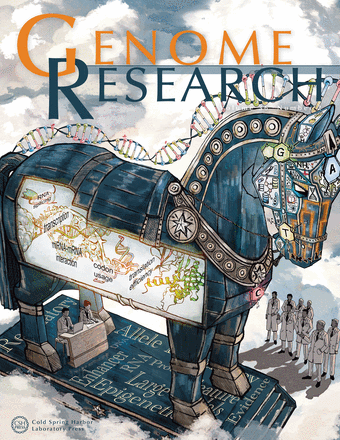
Synonymous variants, which do not alter the encoded amino acid sequence, have long been regarded as neutral changes in the genome, much like a Trojan horse that appears harmless and is allowed to pass unchallenged into the city. However, accumulating evidence shows that these variants can induce hidden functional perturbations at multiple molecular levels, including DNA regulatory elements, RNA splicing, mRNA structure stability, translation kinetics, and gene expression. In this image, the outer shell of the Trojan horse symbolizes the apparent “silence” and perceived safety of synonymous mutations, while the intricate structures concealed within represent the latent and often overlooked pathogenic mechanisms they may harbor. The head of the horse visualizes the SynMall resource, which integrates multispecies data and diverse functional annotations. The design reflects the central contribution of SynMall: a systematic, multilayered annotation framework that reveals the biological consequences of synonymous variants that have traditionally been underestimated or ignored in genomic studies. (Cover art illustrated by Chen Ye using Procreate on an iPad, based on a concept by Chen Ye and Junfeng Xia. [For details, see Ye et al., pp. 421–431.])

