

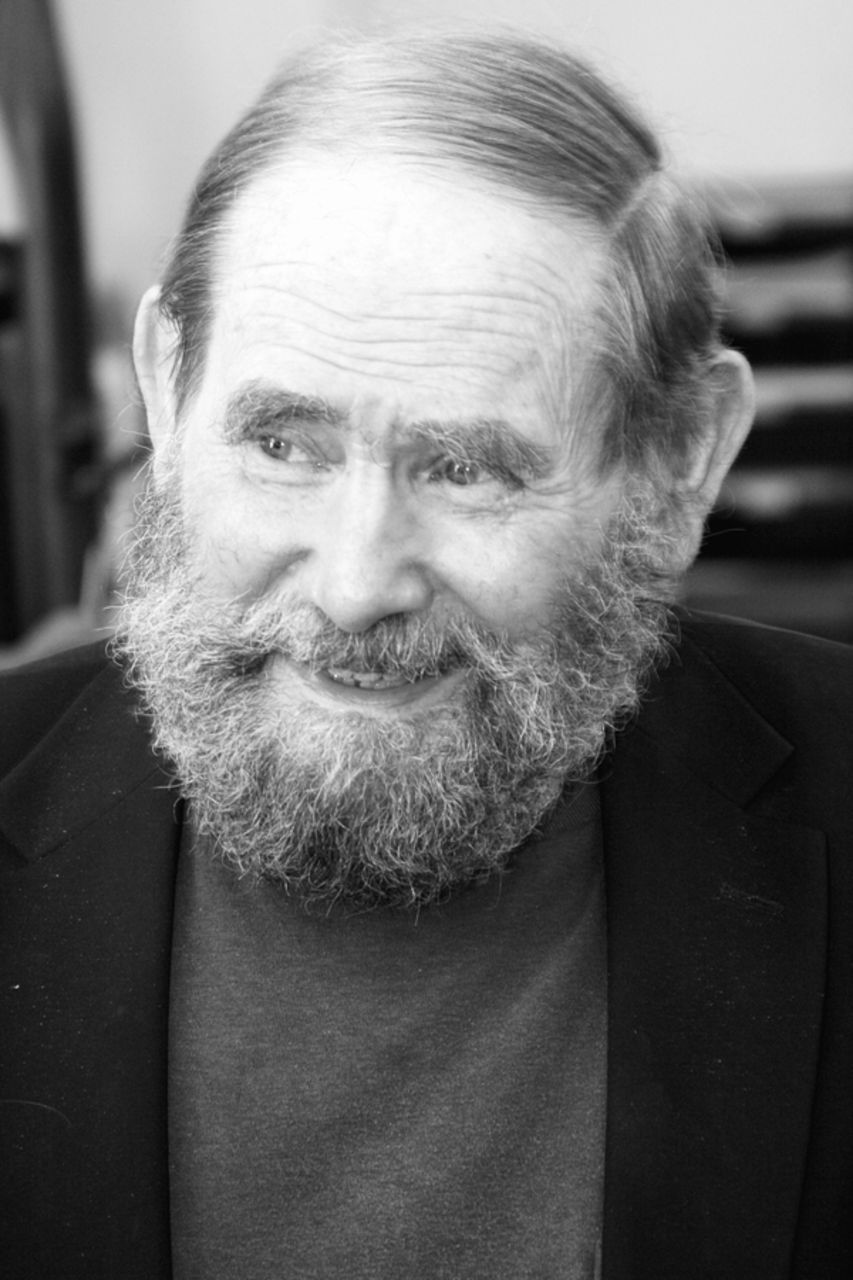
(IMAGE COURTESY OF OKINAWA INSTITUTE OF SCIENCE AND TECHNOLOGY)
Sydney Brenner (1927–2019), a pioneering molecular biologist and scientific giant, passed away recently at the age of 92. This is a personal perspective on Sydney based on my association with him during the last 28 years.
Sydney was born on January 13, 1927 in Germiston, a small town in South Africa. After completing a degree in Medicine and another one in Science at the University of the Witwatersrand in Johannesburg, he obtained a DPhil degree from the Oxford University in 1954. He returned briefly to South Africa before joining Francis Crick at the Medical Research Council (MRC) Cavendish Laboratory, Cambridge, UK in 1956 to start a brilliant career in molecular biology that spanned more than six decades and three continents (Europe, North America, and Asia). During his career, Sydney made several seminal discoveries including cracking the genetic code (Brenner 1957; Crick et al. 1961), codiscovering messenger RNA (Brenner et al. 1961), establishing the tiny roundworm Caenorhabditis elegans as a genetic model (Brenner 1974; White et al. 1986), introducing the compact genome of the pufferfish (Takifugu rubripes, aka fugu) as a model vertebrate genome (Brenner et al. 1993), and pioneering next-generation sequencing by inventing the microbead array-based DNA sequencing technology (Brenner et al. 2000a,b). In 2002, Sydney together with John Sulston and Robert Horvitz was awarded the Nobel Prize in Physiology or Medicine for deciphering the genetic regulation of animal development and programmed cell death using C. elegans as a model.
Among other achievements, Sydney made a landmark contribution to genomics, particularly comparative genomics, whereby genomes of animals distantly related to human are compared with the human genome to identify conserved sequences that play a role in their shared phenotypes, and to highlight sequences unique to human and other lineages that potentially contribute to their derived phenotypes. Sydney strongly believed that the ∼3 Gb human genome is largely “junk” DNA and favored cDNA sequencing for the first phase of the Human Genome Project. He also foresaw that when the whole-genome sequence became available, different strategies would be required to uncover the small fraction of functional DNA elements buried in the vast expanse of noncoding DNA. Thus, when sequencing human cDNA versus whole-genome mapping and sequencing was being discussed in the late 1980s, he decided to look for a less complex “model vertebrate genome” that could be easily sequenced and used in deciphering the human genome. His choice was the compact genome of the fugu, which he happened to come across while reading a paper by Ralph Hinegardner in American Naturalist (Hinegardner 1968). In this paper, Hinegardner had carefully measured and cataloged the cellular DNA content of a large number of fishes, among which the pufferfish stood out as possessing the least amount of DNA per cell. Sydney hypothesized that since all vertebrates shared a similar developmental plan, morphology, and physiology, fugu should contain a set of genes similar to human. This led him to initiate the Fugu Genome Project even before the invention of any of the high-throughput DNA sequencing technologies.
I joined his Molecular Genetics Unit at the MRC in 1991 as a postdoctoral fellow to work specifically on this project. Later I moved to Singapore, where together with Sydney, I set up the Comparative Genomics Laboratory at the Institute of Molecular and Cell Biology (IMCB) and continued working on the fugu genome. In fact, Sydney had played a key role in setting up IMCB, the first major research institute in Singapore, and in establishing the biomedical sciences sector in Singapore. Besides IMCB, Sydney was engaged with several other organizations (Scripps Research Institute, La Jolla, California, USA; Molecular Sciences Institute, Berkeley, California, USA; Salk Institute for Biological Studies, La Jolla, California, USA; Lynx Technologies, Hayward, California, USA; HHMI's Janelia Research Campus, Ashburn, Virginia, USA; Okinawa Institute of Science and Technology, Okinawa, Japan, to name a few) and used to visit Singapore once every two or three months amidst his continual travels around the world. However, during the last seven years he lived in Singapore working full-time as the Scientific Advisor to the Chairman of the Agency for Science, Technology and Research (A*STAR) and Principal Investigator of A*STAR's Molecular Engineering Laboratory.
In the first paper published on the fugu genome (Brenner et al. 1993), using a simple but elegant method based on random genome sequencing, it was shown that the fugu genome is about one-eighth the size of the human genome, yet the two genomes possess a similar repertoire of genes. Fugu was proposed as a model vertebrate genome that would be useful for discovering human genes and for better understanding the human genome (Brenner et al. 1993). Indeed, the publication of this paper ushered in the era of comparative genomics of distantly related species. A major utility of the fugu genome was unveiled when Samuel Aparicio, a graduate student at the time in Sydney's MRC lab, showed that despite the large evolutionary distance (∼400 million years) between fugu and mammals, neuronal enhancers of the mouse Hoxb4 gene are highly conserved in fugu and one of these conserved fugu elements was able to recapitulate a subset of the mouse Hoxb4 expression pattern in a transgenic mouse assay (Aparicio et al. 1995). This study demonstrated that identification of conserved noncoding sequences between fugu and mammals coupled with transgenic assay is a powerful approach for discovering and characterizing gene regulatory elements in the large genomes of mammals. Around the same time I generated transgenic rats bearing a fugu cosmid with a 43-kb insert that contained nine protein-coding genes including the fish homologs of oxytocin and vasopressin, and showed that the fugu oxytocin homolog was expressed in the same hypothalamic neurons that expressed the rat oxytocin gene and also responded to osmotic stress similar to the rat gene (Venkatesh et al. 1997). This study provided additional evidence that the mammalian transcriptional machinery was able to recognize fish cis-regulatory elements, thereby mediating cell-specific and physiological regulation of fish genes. These studies paved the way for using fugu and other model fishes for discovering and characterizing gene regulatory regions in the human genome.
The whole-genome of fugu was sequenced and published in 2002 (Aparicio et al. 2002) by an international consortium assembled and led by Sydney and funded by A*STAR, Singapore and the U.S. Department of Energy Joint Genome Institute. This was the second vertebrate genome to be sequenced, the first being the human genome, which was published in 2001. Fugu was in fact the first vertebrate genome to be sequenced using purely the whole-genome shotgun sequencing method. Indeed, the compact genome of fugu with very few repetitive sequences was ideally suited for this strategy. Analysis of the fugu genome revealed that it encoded a similar number of protein-coding genes as the human genome, thereby confirming Sydney's prediction. The fugu genome has since been used widely as a reference vertebrate genome for comparative studies and in particular for identifying evolutionarily conserved enhancers in the human genome (Woolfe et al. 2005; Pennacchio et al. 2006).
Sydney inspired thousands of students and scientists around the world through his keen intellect and brilliant scientific publications as well as his humor-laced lectures and writings. He was the epitome of a polymath with varied interests in a wide range of subjects and was always looking for new ideas and projects. However, as he often mentioned, he most enjoyed the “opening game”—he would initiate a new, often path-breaking project, hand it over to others to continue, and then move on to explore new concepts and projects. His work on fugu, while others were focusing on human and mouse genomes, helped to draw attention to other vertebrates as useful model genomes in understanding the evolution of human and other vertebrate genomes. The recent launch of the Vertebrate Genomes Project by an international team of scientists (https://vertebrategenomesproject.org/), which aims to sequence the genomes of all ∼66,000 extant vertebrate species and subsequently use these genomes, among other things, to reconstruct the evolutionary history of the human genome nucleotide by nucleotide, is a testament to Sydney's vision for using comparative genomics to understand the human genome better.
During the last seven years Sydney decided to make Singapore his home due to deteriorating health and his renewed passion in engaging with young scientists. During this period Sydney had made it a mission to encourage and support young PhD graduates to become independent researchers and started the Molecular Engineering Laboratory where he mentored young scientists (including my daughter, a postdoc in the lab) in areas as diverse as microbiology, nucleic acid chemistry, iPSC disease modeling, and bioengineering. His interaction with these young scientists continued until his last days, in spite of him being restricted to a wheelchair and requiring continuous oxygen supply. Sydney had an extraordinary memory, which lasted until his recent years. He could not only remember most of the papers and books he had read but could also vividly recount details of people he had met and events that took place several decades ago. He used to meet his lab members, friends, and visiting scientists mostly over dinner, which lasted until late at night. The meetings were invariably dominated by him but the listeners never complained as they always came away enlightened and entertained. Sydney had a strong opinion about many things. Following recent reports about thousands of cis-regulatory elements that apparently evolved from transposable elements in the human genome, someone asked Sydney whether he still thought that the human genome is full of junk. His instant reply was, “No, I have changed my mind. Now I think that only 98% of the human genome is junk.” His well-known, unique sense of humor never diminished. When an overseas scientist greeted him at a conference dinner and asked, “Sydney, I understand you are now living in Singapore?”, he immediately replied, “No, I'm dying in Singapore.”
In 2017, Sydney organized and participated in a series of 24 lectures (two lectures a day each month held over 12 months) called “10-on-10: The Chronicles of Evolution” by 24 prominent scientists from around the world who traced evolution through ten logarithmic time scales starting from the Big Bang to the present day technological and cultural evolution. A compilation of these lectures was published in November 2018 (Sim and Seet 2018) and was formally released by the President of Singapore. Sydney embarked on this mammoth project despite his frail health—another testimony to his indefatigable passion for science. His legacy continues through the accomplishments of generations of scientists he inspired and nurtured right to his final days. His towering intellect, sage advice, and legendary wit will be deeply missed.
References
- ↵Aparicio S, Morrison A, Gould A, Gilthorpe J, Chaudhuri C, Rigby P, Krumlauf R, Brenner S. 1995. Detecting conserved regulatory elements with the model genome of the Japanese puffer fish, Fugu rubripes. Proc Natl Acad Sci 92: 1684–1688. 10.1073/pnas.92.5.1684
- ↵Aparicio S, Chapman J, Stupka E, Putnam N, Chia JM, Dehal P, Christoffels A, Rash S, Hoon S, Smit A, 2002. Whole-genome shotgun assembly and analysis of the genome of Fugu rubripes. Science 297: 1301–1310. 10.1126/science.1072104
- ↵Brenner S. 1957. On the impossibility of all overlapping triplet codes in information transfer from nucleic acid to proteins. Proc Natl Acad Sci 43: 687–694. 10.1073/pnas.43.8.687
- ↵Brenner S. 1974. The genetics of Caenorhabditis elegans. Genetics 77: 71–94.
- ↵Brenner S, Jacob F, Meselson M. 1961. An unstable intermediate carrying information from genes to ribosomes for protein synthesis. Nature 190: 576–581. 10.1038/190576a0
- ↵Brenner S, Elgar G, Sandford R, Macrae A, Venkatesh B, Aparicio S. 1993. Characterization of the pufferfish (Fugu) genome as a compact model vertebrate genome. Nature 366: 265–268. 10.1038/366265a0
- ↵Brenner S, Johnson M, Bridgham J, Golda G, Lloyd DH, Johnson D, Luo S, McCurdy S, Foy M, Ewan M, 2000a. Gene expression analysis by massively parallel signature sequencing (MPSS) on microbead arrays. Nat Biotechnol 18: 630–634. 10.1038/76469
- ↵Brenner S, Williams SR, Vermaas EH, Storck T, Moon K, McCollum C, Mao JI, Luo S, Kirchner JJ, Eletr S, 2000b. In vitro cloning of complex mixtures of DNA on microbeads: physical separation of differentially expressed cDNAs. Proc Natl Acad Sci 97: 1665–1670. 10.1073/pnas.97.4.1665
- ↵Crick FH, Barnett L, Brenner S, Watts-Tobin RJ. 1961. General nature of the genetic code for proteins. Nature 192: 1227–1232. 10.1038/1921227a0
- ↵Hinegardner R. 1968. Evolution of cellular DNA content in teleost fishes. Am Nat 102: 517–523. 10.1086/282564
- ↵Pennacchio LA, Ahituv N, Moses AM, Prabhakar S, Nobrega MA, Shoukry M, Minovitsky S, Dubchak I, Holt A, Lewis KD, 2006. In vivo enhancer analysis of human conserved non-coding sequences. Nature 444: 499–502. 10.1038/nature05295
- ↵Sim S, Seet B. 2018. Sydney Brenner's 10-on-10: the chronicles of evolution. Wildtype Books, Singapore.
- ↵Venkatesh B, Si-Hoe SL, Murphy D, Brenner S. 1997. Transgenic rats reveal functional conservation of regulatory controls between the Fugu isotocin and rat oxytocin genes. Proc Natl Acad Sci 94: 12462–12466. 10.1073/pnas.94.23.12462
- ↵White JG, Southgate E, Thomson JN, Brenner S. 1986. The structure of the nervous system of the nematode Caenorhabditis elegans. Philos Trans R Soc Lond B Biol Sci 314: 1–340. 10.1098/rstb.1986.0056
- ↵Woolfe A, Goodson M, Goode DK, Snell P, McEwen GK, Vavouri T, Smith SF, North P, Callaway H, Kelly K, 2005. Highly conserved non-coding sequences are associated with vertebrate development. PLoS Biol 3: e7. 10.1371/journal.pbio.0030007