


Cover image
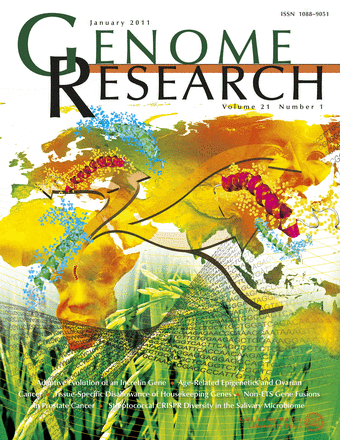
Cover Most obvious differences between humans could be the result of recent positive selection of genetic polymorphism. In this issue, it is reported that selection has acted on a human incretin hormone, GIP, which plays critical roles in the regulation of insulin signaling and adipogenesis in mammals. Taking into account the short time (∼8.1 thousand years ago) that the derived GIP haplotype spread to high frequencies in East Asians, this selection could be pertinent to shifts in energy–balance regulation after the emergence of agriculture in Eurasia. Future characterization of potential genotype-phenotype relationships are expected to provide a better understanding of how GIP variants contribute to phenotypic variation in energy-balance regulation and metabolic syndromes among individuals or populations. (Cover illustration by Roberto Torres, torresdecomunicacion{at}gmail.com. [For details, see Chang et al., pp. 21–32.])

