

Abstract
Suz12 is a component of the Polycomb group complexes 2, 3, and 4 (PRC 2/3/4). These complexes are critical for proper embryonic development, but very few target genes have been identified in either mouse or human cells. Using a variety of ChIP-chip approaches, we have identified a large set of Suz12 target genes in five different human and mouse cell lines. Interestingly, we found that Suz12 target promoters are cell type specific, with transcription factors and homeobox proteins predominating in embryonal cells and glycoproteins and immunoglobulin-related proteins predominating in adult tumors. We have also characterized the localization of other components of the PRC complex with Suz12 and investigated the overall relationship between Suz12 binding and markers of active versus inactive chromatin, using both promoter arrays and custom tiling arrays. Surprisingly, we find that the PRC complexes can be localized to discrete binding sites or spread through large regions of the mouse and human genomes. Finally, we have shown that some Suz12 target genes are bound by OCT4 in embryonal cells and suggest that OCT4 maintains stem cell self-renewal, in part, by recruiting PRC complexes to certain genes that promote differentiation.
It has been hypothesized that the new proliferative demands that occur as a differentiated cell transforms into a tumor cell require a reversion of differentiated characteristics to allow for a more embryonic or stem cell-like phenotype. Accordingly, certain genes that are normally expressed in embryonic cells but not in adult tissues are reactivated in tumors (Monk and Holding 2001). Examples of such genes are the components of the Polycomb Repressive Complexes (Varambally et al. 2002; Bracken et al. 2003; Kleer et al. 2003; Kirmizis et al. 2004; Valk-Lingbeek et al. 2004; Kuzmichev et al. 2005; Raaphorst 2005). The PRC2/3/4 complexes contain the histone methyltransferase Enhancer of Zeste protein-2 (EZH2), the Extra Sex Combs protein (EED), the Suppressor of Zeste-12 protein (SUZ12) and the histone-binding proteins RbAP46 and RbAP48 (Kuzmichev et al. 2002, 2004; Cao and Zhang 2004a). PRC4, but not PRC2 or 3, also contains SirtT1, an NAD+-dependent histone deacetylase (Kuzmichev et al. 2005). Components of the PRC2/3/4 complexes are normally expressed at high levels in embryonic tissues and are essential for proper development. In fact, mice lacking Suz12 (Pasini et al. 2004), Ezh2 (O’Carroll et al. 2002), or Eed (Faust et al. 1995) are not viable and die during early implantation stages. However, in normal adult tissues, expression of SUZ12, EZH2, and EED is very low (Kirmizis et al. 2004; Kuzmichev et al. 2005), suggesting that the PRC complexes may not play a major role in normal differentiated tissues. In contrast, these proteins have been shown to be present at high levels in a variety of human tumors. We, and others, have shown that the components of the PRC2/3/4 complexes are regulated by the E2F/Rb pathway. For example, we initially identified the SUZ12 promoter by cloning and characterizing fragments immunoprecipitated by E2F1 in ChIP assays (Weinmann et al. 2001). Also, SUZ12, EZH2, EED, RbAP46, and RbAP48 have been identified as E2F target genes in overexpression and ChIP-chip experiments (Bracken et al. 2003; Oberley et al. 2003; Bieda et al. 2006). Thus, it is believed that the frequent deregulation of the E2F/Rb pathway that occurs during neoplastic transformation leads to the inappropriate expression of these normally embryonic-specific genes in human tumors.
Components of the PRC complexes have been causally implicated in conferring the neoplastic phenotype (Varambally et al. 2002; Bracken et al. 2003). Thus, developing an understanding of how they function will provide critical insight into the mechanisms of neoplastic transformation. We previously identified eight genes that respond to loss of SUZ12 and 20 promoters that are bound by SUZ12 in colon cancer cells (Kirmizis et al. 2004), and others have shown that SUZ12 binds to the HOXA9 promoter in HeLa cells (Cao and Zhang 2004a). However, the abundance of the PRC components in embryonic cells and their importance in normal development and tumor formation suggest that they must regulate a much larger set of target genes. Thus, we have extended our studies of the PRCs by using a variety of different ChIP-chip assays (summarized in Supplemental Table S1) to identify a large set of SUZ12 target genes in five different cell types; mouse embryonal stem (mES) cells, mouse F9 teratocarcinoma cells, human Ntera2 testicular germ cell carcinomas, human MCF7 breast cancer cells, and human SW480 colon cancer cells. Our characterization of these target genes has revealed that the PRC complexes regulate genes in a cell-type-specific manner and that they have different modes of transcriptional repression at different target genes.
Results
Identification of Suz12 target genes
We began our studies of the mammalian PRC2/3/4 complexes by identifying target genes in mouse embryonal carcinoma F9 cells. Using an antibody to Suz12 in ChIP assays, we enriched for Suz12-bound F9 cell chromatin. We tested, via PCR of the Suz12 ChIP samples, several promoters corresponding to the mouse homologs of previously identified human Suz12 target genes (Kirmizis et al. 2004). One of the tested promoters (Wnt1) was bound by Suz12 in the F9 cells (Fig. 1) and thus could serve as a positive control for ChIP-chip assays. We prepared amplicons from the Suz12 ChIP sample and a portion of the input chromatin and applied labeled amplicons to a microarray containing ∼26,000 mouse promoters. Each promoter was represented by 15 oligomers 50 nt in length, spanning from −1300 to +200. After hybridization and scanning, the Suz12 hybridization signals were divided by the total signals to provide a fold-enrichment value for each oligomer on the array. Each of the promoters was then ranked using the median value of the fold enrichment for all 15 oligomers per promoter. This same ranking system was used for all high-density oligonucleotide promoter arrays throughout this study.
Identification of Suz12 target genes. (A) The number of genes commonly found on the two biological replicates of the Suz12 ChIP-chip experiments were compared in bins of 200, through the top 10,000 ranked genes on each list (Suz12). Also shown are the number of genes found to be in common using randomized Suz12 data sets (Random). Finally, the number of genes in common at each point in the comparison of the randomized data sets was subtracted from the number of genes in common in the two ranked Suz12 ChIP-chip data sets (Corrected). (B) PCR confirmations (using a third biological replicate of Suz12 amplicons) of Suz12 binding to a set of promoters identified in the ChIP-chip assays. All enrichments were normalized to the enrichment at the Wnt1 promoter. For these experiments, the number of PCR cycles was kept low to ensure that the signals were within the linear range of the assay, providing a semiquantitative analysis.
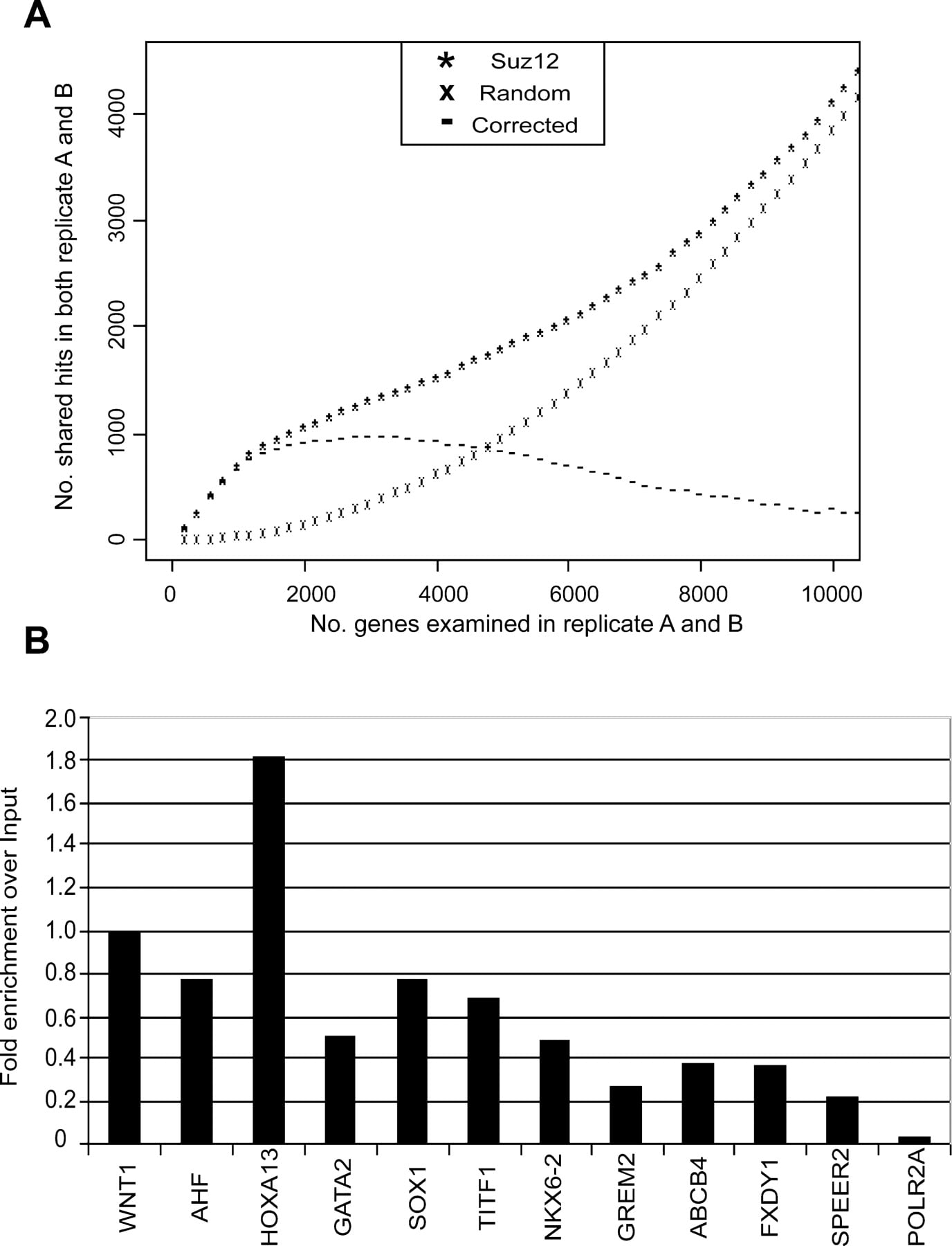
We wished to use a nonarbitrary method to identify a robust set of Suz12 target promoters from the array data. We reasoned that true Suz12 target promoters should fall near the top of the ranked list in two independent experiments, whereas false positives would be high on the list from one array but lower on the list on a different array. Therefore, we performed two biologically independent ChIP-chip experiments (i.e., the cross-linking was performed on two samples of F9 cells grown on separate days, and the ChIP assays and arrays were all done on separate days) and then compared the promoters in common on the two lists by steps of 200 through the top 10,000 promoters from each experiment. We found that the number of hits in common between the two experiments rose sharply as the list expanded from the top 200 to the top 2000 promoters (Fig. 1A). After that, the number in common minus the randomly expected number (based on a Monte Carlo simulation) in common began decreasing. Based on this analysis, we chose the promoters that were in common in the top 2000 ranked promoters from the two Suz12 arrays. This set comprised 1076 promoters; a table listing the Suz12 promoters and their characteristics is shown as Supplemental Table S2 (this ranked list can be derived from Supplemental Table 3).
Based on the graph shown in Figure 1A, we expected that most of the promoters in the 1076 set (which were identified as Suz12 targets in two independent ChIP experiments) would show binding of Suz12 in a third biologically independent ChIP experiment. Therefore, we performed another ChIP experiment using the Suz12 antibody and F9 cells grown and cross-linked on a different day than the cells used in either of the first two ChIP experiments. To confirm the Suz12 target promoters, we chose 10 promoters whose median enrichments ranged from ∼4.0 log2 (the top ranked promoter on one of the arrays) to ∼0.3 log2; the set of 1076 Suz12 target promoters all had average enrichment values of >0.635 (log2) on the arrays. We also included the positive (Wnt1) and negative (RNAPII) primer sets that were used as controls for the amplicons that were applied to the arrays. The fold enrichment for each primer set, as determined by PCR analysis of amplicons prepared from the third ChIP experiment, was calculated and normalized to the positive (Wnt1) control (Fig. 1B). We found that the promoters having higher median fold enrichments on the array produced higher signals in PCR confirmations and that all tested promoters were enriched >10-fold above the negative control RNAPII promoter. Thus, follow-up testing provides evidence that the identified promoters are bound by Suz12 in multiple, independent experiments.
Suz12 binding strictly correlates with Ezh2 recruitmentand results in silenced chromatin
Another member of the PRC2/3/4 complexes is the histone methyltransferase Ezh2. Because (1) elimination of Suz12 or Ezh2 creates similar mutant phenotypes in embryos (Pasini et al. 2004; Montgomery et al. 2005); (2) removal of SUZ12 from five target promoters in colon cancer cells also eliminated EZH2 from the promoter (Kirmizis et al. 2004); and (3) SUZ12 and EZH2 copurify (Kuzmichev et al. 2002, 2004; Cao and Zhang 2004b); we reasoned that most Suz12 target genes should also be bound by Ezh2. We performed a ChIP experiment with an antibody to Ezh2, prepared amplicons, and applied these amplicons to the mouse promoter array. We ranked each of the promoters by their median values of the 15 probes; this ranked list of Ezh2 target promoters can be derived from Supplemental Table 3. We found a striking correlation with Suz12 targets and Ezh2 targets. For example, >98% of the Suz12 targets were in the top 2000 Ezh2 target set (Table 1). Thus, the ChIP-chip assays confirm that Suz12 and Ezh2 bind to a common set of promoters.
Suz12 targets are bound by EZH2 and H3me3K27, but not by RNAPII or H3me3K9
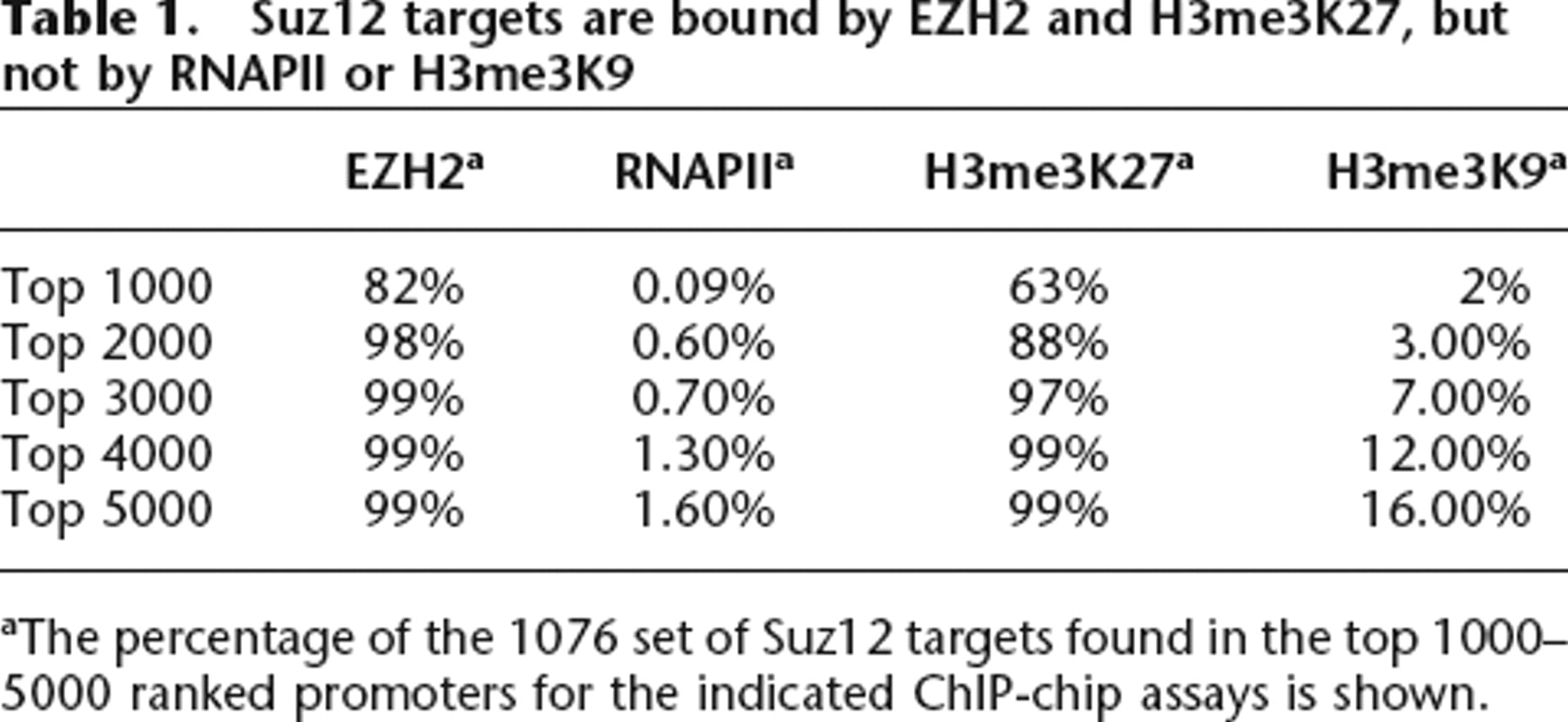
aThe percentage of the 1076 set of Suz12 targets found in the top 1000–5000 ranked promoters for the indicated ChIP-chip assays is shown.
Ezh2 is a histone methyltransferase that has been postulated to regulate gene expression by methylating histone H3 and/or H1, resulting in inactivation of the bound promoter region. Thus, we expected that if we had correctly identified a set of Suz12/Ezh2 target promoters, these promoters would be inactive. To test this hypothesis, we performed a ChIP assay using an antibody to RNAPII, prepared amplicons, and then probed a mouse promoter array (Supplemental Table S3). We compared the position of the Suz12 target promoters on the ranked list of promoters identified using the antibody to RNAPII. Strikingly, we found that <1% of the set of Suz12 target promoters were found in the top 3000 of the promoters bound by RNAPII (Table 1). These results suggest that in F9 cells, Suz12 functions solely as a transcriptional repressor. Because the set of 1076 Suz12 target promoters that we have identified are essentially all bound by Ezh2 and not occupied by RNAPII, we are confident that they represent bona fide Suz12 target promoters and have thus chosen this set of promoters as the set of Suz12 promoters to be further analyzed in our study.
Ezh2 preferentially methylates histone H3 at lysine 27 when complexed with Suz12 at target promoters
As indicated above, Suz12 is a component of PRC2, 3, and 4. In vitro, the PRC complexes have been shown to methylate both lysine 9 and lysine 27 of histone H3 (Kuzmichev et al. 2002, 2004). We had previously examined a small set of promoters bound by SUZ12 in human SW480 colon cancer cells and found that these promoters were bound by histone H3 trimethylated at lysine 27. However, it is possible that the PRC complexes target different residues of histone H3 for methylation in different cell types. To determine which, if either, of the residues of histone H3 are methylated when Suz12 is bound to promoters in embryonic teratocarcinomas, we performed ChIP assays using antibodies that only recognize histone H3 if it is trimethylated on lysine 27 or lysine 9. After preparing the ChIP samples, amplicons were created and applied to the mouse promoter array (see Supplemental Table S3 for the H3me3K27 and H3me3K9 data for all 26,000 promoters). We found that in F9 cells, the overwhelming majority of Suz12 target promoters are trimethylated on K27, but not on K9, of histone H3 (Table 1). For example, 88% of the Suz12 target promoters are also in the top 2000 of the promoters detected by the H3me3K27 antibody. In contrast, only 3% of the Suz12 promoters are in the top 2000 of the promoters detected by the H3me3K9 antibody. The inability to detect trimethylation of lysine 9 of H3 on Suz12 target promoters is not a failure of the antibody to work in ChIP-chip assays. We identified 1792 promoters that were enriched greater than twofold by the H3me3K9 antibody (see Supplemental Table S3). We found that the top 1000 ranked promoters from the H3me3K9 ChIP-chip assay showed a log2 enrichment of 1.56 in the RNAPII ChIP-chip experiment, as contrasted to a log2 enrichment of −0.428 for RNAPII in the top 1000 ranked H3me3K27 set of promoters. Therefore, in mouse F9 cells, trimethylation of histone H3 at K9 is not associated with Suz12 or Ezh2 binding, but instead is associated with the presence of RNAPII. Our results support a previous finding that H3me3K9 can be a mark of actively transcribed promoters (Vakoc et al. 2005). Our ChIP-chip results are also supported by siRNA studies. We introduced siRNA to SUZ12 into MCF7 and SW480 cells and then examined the effects of loss of Suz12 on H3me3K27 or H3me3K9 levels. We found that loss of SUZ12 greatly reduces the overall levels of H3me3K27, but not H3me3K9, in both cell lines (Supplemental Fig. 1). Importantly, this demonstrates that binding of SUZ12 to its target promoters is required for EZH2 to methylate histone H3 on lysine 27.
Suz12 binds to promoters in a cell-type-specific manner
As one approach to understand the function of Suz12, we analyzed the set of 1076 Suz12 target promoters using the DAVID analysis program (Dennis et al. 2003). This analysis program allows investigators to determine what general categories (GO terms, keywords, etc.) are represented by a list of target genes. Importantly, it also provides a measure of significance for the identified categories by providing a P-value that indicates the probability that the identified category is more highly enriched in the target set than would be expected by random chance (based on the number of genes in the genome that fall into a particular category). We found that a very large percentage of the Suz12 target genes were involved in transcriptional regulation (Fig. 2A). In particular, the set of homeodomain-containing transcription factors was very highly represented (see Supplemental Table S4 for a list of the set of 1076 F9 cell Suz12 target genes having known functions). We have also performed a ChIP-chip analysis of F9 cell Suz12 target genes using mouse CpG island arrays. We found identical categories of Suz12 target genes using the CpG island arrays (data not shown) as we did using the high-density oligonucleotide arrays. F9 cells are pluripotent, embryonal-like cells derived from a teratocarcinoma. To determine if Suz12 binds to the same type of target genes in normal embryonal cells, we performed a ChIP-chip analysis using mouse embryonic stem (mES) cells. A DAVID analysis of the target genes revealed that the Suz12 target genes from mES fell into the same categories as the F9 cell target genes (Fig. 2B).
Suz12 target genes are cell type specific. Shown are the categories of Suz12 target genes, as determined using the program DAVID, for (A) the 1076 set of F9 Suz12 targets, (B) the top 1000 Suz12 targets in mES cells, (C) the top 600 SUZ12 targets from Ntera2 cells, (D) the top 600 SUZ12 targets from SW480 cells, (E) the top 600 SUZ12 targets from MCF7 cells, and (F) a set of 1000 randomly chosen promoters. Shown in parentheses are the P-values, which indicate the probability that the category has been identified by random chance. The black bars indicate Suz12 target genes that are stem cell or germ cell tumor specific, the hatched bars indicate Suz12 target genes that are common to all cell types, and the open bars indicate the most common categories of genes in a randomly chosen set of 1000 promoters.
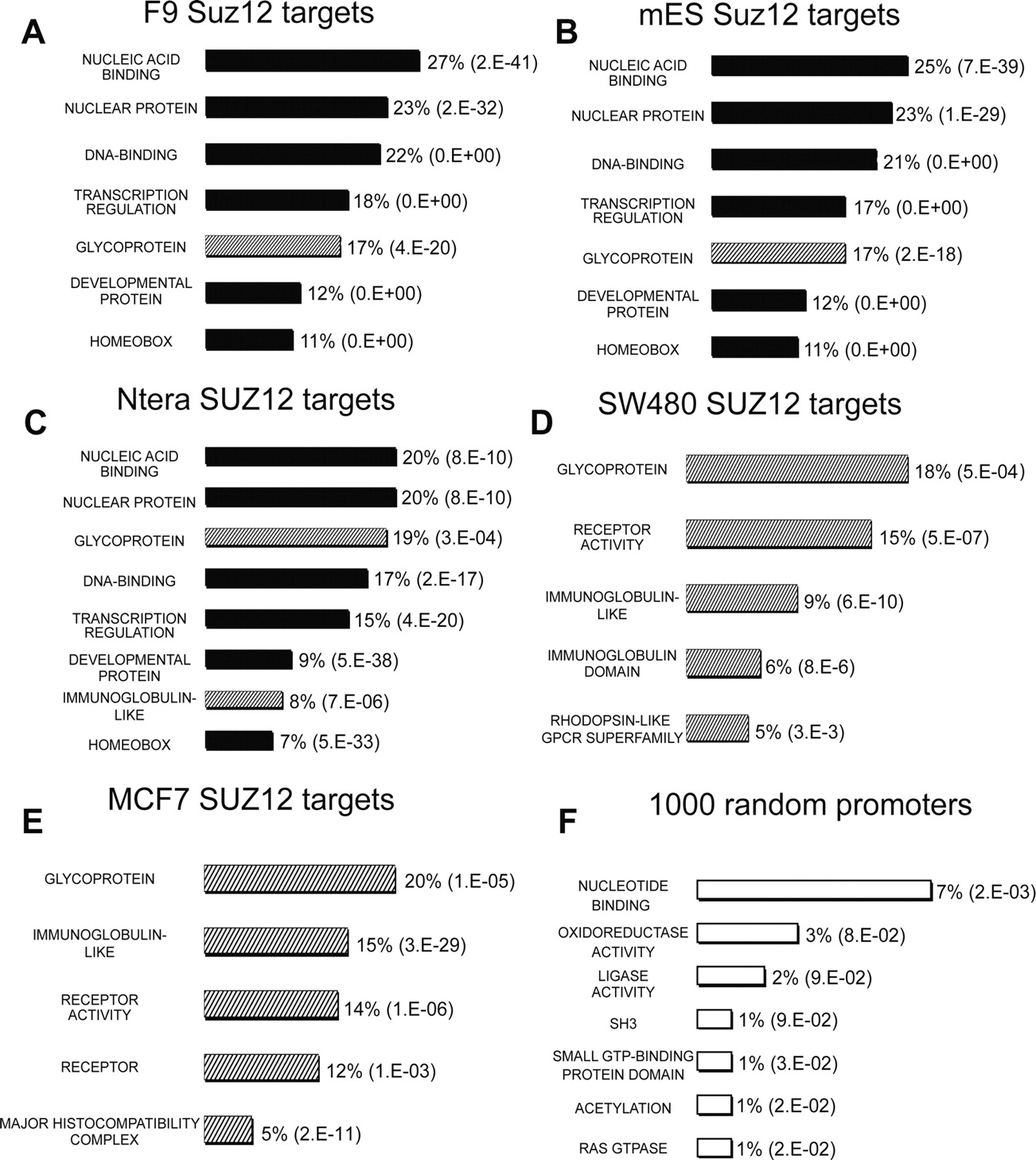
As stated above, Suz12 is normally expressed at low levels in adult cells but is up-regulated in adult tumors. To determine if Suz12 binds to the same target promoters in adult tumors as in embryonic tumors, we next performed a SUZ12 ChIP-chip experiment using human SW480 colon cancer cells and an array that contained 5 kb for each of ∼12,000 human promoters (Supplemental Table S5). We chose the top 600 ranked promoters (which is approximately the same percentage of top-ranked targets as chosen for the mouse array, which had 26,000 promoters) and performed a DAVID analysis (Fig. 2D). We found that the SUZ12 targets in the human colon cancer cells were enriched in glycoproteins and receptors. In addition, a large number of immunoglobulin-related genes were identified. The differences observed between the type of target genes identified in mouse F9 cells versus human SW480 cells could be due to either a difference in the role of Suz12 in regulating gene expression in mice versus humans or in regulating gene expression in embryonic cells versus adult cells. To distinguish these possibilities, we performed additional ChIP-chip assays (Supplemental Table S5) using two other human cell lines, Ntera2 (a testicular carcinoma derived from germ cells) and MCF7 (an adult breast cancer cell). In the MCF7 breast cancer cells, SUZ12 bound to the promoters of the same type of genes as in SW480 cells, namely, glycoproteins and immunoglobulin-like proteins (Fig. 2E). In fact, 488 of the top 1500 SUZ12 target genes are the same in MCF7 and SW480 cells. In contrast, we found that the SUZ12 targets in the germ cell-derived human tumor cell line Ntera2 are very similar to those in the mouse teratocarcinomas and mES cells in that they were highly enriched in transcription factors and homeodomain proteins (Fig. 2C). Thus, SUZ12 binds to a different set of targets in cells derived from embryonic tissues from those derived from adult cells. However, we did identify a set of promoters that are bound by SUZ12 in all three different human tumor cell lines. Of the 141 top ranked genes bound by SUZ12 in Ntera and MCF7 and SW480, 119 of them have been functionally characterized. These genes are highly enriched in immunoglobulin-related genes and receptors (Supplemental Table S6). Finally, as a control set, we took 1000 promoters from the randomized set of 26,000 mouse promoters on the array and performed the same DAVID analysis. As shown in Figure 2F, the randomized set of promoters was not enriched in the types of genes identified as Suz12 target genes.
SUZ12 can bind to large chromatin domains
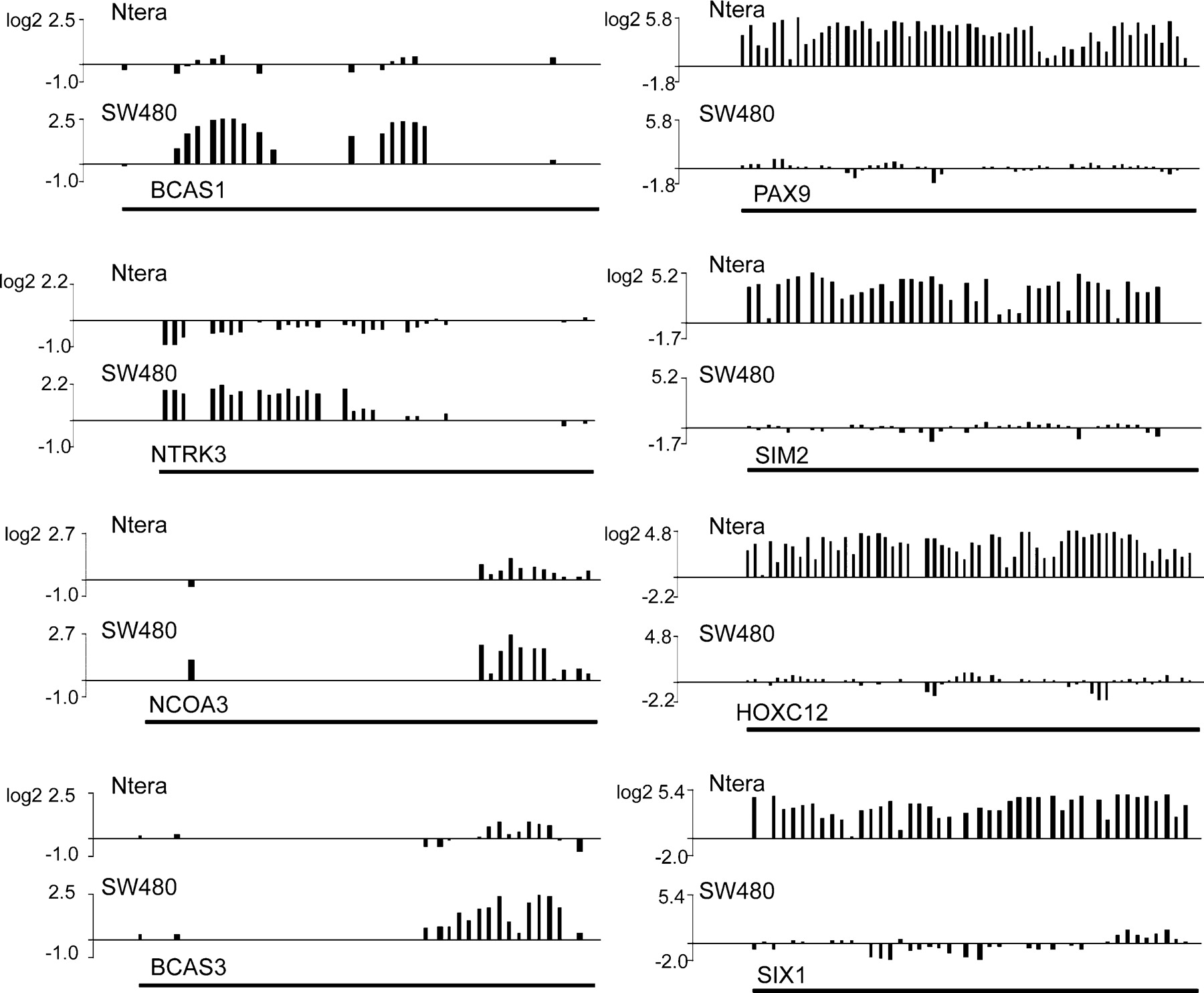
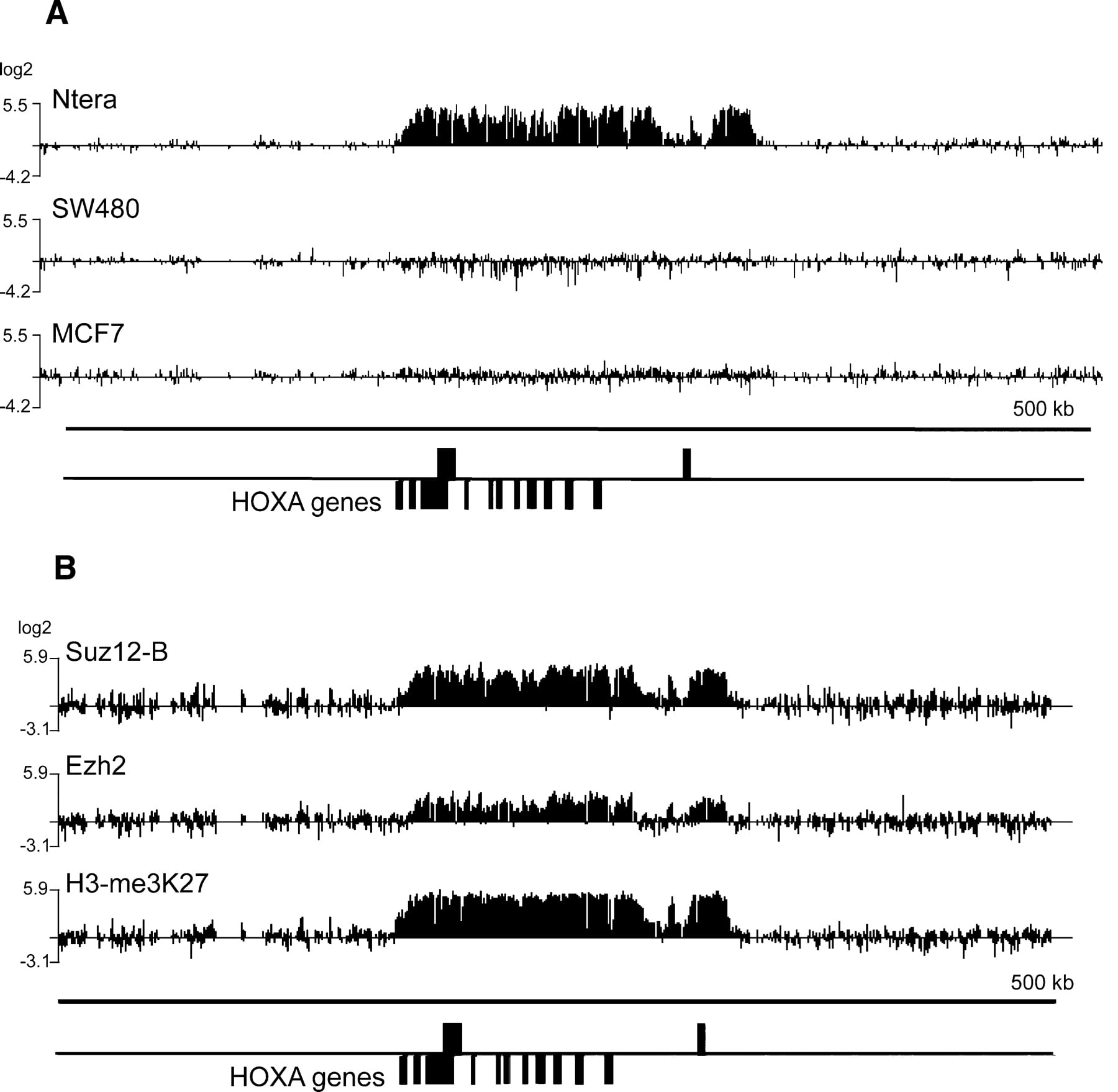
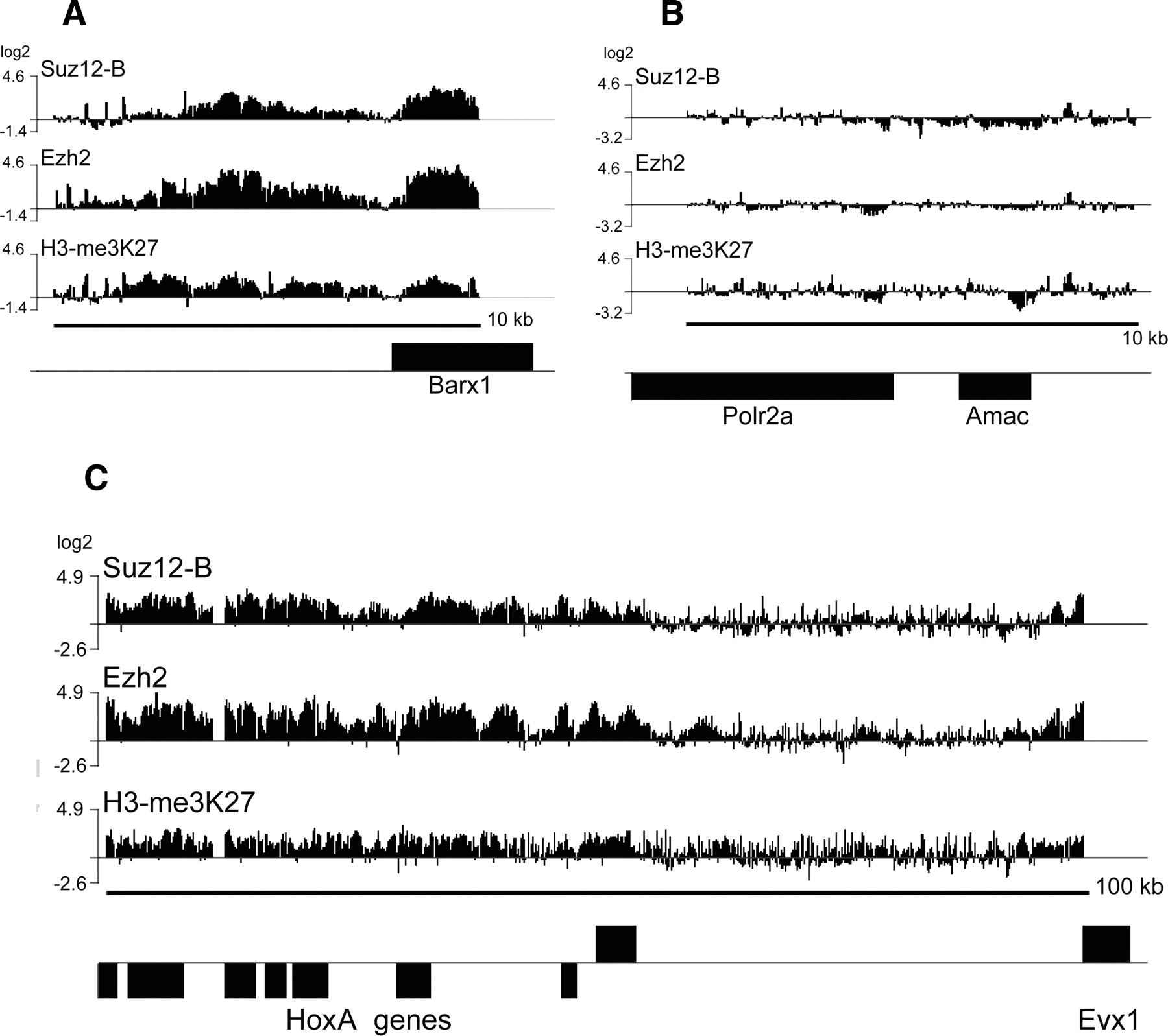
We noticed that the pattern of binding of SUZ12 was very different in the adult tumors from in the embryonic tumors. For example, SUZ12 shows peak-like binding patterns on the top ranked targets from SW480 cells (Fig. 3, left panel). In contrast, the top ranked Ntera2 target genes show binding of SUZ12 to all oligomers in the promoter region (Fig. 3, right panel), suggesting that SUZ12 can spread through a large region in embryonal cells. To investigate this possibility, we used ENCODE arrays that contain 500 kb surrounding the human HOXA cluster (see Bieda et al. 2006 for a detailed description of the ENCODE arrays). We probed the human ENCODE arrays with SUZ12 ChIP samples from Ntera2, SW480, and MCF7 cells (Fig. 4A). We found that a 200-kb region is covered by SUZ12 in Ntera2 cells, but not in the SW480 and MCF7 adult tumor lines, thus providing clear evidence for cell-type specificity of the SUZ12 binding (as expected, the ChIP-chip experiments did indicate that other promoters were bound by SUZ12 in the SW480 and MCF7 cell lines) (data not shown). Although our data indicated that SUZ12 binds to a large region of its target promoters, it was unclear if this was functional binding. It was possible that SUZ12 had a diffuse binding pattern, but EZH2 (and thus the extent of histone methylation) would be more restricted. Therefore, we also examined the binding pattern of EZH2. The pattern of SUZ12 and EZH2 was almost identical throughout each region (Fig. 4B), suggesting that a functional complex was spreading throughout the region. If so, then the entire region should contain histone H3me3K27. As shown in Figure 4B, the extent of silenced chromatin (as indicated by the H3me3K27 mark) mirrors the extent of SUZ12 and EZH2 binding. Thus, a functional PRC complex is spread throughout the entire SUZ12-bound region. To further analyze the extent of Suz12 binding on promoters in embryonal cells, we created custom arrays (composed of 50mers, tiled every 26 bp) that represented a minimum of 10 kb of a large set of F9 cell Suz12 target genes. ChIP-chip analysis using F9 cells revealed that in many cases Suz12 was bound throughout the entire 10 kb region (see Fig. 5 for an example and Supplemental Table S7 for a summary of the binding pattern of Suz12 on 58 different target genes). We also examined 100-kb regions of some of the target promoters. As shown in Figure 5 and Supplemental Table S7, in some cases Suz12 bound through very large regions (e.g., at the HoxA cluster). As in Ntera2 cells, the binding patterns of Ezh2 and H3me3K27 in F9 cells are similar to that of Suz12.
Analysis of SUZ12 target promoters. Shown are the SUZ12 binding patterns on four top ranked SUZ12 target promoters from SW480 (left panel) and Ntera2 (right panel) cells. The black bar indicates the 5-kb region of each promoter that is tiled by the oligomer probes.
PRC complexes can silence large regions in a cell-type-specific manner. (A) SUZ12 ChIP-chip analysis of a 500-kb region of the HOXA cluster, using three different cell lines. (B) SUZ12, EZH2, and H3me3K27 ChIP-chip analysis of a 500-kb region of the HOXA cluster, using human Ntera2 cells. The coding regions of the indicated genes are shown by the black boxes.
Custom ChIP-chip analysis of mouse F9 cell Suz12 target promoters. Custom ChIP-chip analysis using mouse F9 cells of (A) a 10-kb region of a Suz12 target gene, (B) a 10-kb region of the negative control RNAPII promoter, or (C) a 100-kb region of the HoxA cluster.
A distinct class of genes is regulated by PRC2
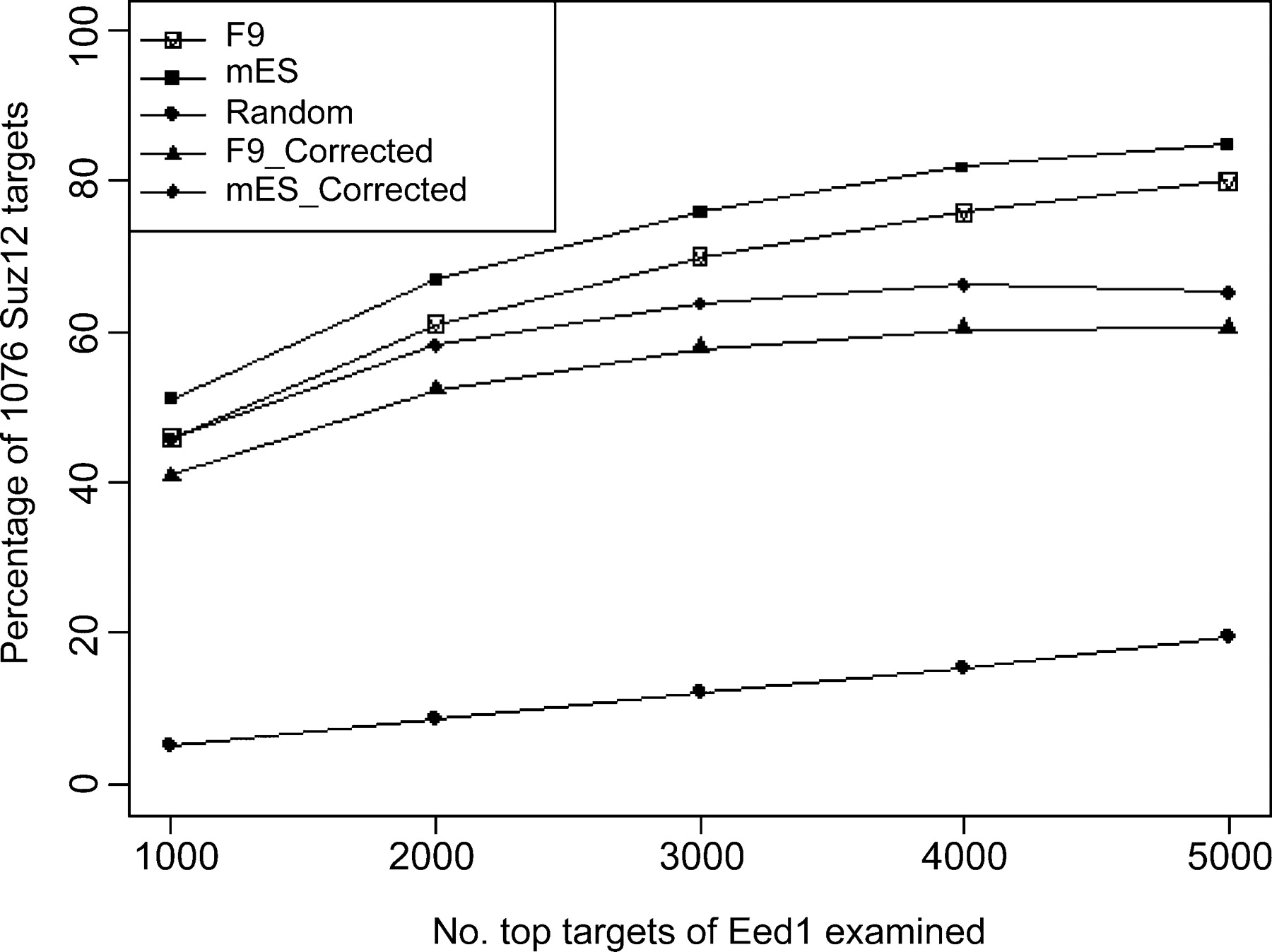
Another factor that copurifies with Suz12 and Ezh2 is Eed. Several different isoforms of this protein exist, which are distinguished by small differences in the length of their N termini (Kuzmichev et al. 2005). Using biochemical methods, such as coimmunoprecipitation and column chromatography, it has been shown that each of the different isoforms can be detected in specific PRC complexes. However, it is not known if all the complexes are functionally equivalent, if the presence of certain isoforms of Eed leads to different methylation of target promoters in vivo, or if all the different complexes regulate the same set of target genes. To begin to address this issue, we developed an antibody that recognizes the longest form of Eed (Eed1) and can coimmunoprecipitate Ezh2 and Suz12 (Supplemental Fig. 2). We then used this antibody in a ChIP-chip assay to identify promoters bound by Eed1 in F9 cells (the ranked list of Eed1-bound promoters can be derived from Supplemental Table S3). By comparing the set of 1076 Suz12 targets in F9 cells to the ranked Eed1-enriched promoters, we found that ∼50% of the Suz12 target promoters were bound by Eed1 (Fig. 6). These results suggested that most, but not all, Suz12 target promoters were bound by this isoform of Eed. The abundance of Eed isoforms can differ when normal cells are compared to cancer cells (Kuzmichev et al. 2005). Therefore, we also determined the percentage of Suz12 target genes that are bound by Eed1 in normal murine embryonic stem (mES) cells. We performed ChIP-chip assays using mES cells and the Suz12 and Eed1 antibodies. We then compared the top 1000 ranked Suz12 targets in mES cells to the ranked list of Eed1 targets and found a very similar distribution in the mES cells as in the F9 cells. Thus, in both F9 and mES cells some of the Suz12 targets are bound by a PRC complex that does not contain Eed1.
Most Suz12 target genes are bound by Eed1. Shown is the percentage of Suz12 targets found in the top 5000 (in bins of 1000) Eed1 target genes in F9 and mES cells (indicated as F9 and mES). Also shown is the “corrected” percentage of Suz12 target genes found in the top 5000 Eed1 target genes for both mouse F9 and mES cells (indicated as F9 Corrected and mES Corrected). The “corrected” percentage was calculated by subtracting the percentage of Suz12 target genes that was found in a randomized set of promoters (indicated as random) from the number found in the ranked set of Eed1 targets for F9 or mES cells.
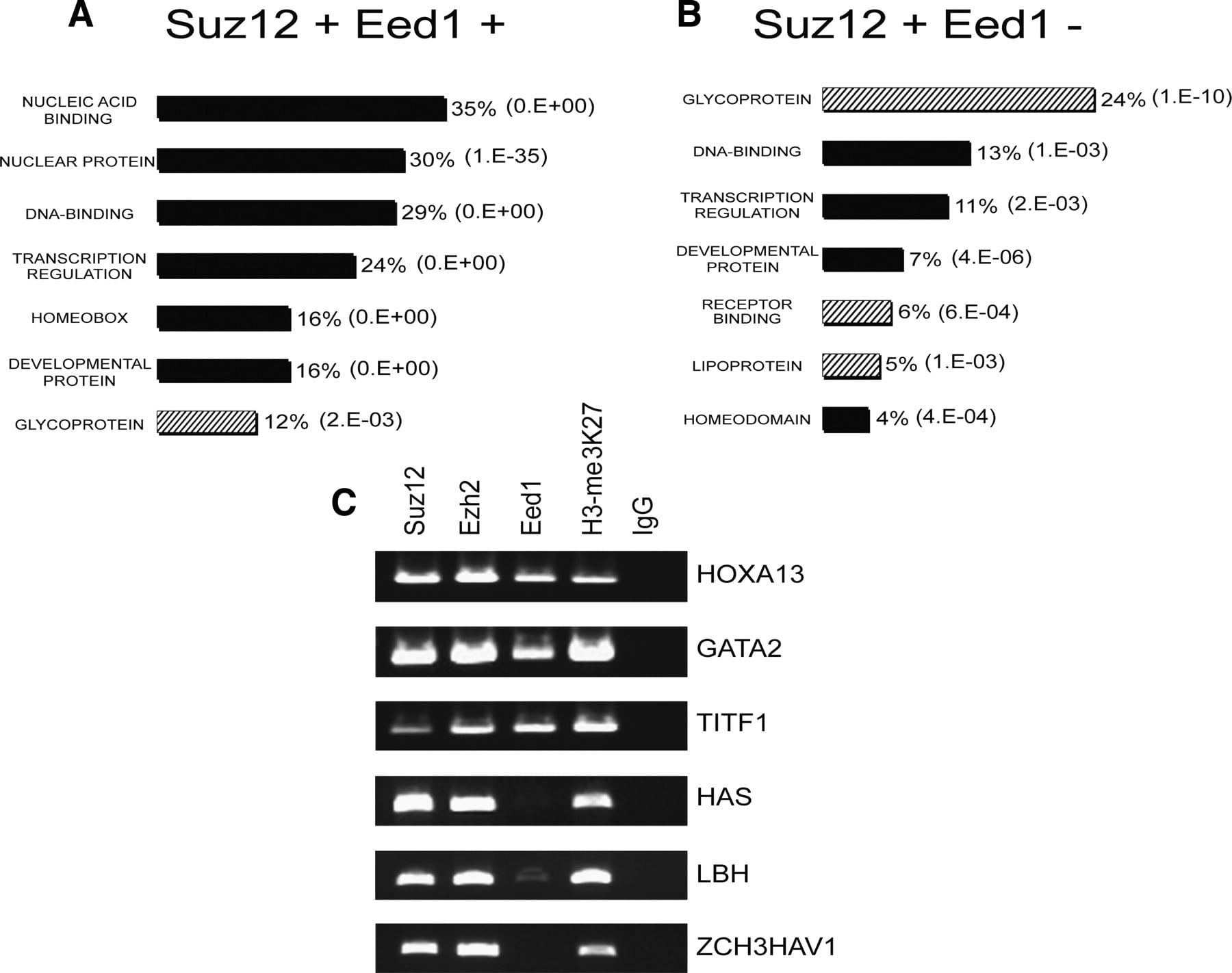
To determine if the Suz12+, Eed1+ and Suz12+, Eed1− targets represented different functional groups, we performed a DAVID analysis on the two sets (Fig. 7A,B). We found that the two sets represent different classes of target genes, with the Suz12+, Eed1+ set being composed mainly of transcription factors and homeodomain proteins and the Suz12+, Eed1− set being composed mainly of glycoproteins. We note that the Suz12+, Eed1− targets are not likely to be false positives for Suz12 because they are also bound by both H3me3K27 and Ezh2, as expected for a bona fide Suz12 target gene. To confirm that a set of Suz12+, Eed1− promoters does exist, we performed PCR assays using a biologically independent Eed1 ChIP sample (Fig. 7C). Clearly, we can identify promoters that are bound by Suz12 and Ezh2, but not by Eed1. Because an antibody that detects all isoforms of Eed1 does immunoprecipitate these promoters (data not shown), it is likely that shorter Eed isoforms are in the PRC complexes bound to this set of promoters. Unfortunately, antibodies cannot distinguish these shorter forms.
Different PRC complexes regulate different types of Suz12 targets. Shown are the categories, as determined using the program DAVID, for (A) F9 cell Suz12+, Eed1+ and (B) F9 cell Suz12+, Eed1− target genes. The black bars indicate Suz12 target genes that are stem cell or germ cell tumor specific, and the hatched bars indicate Suz12 target genes that are common to all cell types. Shown in parentheses are the P-values, which indicate the probability that the category has been identified by random chance. For the Suz+, Eed1+ targets, the median Suz12 value was 1.816 (log2), and the median Eed1 value was 0.762 (log2). For the Suz12+, Eed1− targets, the median Suz12 value was 0.91 (log2), and the median Eed1 value was 0.205 (log2). (C) PCR confirmations were performed to confirm the existence of two classes of target genes, those bound by Suz12, Ezh2, and Eed1 and those bound by Suz12 and Ezh2, but not by Eed1.
OCT4 binds to a subset of SUZ12-silenced promoters
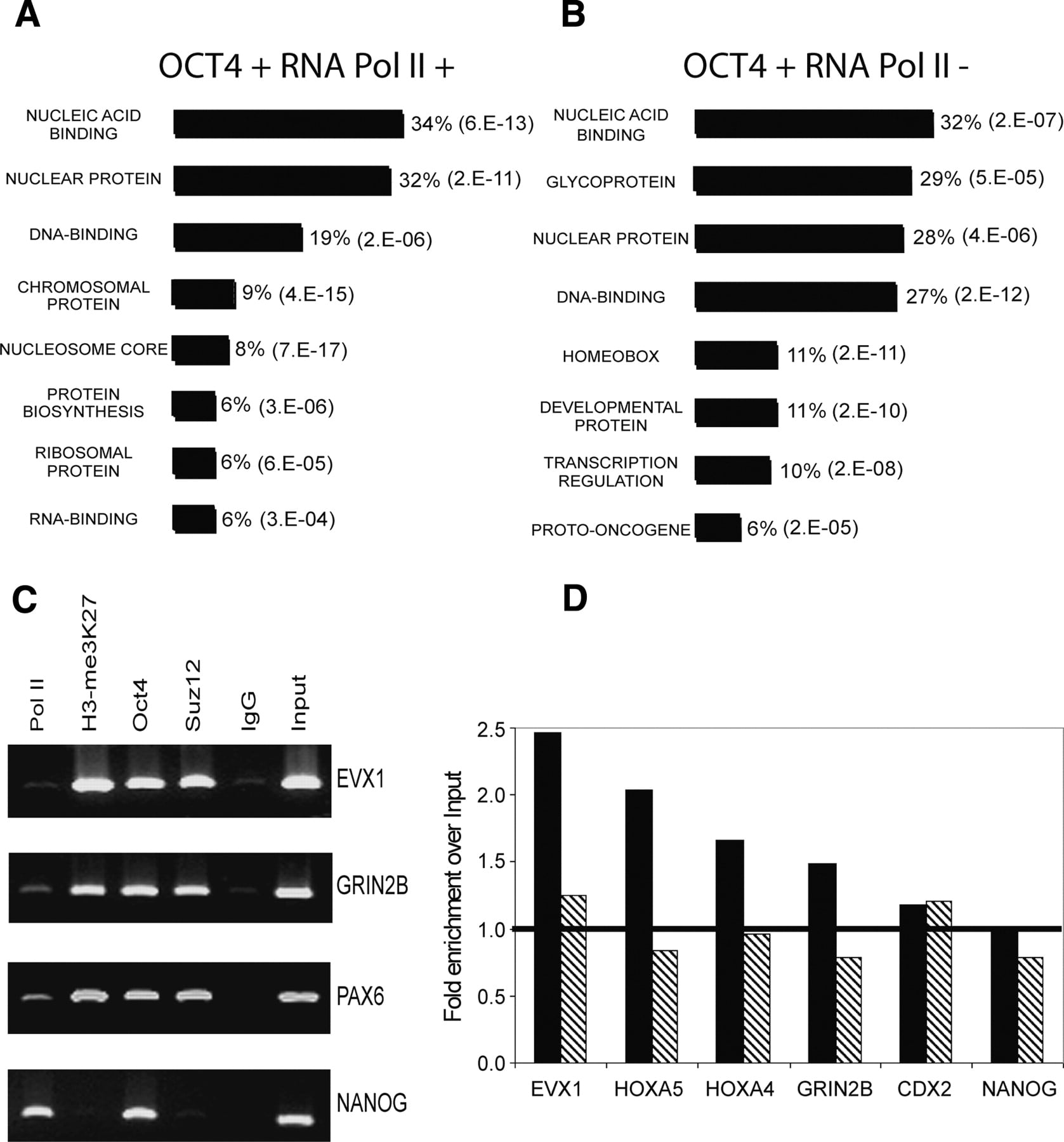
None of the components of the PRC2/3/4 complexes are DNA-binding proteins, and it is not clear how the SUZ12-containing complexes are brought to the chromatin. However, based on our observations that the transcription factor subset of SUZ12 targets is highly enriched in embryonic cells and in germ-cell tumors, we hypothesized that the PRC complex may be recruited specifically to these promoters by a site-specific factor expressed only in embryonic or germ cells. One such factor is OCT4, a critical regulator of self-renewal of embryonic stem cells. To determine if OCT4 regulates a subset of SUZ12 target promoters, we first performed ChIP-chip assays using an antibody to OCT4 and selected the top 1000 promoters that were commonly enriched on two arrays as our set of OCT4 target promoters (Supplemental Table 8). OCT4 has been proposed to function as both an activator and a repressor (Yuan et al. 1995; Botquin et al. 1998; Boyer et al. 2005). Therefore, we expected that a subset of OCT4 target promoters might lack RNAPII and be bound by SUZ12. To confirm this hypothesis, we first performed two ChIP-chip assays using an antibody to RNAPII. Our ChIP-chip analysis of Ntera2 cells using an RNAPII antibody showed that OCT4 target promoters could be divided into those bound versus not bound by RNAPII. We then ranked the OCT4 targets by their RNAPII enrichment values and performed a DAVID analysis on the 25% having the highest RNAPII enrichment and the 25% having the lowest RNAPII enrichment (Fig. 8). Interestingly, this analysis revealed two distinct classes of OCT4 target genes. Those bound by OCT4 and RNAPII included histone proteins and genes required for protein synthesis; OCT4-mediated activation of these genes would support a role for OCT4 in maintaining proliferation. Those genes bound by OCT4 but not by RNAPII included developmental proteins and homeobox genes. This list is very similar to the list of SUZ12 targets identified in Ntera2 cells (Fig. 2C). In fact, 58 of the 252 OCT4+, RNAPII− promoters used for the DAVID analysis of Figure 8B were identified as SUZ12 targets in the Ntera2 ChIP-chip experiments; this list can be found as Supplemental Table S9. To determine the significance of the overlap between SUZ12 and OCT4 targets, we randomized the data from the OCT4 experiment and found that only 13 of the top 252 targets from the randomized list were also SUZ12 targets. Thus, the relationship between the OCT4 targets and SUZ12 targets is much higher than random (with a P-value <10−8). To confirm the colocalization of OCT4 and SUZ12, we performed PCR analyses of ChIP samples (Fig. 8C). These experiments confirm the existence of a set of OCT4+, RNAPII−, SUZ12+ promoters. We have also shown that these promoters are bound by histone H3me3K27 (Fig. 8C), suggesting that OCT4 may either recruit or cooperate with PRC complexes in repressing differentiation-specific genes in embryonal cells. To determine if OCT4 might be involved in recruiting SUZ12 to target promoters, we transiently introduced siRNAs that target OCT4 into Ntera2 cells. Western blot analysis indicated that OCT4 levels were greatly reduced by the siRNAs (data not shown). We then performed ChIP analysis using an antibody to SUZ12 in the mock or siRNA-treated cells. We found that knockdown of OCT4 resulted in loss of SUZ12 from certain target promoters (Fig. 8D).
Promoters bound by both SUZ12 and OCT4 in Ntera2 cells. DAVID analysis of the set of (A) OCT4+ RNAPII+ and (B) OCT4+ RNAPII− promoters in Ntera2 cells. Shown in parentheses are the P-values, which indicate the probability that the category has been identified by random chance. The entire list of OCT4 targets (having known function) can be found as Supplemental Table S8. (C) PCR analysis of amplicons prepared from Ntera2 ChIP samples obtained using antibodies to the indicated proteins. The NANOG promoter was used for a known OCT4 target gene; NANOG was not expected to be bound by SUZ12 because it is expressed at high levels in Ntera2 cells (i.e., it is an OCT4+ RNAPII+ promoter target). (D) PCR analysis of amplicons prepared from SUZ12 ChIP samples after siRNA-mediated knockdown of OCT4 (hatched bars) or introduction of a control siRNA (black bars) in Ntera2 cells. The horizontal black bar indicates the SUZ12/Total ratio that is expected for nontarget promoters such as NANOG (nontarget genes should show a ratio of ∼1 when equivalent amounts of amplicons prepared from ChIP and total samples are analyzed).
Discussion
In this study, we have performed an extensive ChIP-chip analysis of SUZ12 target genes in the human and mouse genomes, using a variety of cell types and five different types of genomic microarrays. We have demonstrated that SUZ12 and other components of the PRC2/3/4 complexes bind to large silenced regions of the mouse and human genomes. We have shown that the genes bound by SUZ12-containing complexes differ in embryonal versus adult cells. To our knowledge, this is the first report of tumor type-specific binding of the PRC complexes. In embryonic stem cells and in tumors derived from germ cells, but not in adult tumors, a large number of SUZ12 targets are homeobox-containing transcription factors, suggesting that the PRC complex is recruited to homeobox genes via a stem cell-specific factor. Accordingly, we demonstrate that OCT4, a stem cell-specific transcription factor, binds to a subset of the SUZ12 target promoters. We suggest that one function of OCT4 is to maintain pluripotency by recruiting the PRC complexes to silence differentiation-specific genes. In contrast, other factors must recruit SUZ12 to promoters in adult cell tumors.
SUZ12 binds to the promoters of transcription factors, glycoproteins, and immunoglobulin-like receptors
Mutational analyses of components of the PRC 2/3/4 complexes clearly demonstrate that they play a key role in embryonic development (Faust et al. 1995; O’Carroll et al. 2002; Pasini et al. 2004). Also, we and others have shown that levels of SUZ12 and EZH2 are increased in several different human tumors (Varambally et al. 2002; Bracken et al. 2003; Kleer et al. 2003; Kirmizis et al. 2004; Valk-Lingbeek et al. 2004; Kuzmichev et al. 2005; Raaphorst 2005). This suggests that SUZ12 may play a critical role in both normal development and neoplastic transformation. However, the exact role that SUZ12-containing PRC complexes play in these processes has been undefined because of a lack of knowledge of what genes are regulated by PRC2/3/4. To address this problem, we identified SUZ12 target genes in normal stem cells, two different germ cell tumor lines, and two different adult cell tumor lines. We found that SUZ12 binds to a specific set of target genes in embryonic stem cells and germ cell tumors that it does not bind to in tumor cell lines derived from adult tissues. The Suz12 target genes in embryonal cells are highly enriched for transcription factors, especially homeobox factors. In fact, we identified >100 different homeobox transcription factors that are bound by Suz12. However, in the cell lines derived from adult tumors (SW480 and MCF7 cells), the largest category of SUZ12 target genes was glycoproteins, whereas the number of transcription factors and homeobox-domain-containing proteins was very small. By comparison of Ntera2, MCF7, and SW480 cells, we could identify a common set of glycoproteins and immunoglobulin-related target genes bound by SUZ12 in all three human tumor lines, suggesting that SUZ12 plays a key role in repressing these genes under diverse conditions.
Inspection of the lists of Suz12 target genes (Supplemental Tables S4 and S6) reveals that, in many cases, several different members of gene families are bound by Suz12. Our findings suggest that Suz12-mediated repression of a family of genes can be achieved in two different ways. For example, the members of the mouse and human HoxA gene clusters are repressed by Suz12 via silencing of a large region of mouse chromosome 6 or human chromosome 7 (Figs. 4 and 5). Similarly, the different members of the HoxB, HoxC, and HoxD gene families are clustered on chromosomes 11, 15, and 2, respectively, and silenced by spreading of Suz12 through large regions of these three chromosomes. This PRC spreading pattern could be mediated by a single nucleating site at which a site-specific factor binds and recruits a PRC complex, which then spreads via protein–protein interaction much as do the Sir proteins that are involved in telomeric silencing in yeast (Fox and McConnell 2005). Alternatively, there could be multiple “anchors” for the PRC complex throughout the silenced region. Further work is needed to distinguish these possibilities. In contrast, Gata-2, Gata-3, Gata-4, Gata-5, and Gata-6 are all silenced by Suz12, but each of these genes is located on a different chromosome. Also, Suz12 represses Wnt1, Wnt2b, Wnt3, Wnt5a, Wnt6, Wnt7a, Wnt7b, Wnt9a, Wnt10a, Wnt10b, and Wnt11, but these related genes are found dispersed on seven different chromosomes.
The majority of Suz12 target genes are bound by the PRC2 complex in embryonal cells
As indicated above, we have shown that in both normal embryonic stem cells and in F9 teratocarcinoma cells, the majority of Suz12 target genes are bound by the largest Eed subunit, called Eed1, and thus are categorized as PRC2 complexes. The division of Suz12 targets into Eed1-containing versus Eed1-lacking sets suggests that in embryonal cells a distinct subclass of genes is regulated by PRC2, that is, homeobox genes and transcription factors. The Suz12 targets that lack Eed1 in the embryonic cells include glycoproteins and receptors, similar to the sets of genes bound by SUZ12 in adult tumors. Unfortunately, there is no currently available antibody that can specifically detect the other individual Eed isoforms (the isoforms are transcribed from the same mRNA and differ only in the amino acid chosen for translation); therefore, we cannot know which Eed isoforms bind to the Suz12+, Eed1− set of genes. We have also shown that the vast majority of Suz12 target genes in F9 and mES cells are bound by histone H3me3K27, not H3me3K9. Similarly, we have shown that knockdown of SUZ12 in MCF7 and SW480 cells greatly reduces global H3me3K27, but not H3me3K9 levels. In fact, in both mES cells and in F9 cells, the H3me3K9 mark is associated with promoters that are bound by RNAPII, not with silenced chromatin. This observation fits with a recent study in which H3me3K9 was shown to correlate with transcriptional activity (Vakoc et al. 2005). In contrast, others have previously used antibodies that recognize H3me3K9 and found that pericentric heterochromatin was defined by H3me3K9 marks (Rice et al. 2003). However, it is important to note that the older study indicated that the H3me3K9 on the pericentric heterochromatin was mediated by Suv38h1 and Suv39h2, not by Ezh2. They also measured H3me3K9 marks using immunofluorescence, not ChIP-on-chip assays. Perhaps very long stretches of H3me3K9 (as typified by silenced chromatin) can be easily detected by immunofluorescence, but shorter regions that have H3me3K9 may not be as easily visualized.
OCT4 and SUZ12 have a common set of target genes in embryonic cells
None of the components of the PRC2/3/4 are site-specific DNA-binding proteins, and therefore it is not clear how specific regions of the mammalian genome are targeted for interaction with the PRCs. The DNA-binding factor AEBP2 has been purified in some, but not all, Suz12-containing complexes (Cao et al. 2002). There is no evidence that this factor recruits the PRC complex to specific sites; however, it does seem to increase the overall histone methylase activity of the complex in vitro. We have identified AEBP2 as a Suz12-repressed target gene (Supplemental Table S4), and therefore it cannot be the factor that recruits the PRC complex to chromatin in embryonal cells. In Drosophila, Pleiohomoetics (PHO) and Pleiohomeotic-like (Phol) have been implicated as site-specific factors that can recruit PRCs (Mihaly et al. 1998). The mammalian counterpart of these factors is YY1, and Srinivasan and Atchison (2004) have shown that YY1 can substitute for loss of PHO in Drosophila cells. Although no one has directly shown that YY1 is important in recruiting PRCs in mammalian cells, two studies have implicated YY1 as a possible PRC-recruiting factor. First, Cao and Zhang (2004a) identified a region upstream of the HOXA9 gene as being bound by SUZ12. The exact site to which SUZ12 was bound was not delineated, because a tiling array was not used, but SUZ12 could be detected between −5 kb and the start site of transcription. The authors note that the upstream region of HOXA9 has three YY1 consensus sites, but YY1 ChIP analysis was not performed. Caretti et al. (2004) found that knockdown of YY1 using siRNAs reduced the level of trimethylated H3me3K27 on a set of muscle-specific target genes, suggesting that in muscle cells YY1 may recruit PRC2/3/4 to the chromatin. However, they did not analyze Suz12 binding, either before or after YY1 knockdown. We have attempted to link YY1 to the mammalian PRC complex by performing a ChIP-chip analysis using an antibody to YY1. A comparison of the top 1000 mES cell Suz12 and top 1000 mES cell YY1 targets revealed only two promoters in common (data not shown). However, it is important to note that owing to the nature of the array design, promoters bound by YY1 upstream of −1500 would not have been detected. Further studies are in progress to determine the role of YY1 in recruiting mammalian PRC complexes to target genes.
In contrast to the small overlap between YY1 and Suz12 targets, we found a larger overlap between SUZ12 and OCT4 targets. Although OCT4 can function as a transcriptional activator, recent studies have suggested that it may also function as a transcriptional repressor on a different set of promoters (Boyer et al. 2005; Loh et al. 2006). We found that many of the OCT4 target promoters in Ntera2 cells that are not bound by RNAPII are bound by SUZ12. We also found that the OCT4 targets that were bound by SUZ12 had marks of silenced chromatin (i.e., the presence of H3me3K27 and the absence of RNAPII), suggesting that OCT4 may function to repress these differentiation-specific genes. If so, then perhaps one role of OCT4 in maintaining stem cell self-renewal is to recruit the PRC repression complexes to genes that promote differentiation. We showed that knockdown of OCT4 levels can reduce binding of SUZ12 at certain target promoters. Studies analyzing the genome-wide effects on SUZ12 target genes due to loss of OCT4 are now in progress.
Conclusions
In summary, we have shown that in embryonic cells or germ cell tumors of both mice and humans, the major Suz12-containing complex also contains Ezh2 and the longest form of Eed (Eed1), and is typified by the presence of H3me3K27 and the absence of RNAPII (see Supplemental Fig. S3 for a summary of the characteristics of Suz12 target genes). The genes bound by this complex fall into the category of transcriptional regulators, in particular, homeobox factors. A minority of the PRC complexes in these cells lack the longest form of Eed1, but still contain Suz12 and Ezh2 and show H3me3K27 but not RNAPII binding. Many genes in this category are glycoproteins. In contrast, in adult cell lines, there is almost a complete absence of homeobox factors in the list of SUZ12 targets. Rather, the glycoproteins predominate. In fact, we have identified a set of immunoglobulin-like glycoproteins that are bound by SUZ12 in three different human tumor cell lines. In addition, we show that SUZ12 can display both spreading and peak-like patterns of binding, depending on the category of target gene; homeobox genes show wide-spread SUZ12 binding, whereas other target genes show a peak-like binding pattern. Finally, we suggest that OCT4 may aid in the recruitment of SUZ12 to a subset of target promoters. Further studies are required to identify additional site-specific factors that may anchor the PRC complex to the genome.
Methods
Cell culture
Mouse F9 cells were grown in Dulbecco’s Modified Eagle’s Medium supplemented with 10% fetal bovine serum (FBS), 2 mM L-glutamine, and 100 units/mL penicillin/streptomycin. SW480 cells were grown in McCoy’s 5A medium modified (Invitrogen), supplemented with 10% FBS (NovaTech) and 100 units/mL penicillin/streptomycin (Invitrogen). MCF7 and Ntera2 cells were grown in Dulbecco’s Modified Eagle’s Medium supplemented with 2 mM glutamine, 1% penicillin/streptomycin, and 10% FBS. All cells were incubated at 37°C in a humidified 5% CO2 incubator. Mouse embryonic stem cells were obtained from the Murine Targeted Genomics Laboratory at the Mouse Biology Program at UC Davis. These are feeder-independent cells derived from the E14Tg2A.4 subclone.
RNA interference
OCT4 SMARTpool siRNA (siPOU5F1, M019591-02) and control siRNA (siGlo, D-001600-01) were obtained from Dharmacon; SUZ12 siRNAs were described previously (Kirmizis et al. 2004). RNAi-ChIP methods have been described previously (Kirmizis et al. 2004). Briefly, cells were plated at a density of 1.2 × 10⁶ cells per 100-mm dish. Twenty-four hours after plating, cells were transfected with SMARTpool siRNAs at a 100 nM final concentration using Lipofectamine 2000 (Invitrogen) following the manufacturer’s recommendations. After 72 h of incubation with SMARTpool siRNAs, the cells were replated for another 72-h transfection with 100 nM SMARTpool siRNAs. At the end of the second 72-h incubation, the cells were harvested and used in ChIP assays.
ChIP assays and amplicon preparation
ChIP assays were performed as previously described with minor modifications (Weinmann et al. 2001). A complete protocol can be found on our Web site at http://genomics.ucdavis.edu/farnham/ and in Oberley et al. (2004). The antibodies used in this study include SUZ12 (Abcam cat# 12,201), EZH2 (generated in the Reinberg lab), H3me3K27 (Upstate Cell Signaling cat# 07-449), H3me3K9 (Abcam cat# ab1186), RNAPII (Covance cat# MMS-126R), and OCT4 (Santa Cruz Biotechnology cat# sc-8628X). The EED1 antibody was raised against amino acids 35–54 of EED. The secondary rabbit anti-mouse IgG (cat# 55,436) and rabbit anti-goat IgG (cat# 55,335) were purchased from MP Biomedicals. For analysis of the ChIP samples prior to amplicon generation, immunoprecipitates were dissolved in 50 μL of water, except for input samples that were dissolved in 100 μL. Standard PCR reactions using 2 μL of the immunoprecipitated DNA were performed. PCR products were separated by electrophoresis through 1.5% agarose gels and visualized by ethidium bromide intercalation. For details concerning the generation of amplicons from ChIP samples, see http://genomics.ucdavis.edu/farnham/ and Oberley et al. (2004).
ChIP-chip assays
The NimbleGen mouse and human minimal promoter arrays each consist of a single array design, containing 1.5 kb of promoter region of 24,275 (human) or 26,842 (mouse) promoters. There are 15 50mer probes per region, with roughly 100 bp spacing, dependent on the sequence composition of the region. The 5-kb human promoter array design is a two-array set, containing 5.0 kb of promoter region. Where individual 5.0-kb regions overlap, they are merged into a single larger region, preventing redundancy of coverage. The promoter regions thus range in size from 5.0 kb to 50 kb. These regions are tiled at a 110-bp interval, using variable length probes with a target Tm of 76°C. NimbleGen ENCODE oligonucleotide arrays contained ∼380,000 50mer probes per array, tiled every 38 bp. The regions included on the arrays encompassed the 30 Mb of the RepeatMasked ENCODE sequences, representing ∼1% of the human genome. Custom Suz12 target arrays included 10–100 kb of target genes identified on either the NimbleGen 1.5-kb promoter array or on mouse CpG arrays, with a tiling interval of one 50mer every 26 bp. All NimbleGen arrays were hybridized and the data were extracted according to standard operating procedures by NimbleGen Systems Inc.
Monte Carlo simulation
A Monte Carlo simulation was used to measure the significance of the number of overlapping genes from the two Suz12 biological replicates. First, a pair of random data sets was generated with normal distributions using the values of mean and standard deviation from replicates A and B, respectively. Next, the overlapping genes on the two lists were identified from the pair of random data sets; this process was repeated 10,000 times. Finally, a P-value was calculated to provide a conservative estimate of the probability that the overlaps in the Suz12 target lists were due to chance alone. The P-value obtained for the Suz12 biological replicates was <10−8. This small P-value should be interpreted as suggesting that the overlapping genes from biological replicates are very likely to be truly discovered by each experiment for the biological replicate, but should not be interpreted as a measure of the confidence that all of the overlapping genes are the correct ones (each replicate has several false positives).
DAVID analysis
Functional annotations were performed using the program Database for Annotation, Visualization, and Integrated Discovery (DAVID) 2.1 (Dennis et al. 2003; see also http://apps1.niaid.nih.gov/david/). DAVID is a Web-based, client/server application that allows users to access a relational database of functional annotation. Functional annotations are derived primarily from LocusLink at the National Center for Biotechnology Information (NCBI). DAVID uses LocusLink accession numbers to link gene accessioning systems like GenBank, UniGene, and Affymetrix identifiers to biological annotations including gene names and aliases, functional summaries, Gene Ontologies, protein domains, and biochemical and signal transduction pathways. The same parameters were used for all analyses presented in this study. These parameters were Gene Ontology (GO) Molecular Function term, level 2; InterPro name in the Protein Domains section; and SP_PIR_Keywords in the Functional Categories section. After performing the analysis, all categories that represented <4% of the total number of genes were eliminated. In addition, redundant terms (e.g., transcriptional regulation and transcription factor activity) and noninformative terms (e.g., multigene family) were also eliminated.
Acknowledgments
This work was supported in part by Public Health Service grants CA45250, HG003129, and DK067889. We thank the members of the Farnham lab for helpful discussion and data analysis. We also thank Antonis Kirmizis for performing the siRNA experiments shown in Supplemental Figure S1.
References
- ↵M. BiedaX. XuM.A. SingerR. GreenP.J. Farnham (2006) Unbiased location analysis of E2F1-binding sites suggests a widespread role for E2F1 in the human genome. Genome Res. 16:595–605.
- ↵V. BotquinH. HessG. FuhrmannC. AnastassiadisM.K. GrossG. VriendH.R. Scholer (1998) New POU domain configuration mediates antagonistic control of an osteopontin preimplantation enhancer by Oct-4 and Sox-2. Genes & Dev. 12:2073–2090.
- ↵L.A. BoyerT.I. LeeM.F. ColeS.E. JohnstoneS.S. LevineJ.P. ZuckerM.G. GuentherR.M. KumarH.L. MurrayR.G. Jenner (2005) Core transcriptional regulatory circuitry in human embryonic stem cells. Cell 122:947–956.
- ↵A.P. BrackenD. PasiniM. CapraE. ProsperiniE. ColliK. Helin (2003) EZH2 is downstream of the pRB-E2F pathway, essential for proliferation and amplified in cancer. EMBO J. 22:5323–5335.
- ↵Q. CaoY. Zhang (2004a) SUZ12 is required for both the histone methyltransferase activity and the silencing function of the EED–EZH2 complex. Mol. Cell 15:57–67.
- ↵R. CaoY. Zhang (2004b) The functions of E(Z)/EZH2-mediated methylation of lysine 27 in histone H3. Curr. Opin. Genet. Dev. 14:155–164.
- ↵R. CaoL. WangL. XiaH. Erdjument-BromageP. TempstR.S. JonesY. Zhang (2002) Role of histone H3 lysine 27 methylation in Polycomb-group silencing. Science 298:1039–1043.
- ↵G. CarettiM. Di PadovaB. MicalesG.E. LyonsV. Sartorelli (2004) The Polycomb Ezh2 methyltransferase regulates muscle gene expression and skeletal muscle differentiation. Genes & Dev. 18:2627–2638.
- ↵G.J. DennisB.T. ShermanD.A. HosackJ. YangW. GaoH.C. LaneR.A. Lempicki (2003) DAVID: Database for annotation, visualization, and integrated discovery. Genome Biol. 4:3.
- ↵C. FaustA. SchumacherB. HoldenerT. Magnuson (1995) The eed mutation disrupts anterior mesoderm production in mice. Development 121:273–285.
- ↵C.A. FoxK.H. McConnell (2005) Toward biochemical understanding of a transcriptionally silenced chromosomal domain in Saccharomyces cerevisiae. J. Biol. Chem. 280:8629–8632.
- ↵A. KirmizisS.M. BartleyA. KuzmichevR. MargueronD. ReinbergR. GreenP.J. Farnham (2004) Silencing of human Polycomb target genes is associated with methylation of histone H3 lysine 27. Genes & Dev. 18:1592–1605.
- ↵C.G. KleerQ. CaoS. VaramballyR. ShenI. OtaS.A. TomlinsD. GhoshR.G. SewaltA.P. OtteD.F. Hayes (2003) EZH2 is a marker of aggressive breast cancer and promotes neoplastic transformation of breast epithelial cells. Proc. Natl. Acad. Sci. 100:11606–11611.
- ↵A. KuzmichevK. NishiokaH. Erdjument-BromageP. TempstD. Reinberg (2002) Histone methyltransferase activity associated with a human multiprotein complex containing the Enhancer of Zeste protein. Genes & Dev. 16:2893–2905.
- ↵A. KuzmichevT. JenuweinP. TempstD. Reinberg (2004) Different ezh2-containing complexes target methylation of histone h1 or nucleosomal histone h3. Mol. Cell 14:183–193.
- ↵A. KuzmichevR. MargueronA. VaqueroT.S. PreissnerM. ScherA. KirmizisX. OuyangN. BrockdorffC. Abate-ShenP. Farnham (2005) Composition and histone substrates of Polycomb repressive group complexes change during cellular differentiation. Proc. Natl. Acad. Sci. 102:1859–1864.
- ↵Y.-H. LohQ. WuJ.-L. ChewV.B. VegaW. ZhangX. ChenG. BourqueJ. GeorgeB. LeongJ. Liu (2006) The Oct4 and Nanog transcription network regulates pluripotency in mouse embryonic stem cells. Nat. Genet. 38:431–440.
- ↵J. MihalyR.K. MishraF. Karch (1998) A conserved sequence motif in Polycomb response elements. Mol. Cell 1:1065–1066.
- ↵M. MonkC. Holding (2001) Human embryonic genes re-expressed in cancer cells. Oncogene 20:8085–8091.
- ↵N.D. MontgomeryD. YeeA. ChenS. KalantryS.J. ChamberlainA.P. OtteT. Magnuson (2005) The murine polycomb group protein Eed is required for global histone H3 Lysine-27 methylation. Curr. Biol. 15:942–947.
- ↵M.J. OberleyD. InmanP.J. Farnham (2003) E2F6 negatively regulates BRCA1 in human cancer cells without methylation of histone H3 on lysine 9. J. Biol. Chem. 278:42466–42476.
- ↵M.J. OberleyJ. TsaoP. YauP.J. Farnham (2004) High throughput screening of chromatin immunoprecipitates using CpG island microarrays. Methods Enzymol. 376:316–335.
- ↵D. O’CarrollS. ErhardtM. PaganiS.C. BartonM.A. SuraniT. Jenuwein (2002) The Polycomb-group gene Ezh2 is required for early mouse development. Mol. Cell. Biol. 21:4330–4336.
- ↵D. PasiniA.P. BrackenM.R. JensenE. Lazzerini DenchiK. Helin (2004) Suz12 is essential for mouse development and for EZH2 histone methyltransferase activity. EMBO J. 23:4061–4071.
- ↵F.M. Raaphorst (2005) Deregulated expression of Polycomb-group oncogenes in human malignant lymphomas and epithelial tumors. Hum. Mol. Genet. 14:R93–R100.
- J.C. RiceS.D. BriggsB. UeberheideC.M. BarberJ. ShabanowitzD.F. HuntY. ShinkaiC.D. Allis (2003) Histone methyltransferases direct different degrees of methylation to define distinct chromatin domains. Mol. Cell 12:1591–1598.
- ↵L. SrinivasanM.L. Atchison (2004) YY1 DNA binding and PcG recruitment requires CtBP. Genes & Dev. 18:2596–2601.
- ↵C.R. VakocS.A. MandatB.A. OlenchockG.A. Blobel (2005) Histone H3 lysine 9 methylation and HP1γ are associated with transcription elongation through mammalian chromatin. Mol. Cell 19:381–391.
- ↵M.E. Valk-LingbeekS.W.M. BruggemanM. van Lohuizen (2004) Stem cells and cancer: The Polycomb connection. Cell 118:409–418.
- ↵S. VaramballyS.M. DhanasekaranM. ZhouT.R. BarretteC. Kumar-SinhaM.G. SandaD. GhoshK.J. PientaR.G. SewaltA.P. Otte (2002) The Polycomb group protein EZH2 is involved in progression of prostate cancer. Nature 419:624–629.
- ↵A.S. WeinmannS.M. BartleyM.Q. ZhangT. ZhangP.J. Farnham (2001) The use of chromatin immunoprecipitation to clone novel E2F target promoters. Mol. Cell. Biol. 21:6820–6832.
- ↵H. YuanN. CorbiC. BasilicoL. Dailey (1995) Developmental-specific activity of the FGF-4 enhancer requires the synergistic action of Sox2 and Oct-3. Genes & Dev. 9:2635–2645.
Notes
[1] [Supplemental material is available online at www.genome.org. The sequence data from this study have been submitted to GEO under accession nos. GSE4902, GSE4904, GSE4905, GSE4907, and GSE4908.]
[2] Article published online before print. Article and publication date are at http://www.genome.org/cgi/doi/10.1101/gr.5306606