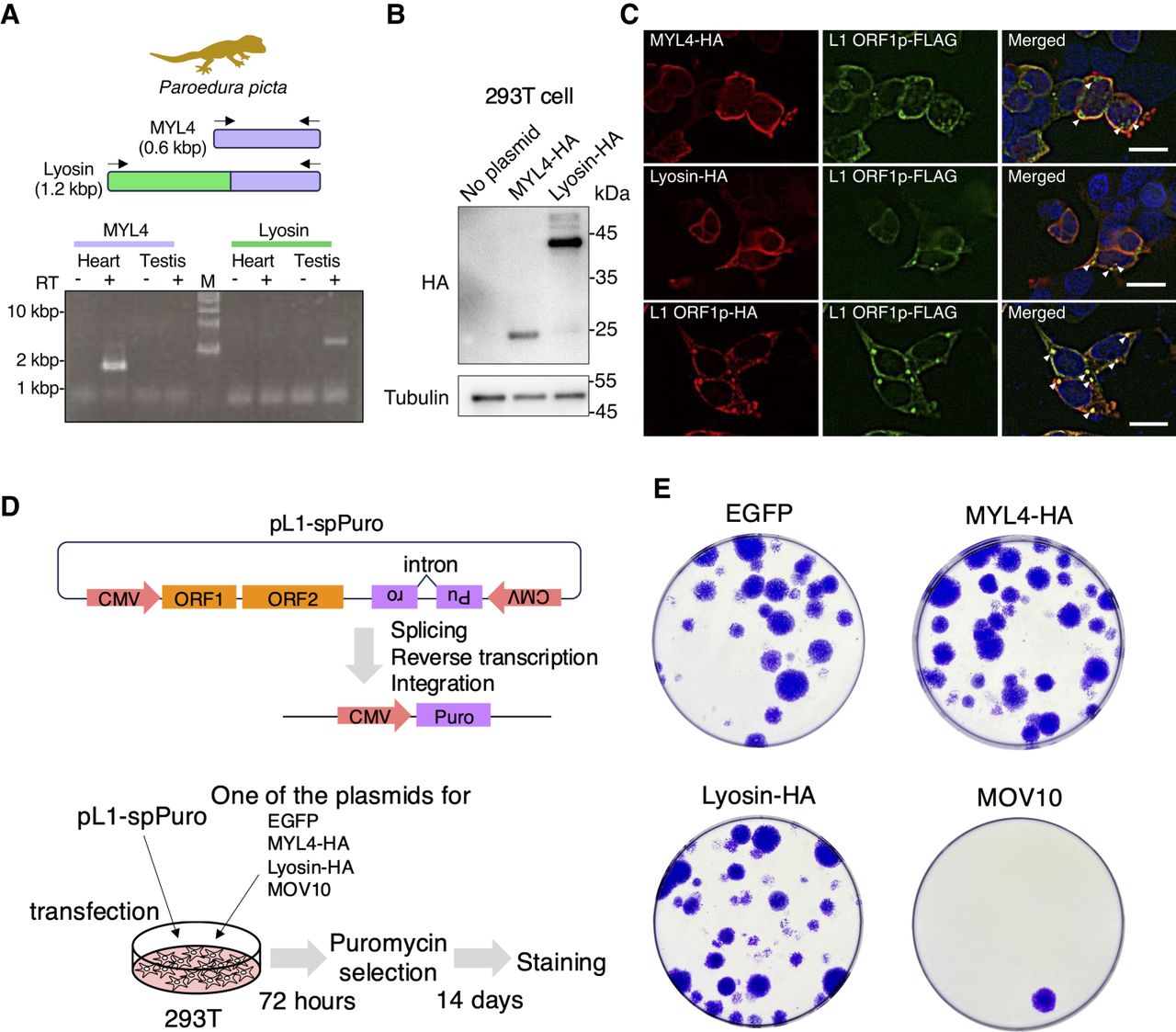
Molecular characterization of the Lyosin protein. (A) RT-PCR targeting the MYL4 and Lyosin transcripts. RNA was extracted from the heart and testis of a sexually matured male Madagascar ground gecko. Samples without reverse transcriptase (RT−) were analyzed as negative controls. (B) Western blotting of MYL4-HA and Lyosin-HA expressed in human 293T cells. (C) Fluorescence immunostaining images in human 293T cells. White arrows indicate L1 ORF1p cytoplasmic foci. The scale bars represent 20 µm. (D) Illustration of the mechanism of L1 retrotransposition assay. (E) Results of L1 retrotransposition assay. The indicated genes and L1 reporter were coexpressed in 293T cells. L1 retrotransposition results in cell colonies resistant to puromycin. MOV10 is used as a positive control that was reported to suppress L1.