


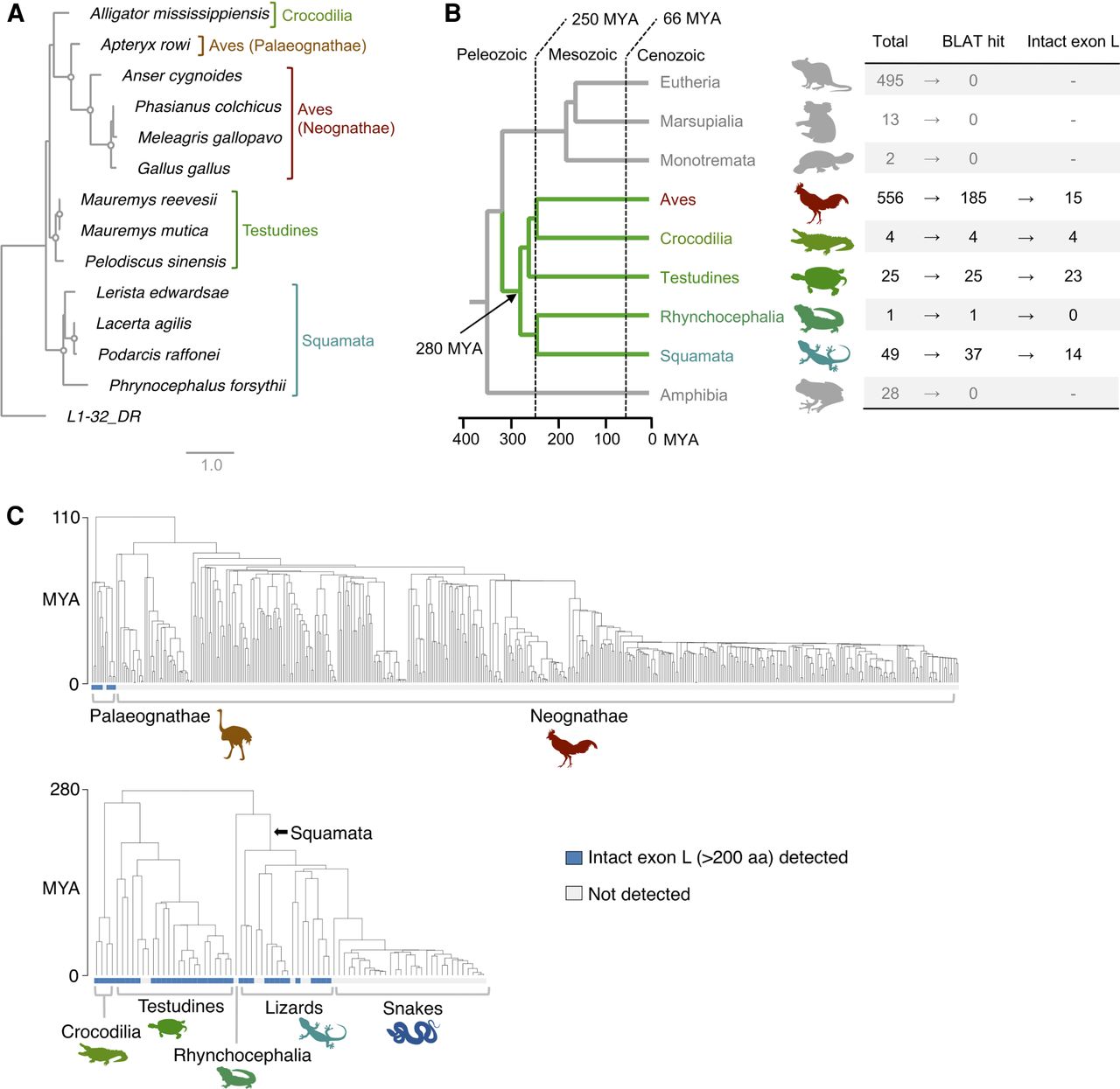
Identification of Lyosin in the genome assemblies of Tetrapoda. (A) Maximum likelihood-based phylogenetic tree of the Lyosin proteins obtained by NCBI BLASTP search. Open circles in internal nodes indicate >95% ultrafast bootstrap support (1000 replicates). (B) Schematic summary of the detection of the Lyosin sequence in the genome assemblies of Tetrapoda. The numbers of the analyzed genome assemblies (total), Lyosin-detected genome assemblies by BLAT searching (BLAT hit), and intact Lyosin’s exon L-detected genome assemblies are listed on the right. The co-option for the Lyosoin protein occurred before the divergence of reptiles and birds, 280 million years ago (MYA) in the Paleozoic era. (C) The evolutionary history of Lyosin in reptile and bird lineages. Phylogenetic trees of species with divergence times were based on the TimeTree (Kumar et al. 2022). The species predicted to have an intact exon L with more than 200 amino acid coding sequence were reflected on the tree nodes (Supplemental Table S3).



