


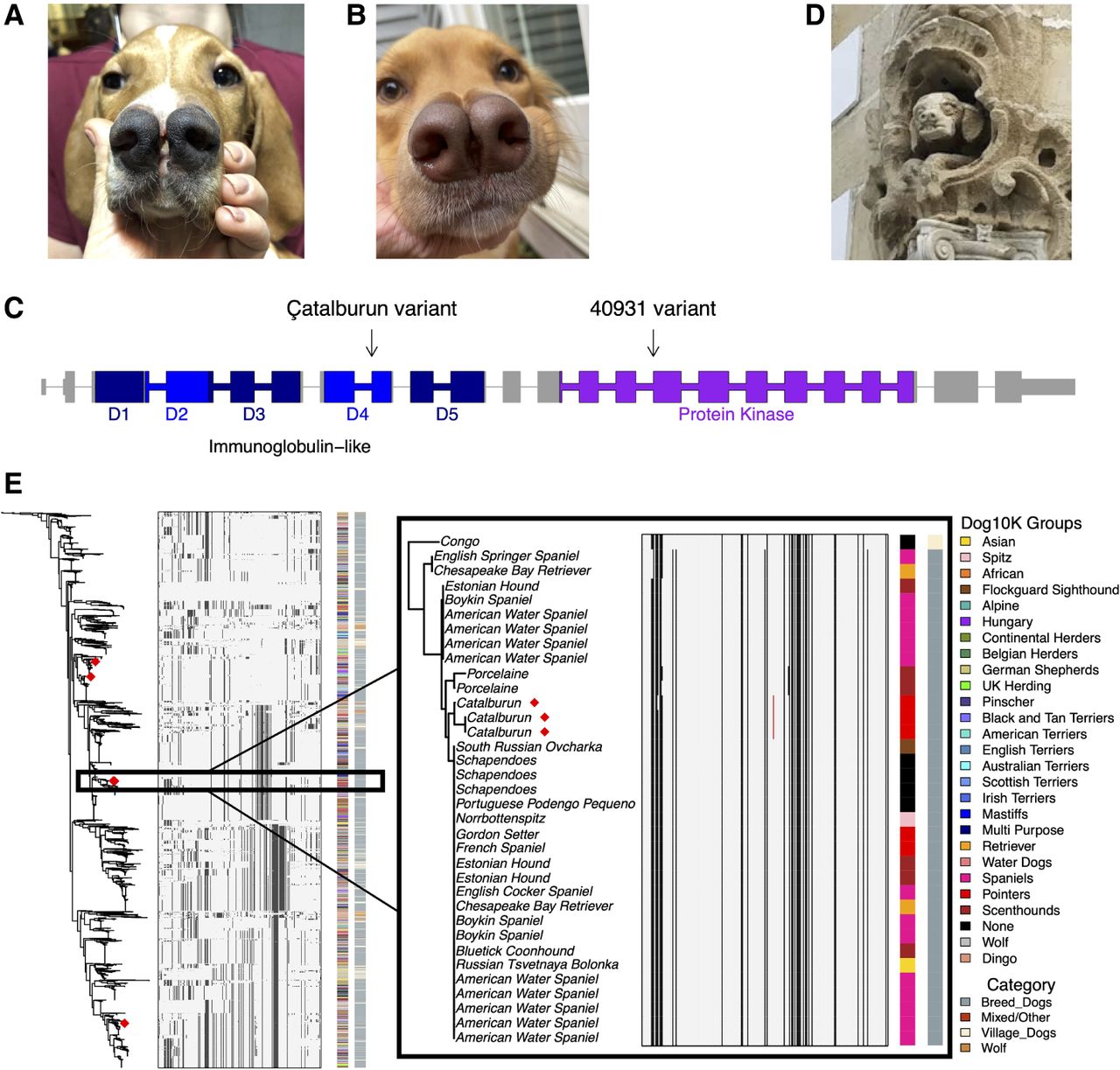
PDGFRA LoF mutations are associated with bifid nose. (A) Çatalburun dog with the distinctive bifid nose phenotype. (B) A mixed-breed dog (Dog ID: 40931) with a bifid nose phenotype. The dog is heterozygous for an additional PDGFRA splice-acceptor variant. (C) Canine PDGFRA transcript showing the locations of each splice-acceptor variant found within dogs with orofacial clefts. The first variant is the Çatalburun variant and the second variant belongs to Dog 40931. (D) Photograph of a statue depicting a dog with a bifid nose phenotype. The statue is located at the Palace of Bertemati in Andalusia, Spain and was constructed in the eighteenth century. (E) Haplotype analysis of the PDGFRA locus. A neighbor-joining tree is shown alongside a matrix of phased haplotypes. Red diamonds on the tree show the locations of Çatalburun haplotypes. The inset shows the Çatalburun haplotypes containing the PDGFRA splice-acceptor mutation. The position of the mutation within the haplotype is indicated in red.



