


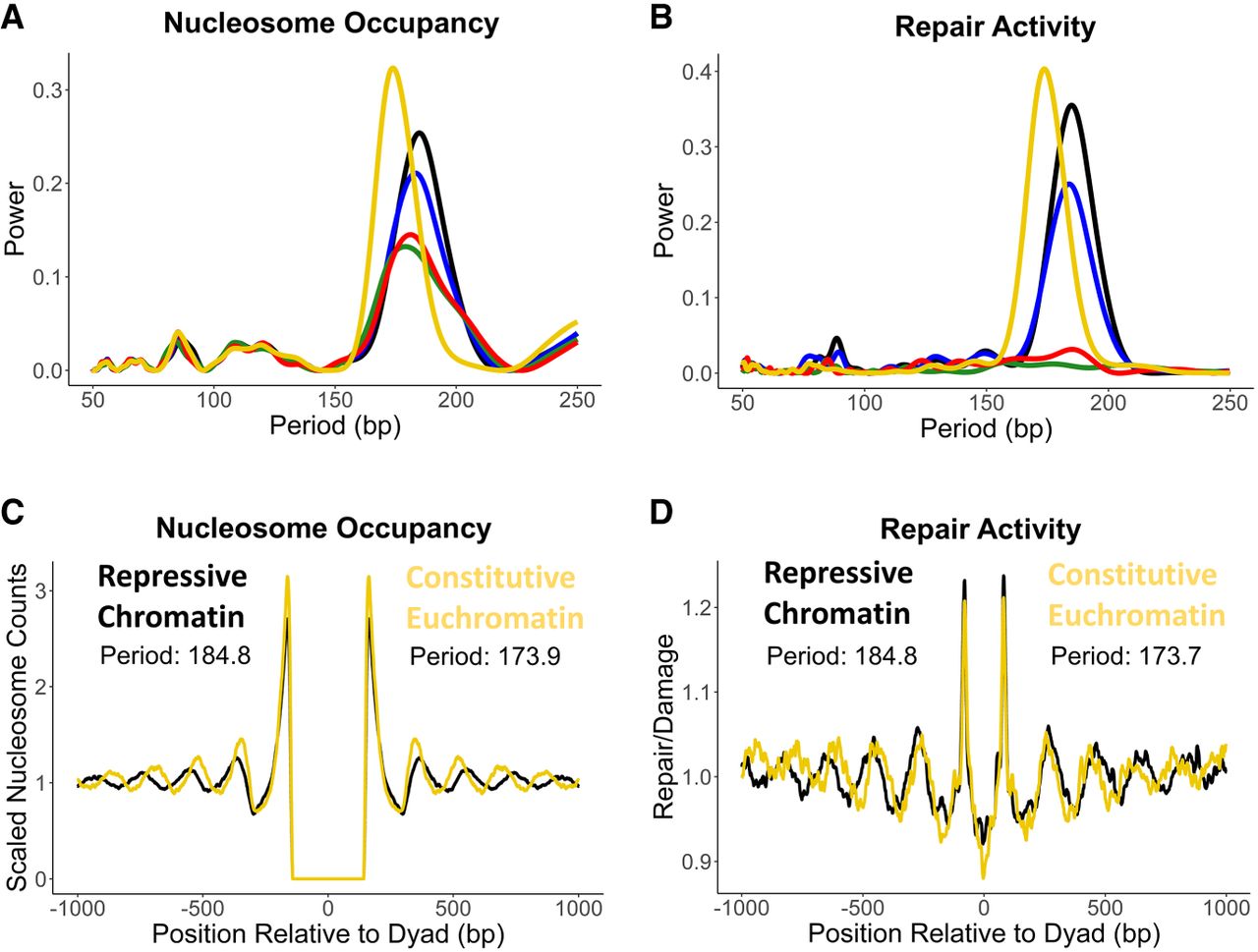
Translational CPD repair periods and nucleosome repeat length vary in tandem across chromatin types. (A,B) Lomb–Scargle periodograms showing nucleosome occupancy (A) and CPD repair (B) periodicities for each chromatin type. Black trend lines represent repressive chromatin; blue trend lines, PcG heterochromatin, green trend lines, centromeric chromatin; red trend lines, inducible euchromatin; and yellow trend lines, constitutive euchromatin. (C,D) Overlaid constitutive euchromatin and repressive chromatin translational patterns for nucleosome occupancy (C) and CPD repair activity (30 min; D). Nucleosome dyads were never called within 147 bp of one another, so the region from −147 to 147 bp in the nucleosome occupancy data (C) was excluded from the periodicity analysis.



