


Cover image
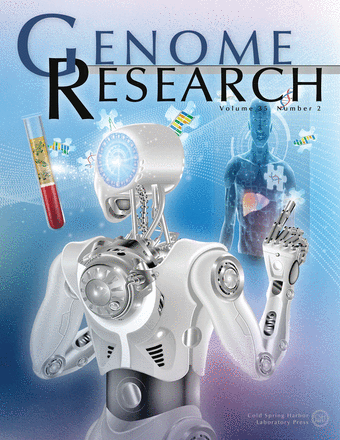
Artificial intelligence (AI) and machine learning (ML), known for their ability to integrate high-dimensional features, have recently been applied to the field of cell-free DNA (cfDNA). Various AI and ML approaches in cfDNA-based diagnostics were recently reviewed. Here, a robot is the embodiment of AI and ML algorithms. The robot inspects blood plasma for puzzle pieces, which symbolize cfDNA fragments. Various cfDNA features, such as size, coverage, CpG methylation, and end motifs, are pictured on the puzzle pieces. The robot's right hand is assembling these puzzle pieces onto a humanoid hologram, on which a site of possible pathology (i.e., the liver) is highlighted, symbolizing the power of AI and ML in leveraging these cfDNA features for diagnostic applications. (Digital cover art by Chingyi Wai from an edited image of a robot and human body [https://www.shutterstock.com] using Adobe Photoshop and Illustrator, based on a concept from Adrian Tsui and Dennis Lo. [For details, see Tsui et al., pp. 1–19.])

