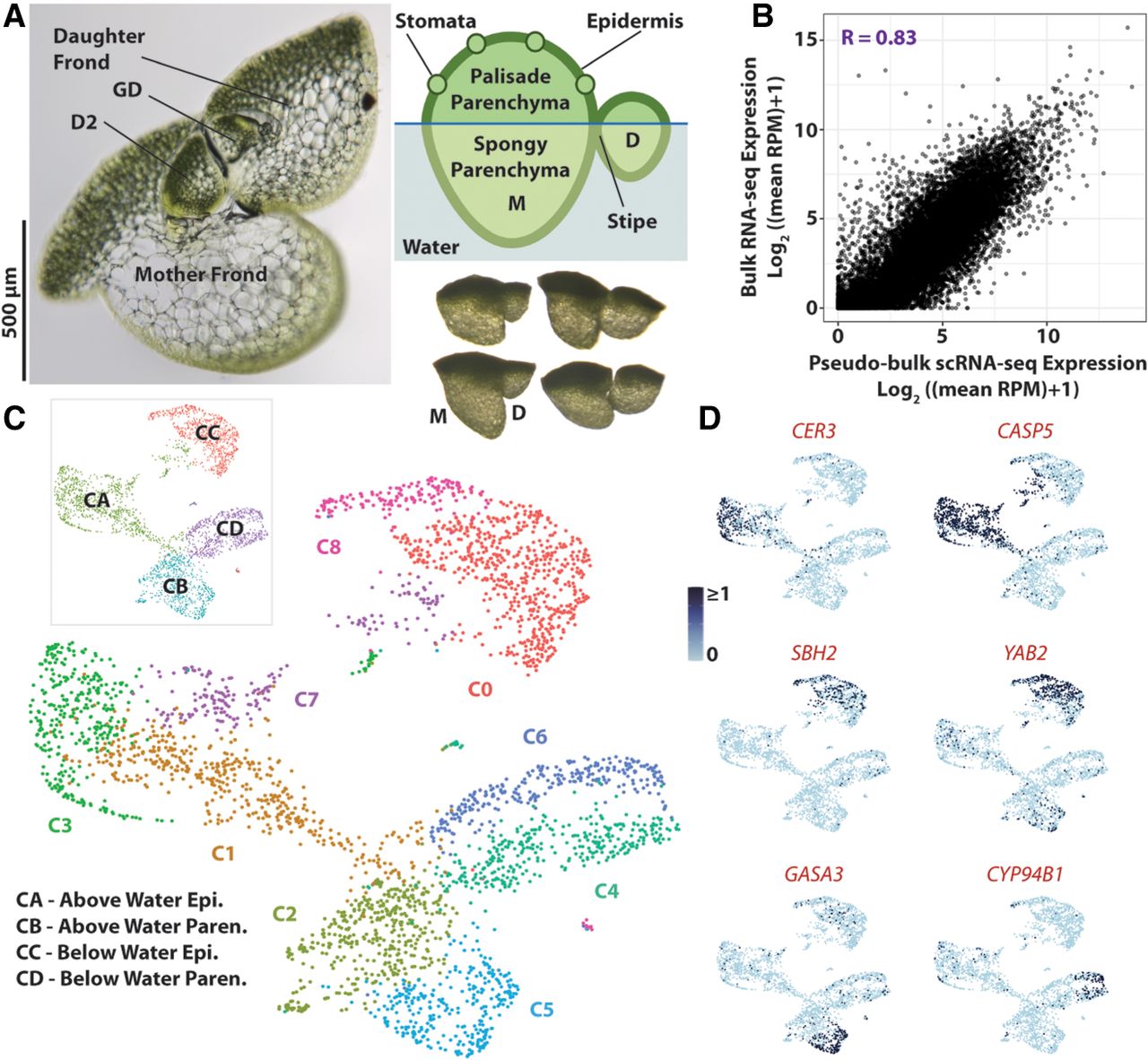
A scRNA-seq atlas of Wolffia australiana cells reveals two core cell types optimized for life in air versus water. (A) W. australiana comprises a mother (M) frond from which successive daughter (D) fronds bud off. Within the plant, a granddaughter (GD) frond is often also seen. A developmental progression of a daughter frond (anticlockwise from top left) is shown on the bottom right. The plant can generally be divided into epidermal and parenchymal cells, with stomata dispersed across the above-water epidermis and the parenchyma divided into photosynthetic palisade parenchyma at the top of the plant and spongy parenchyma in the hull (top right). A conical cavity is seen near the center of the frond below the surface of the water. (B) Pearson correlation analysis shows that gene expression values in merged single-cell and bulk-tissue RNA-seq of whole Wolffia plants are highly correlated. (C) UMAP visualization of the dusk scRNA-seq atlas reveals nine distinct cell clusters, organized around four superclusters (inset) corresponding to above-water epidermis (CA), below-water epidermis (CC), above-water parenchyma (CB), and below-water parenchyma (CD). (D) UMAP projections of normalized expression profiles of select DEGs within the atlas showing cluster and supercluster specificity. Names of Arabidopsis orthologs are given (see Supplemental Data Set S10).