


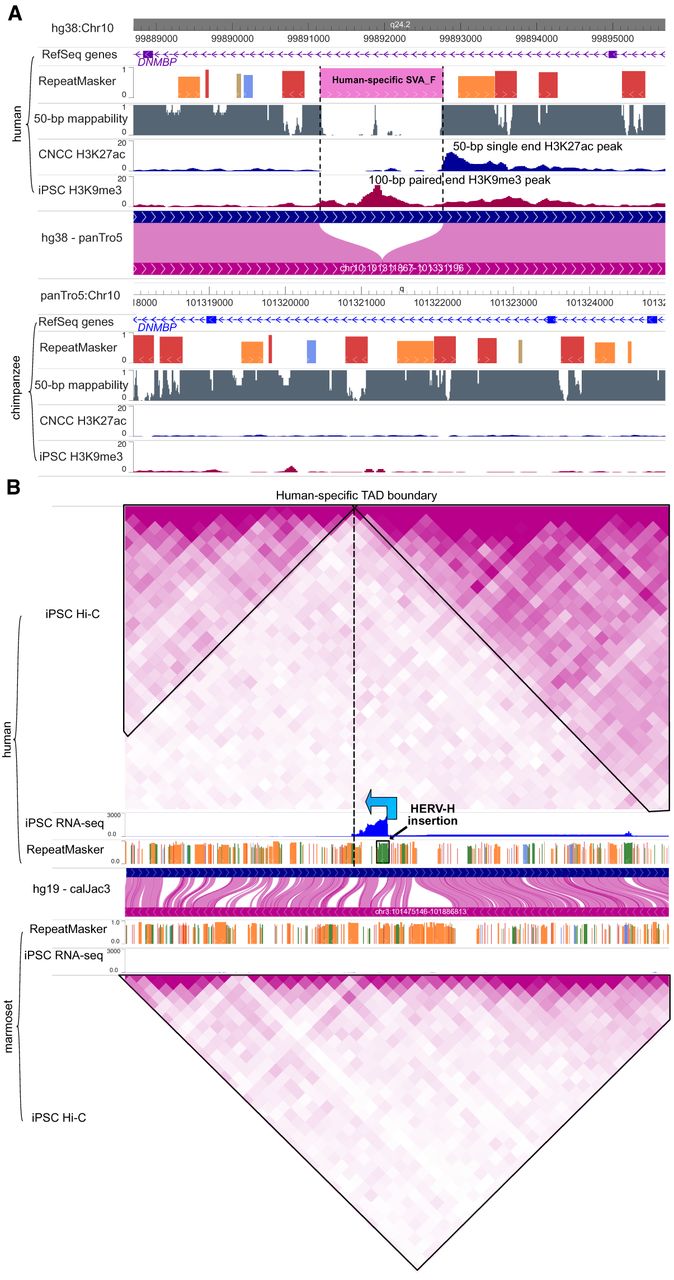
Connecting epigenomic changes with genomic changes using the WashU Comparative Epigenome Browser. (A) RefSeq genes, RepeatMasker, and 50-bp mappability annotations along with H3K27ac ChIP-seq data from cranial neural crest cells (CNCCs) and H3K9me3 ChIP-seq data from iPSCs in both human and chimpanzee were plotted in DNMBP gene region. The H3K9me3 peak in the human-specific SVA insertion indicates epigenomic repression of this element in iPSCs, and the human-specific H3K27ac peak indicates the creation of a putative new CNCC enhancer in the human lineage. (B) Human-specific HERV-H expression is correlated with a new TAD boundary in iPSCs in the human genome compared with the marmoset genome. The iPSC Hi-C contact map, RNA expression, and repeat annotations from human (hg19) and marmoset (calJac3) are compared vertically. HERV-H insertion and expression in the human lineage are associated with a human-specific TAD boundary.



