


Cover image
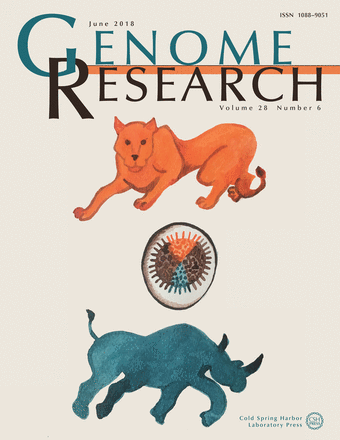
Mammalian genomes are dominated by DNA sequences derived from viruses (i.e., retrotransposons, illustrated as a viral particle replacing the cell's nucleus), some of which are still able to replicate within the genome. In mouse naïve embryonic stem cells, which represent early embryos, both the HUSH complex and TRIM28 are required to epigenetically silence evolutionarily young retrotransposons and genes. If either complex is depleted, young, long interspersed nuclear elements (e.g., L1s, illustrated as a young lion cub), and endogenous retroviruses (illustrated as a rhinoceros), become derepressed. These young retrotransposons produce mRNA and proteins required for their mobility and, once reactivated, can compromise genome integrity and development of the embryo. (Indian ink illustration by Helen Rowe. [For details, see Robbez-Masson et al., pp. 836–845.])

