


Cover image
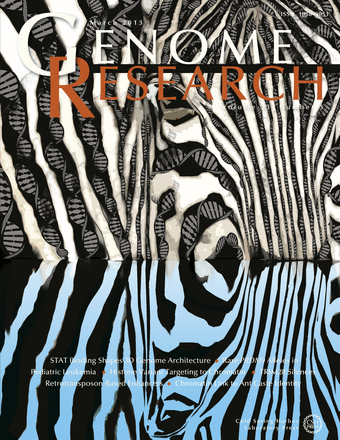
Cover The spatial organization of genes and genomic elements within the nuclear space is important for the maintenance of cell identity. In this issue, the ″hidden″ organization of key genes within distinct types of T lymphocytes, represented by the Zebra stripes, is characterized as cell-type specific and changes as cells differentiate. Nuclear architecture of the committed cells is established by selecting genomic contacts from the promiscuous contact repertoire found in multipotent progenitors. (Cover illustration by Ruth di Segni Hakim. [For details, see Hakim et al., pp. 462–472.])

