


Cover image
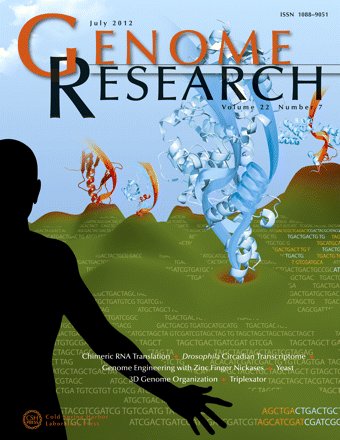
Cover An artist's representation of the “gene expression landscape” that is identified by high throughput RNA sequencing (RNA-seq), including chimeric RNAs (represented by two-tone sequence fragments). The shape of the landscape represents different levels of gene expression. In this issue, chimeric RNAs identified by RNA-seq are significantly more tissue-specific than non-chimeric transcripts, and, although they often incorporate highly expressed parental genes, most chimeric RNAs are weakly expressed. Novel chimeric proteins are detected in multiple shotgun mass spectrometry experiments (represented by the red and blue volcanic eruptions, while their normal protein counterparts are represented by either red or blue eruptions). Functional annotation suggests that chimeras incorporate transmembrane domains and signal peptides, altering the cellular localization of these proteins. (Cover illustration by Bureau Design Studio and Multi-Player Laboratory Ltd. [For details, see Frenkel-Morgenstern et al., pp. 1231–1242.])

