


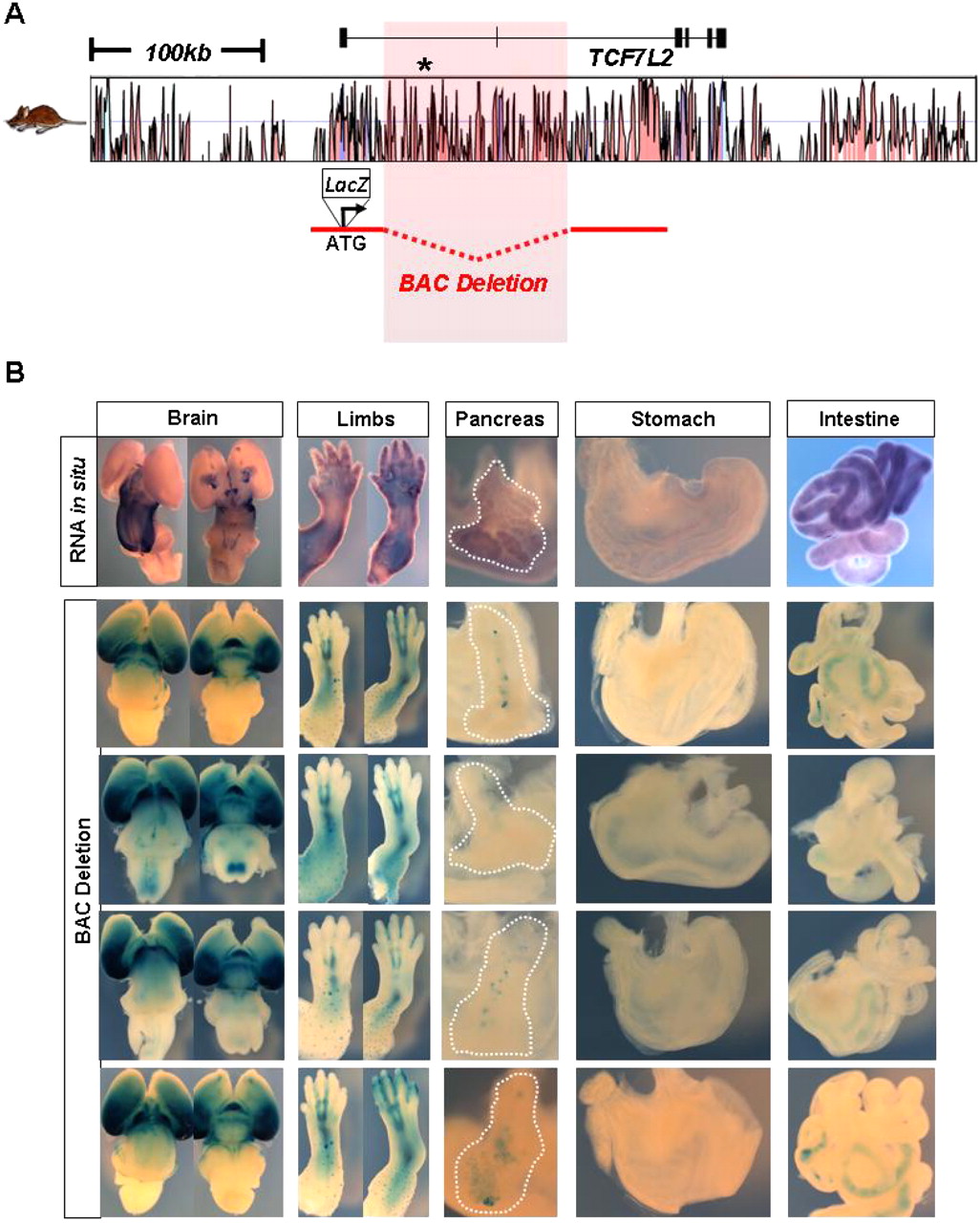
Regulatory importance of T2D-associated interval. (A) The location of enhancer-trapping human BAC RP11-466I19 containing a deletion of the association interval (BAC Deletion) at the TCF7L2 locus. Noncoding sequence conservation between human and mouse is displayed as red peaks (VISTA genome browser). The type 2 diabetes (T2D)–associated interval is highlighted in red. A black asterisk marks the location of SNP rs7903146. (B) The endogenous expression of Tcf7l2 is shown in the top row. Four independent transgenic lines of mice harboring the enhancer-trapped BAC Deletion are shown below. Images of brain (dorsal and ventral views), limb (fore- and hindlimbs), pancreas (outlined with dotted white line), stomach, and intestine at E15.5 are shown (left to right). Deletion of T2D-associated interval results in a complete ablation of enhancer activity in the pyloric stomach along with a reduction of enhancer activity in both fore- and hindlimbs, pancreas, and intestine in all four transgenic lines.



