


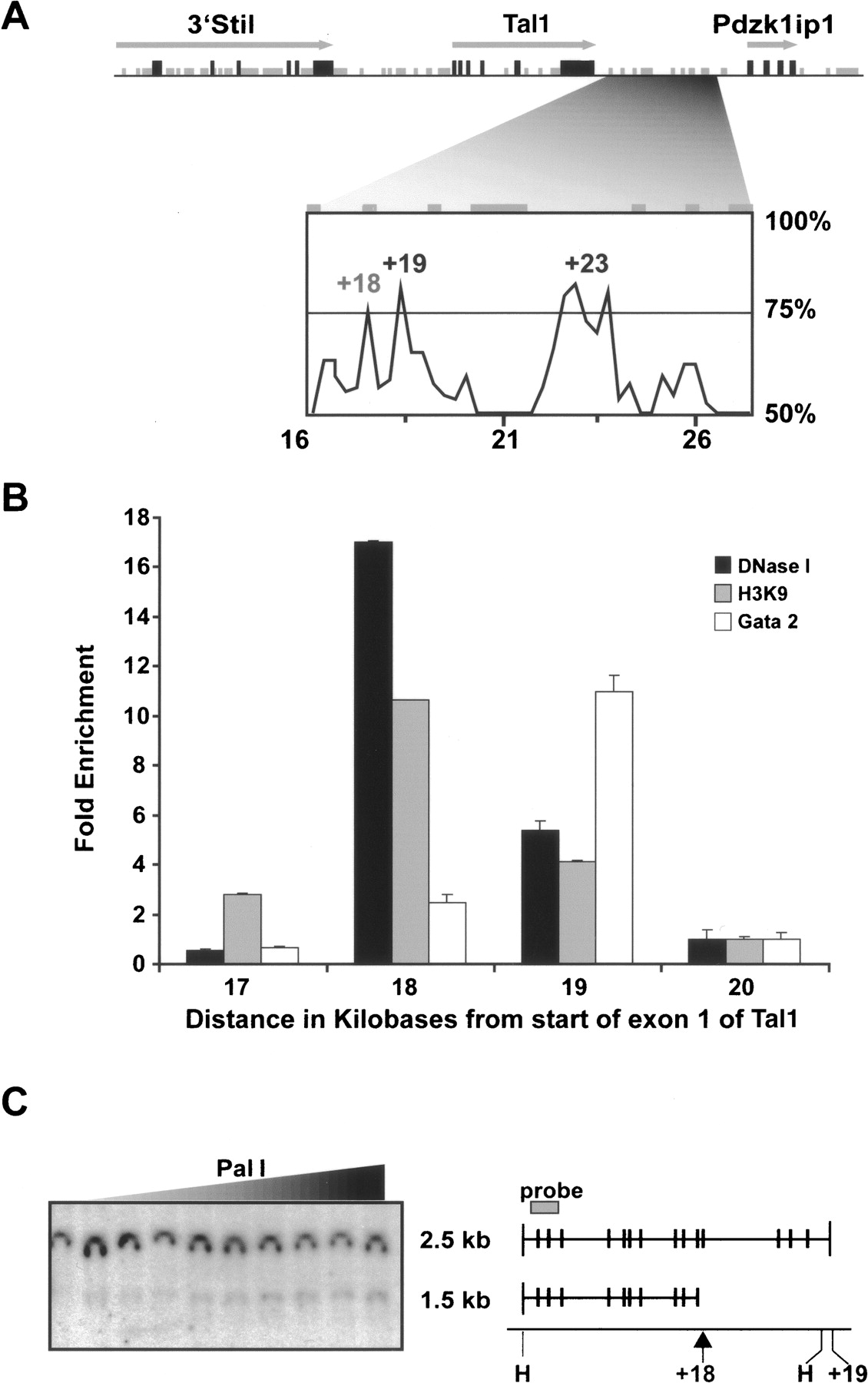
Identification of the + 18 region as a region of open chromatin. (A) Sequence homology plot between mouse and human highlighting the +19 and +23 elements with known regulatory functions and the conserved peak at +18. Numbering corresponds to distances in kilobases from the start of exon 1a with the exons shown as black boxes and the repeat regions marked in gray. (B) Chromatin status and transcription factor occupancy in the Tal1 3′ flanking region. DNase I/ChIP assays were performed in the 416B cell line with either DNase I (black bars), AcK9 (gray bars), or GATA2 (white bars) and analyzed by real-time PCR using primers across a 4-kb segment of the Tal1 locus from +17 to +20. The levels of enrichment were normalized to untreated DNase I control or to IgG and plotted as fold increase over the +20 control region. (C) Restriction endonuclease accessibility assay showing the mapping of the +18 hypersensitive site (arrowhead). Nuclei were incubated with increasing concentrations of PalI and the extracted DNA digested with HindIII. Southern blot analysis was performed with the indicated probe.


