


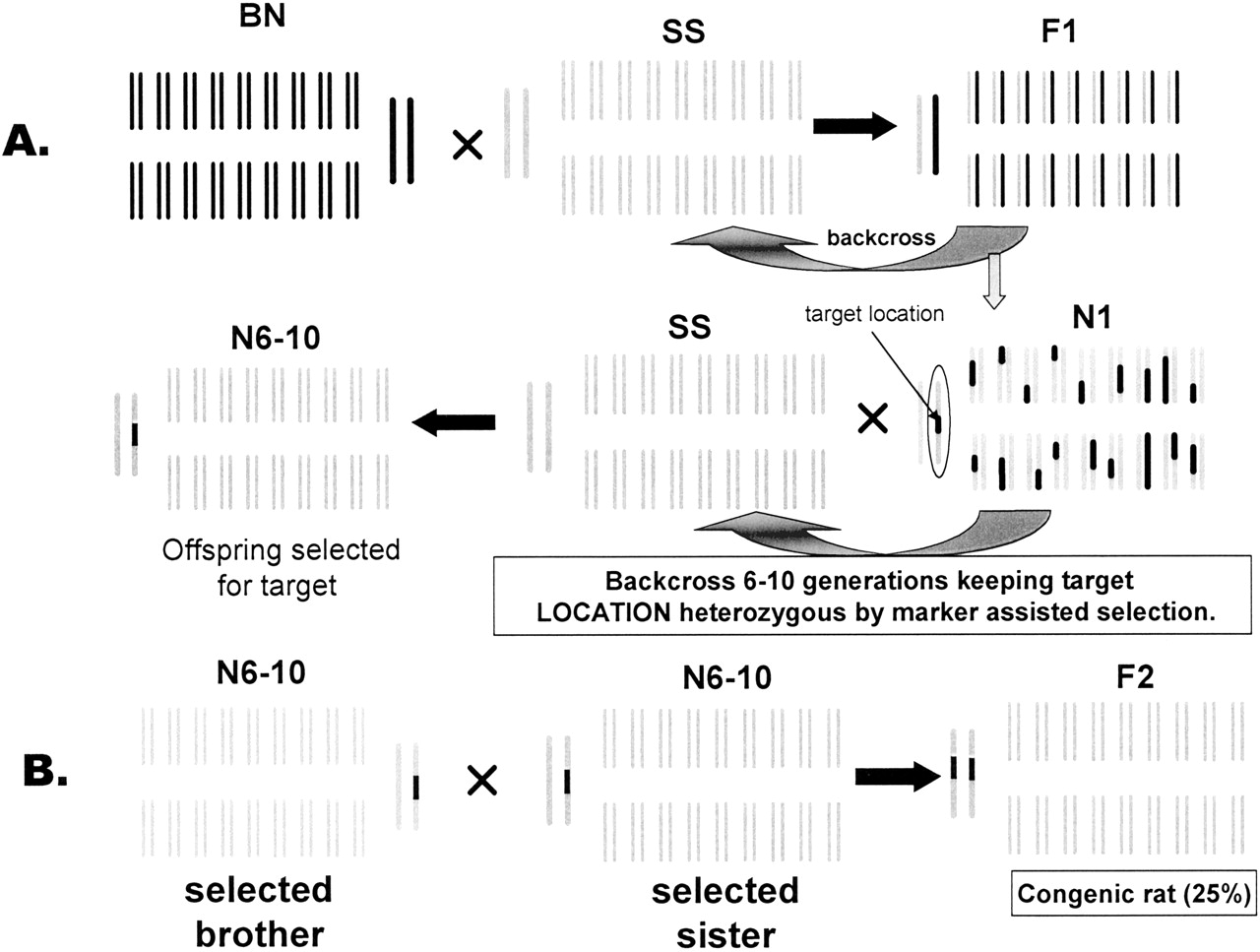
Schematic representation of the generation of a congenic strain from two genetically different rat strains. (A) Parental strains Brown Norway (BN) and Dahl salt-sensitive (SS) are intercrossed for the generation of a heterozygous F1 population. The F1 is then crossed with the parental background of interest (in this example, the SS) to generate an N2 population. The N2 rats are then backcrossed six to 10 generations using marker-assisted selection of the offspring, in order to substitute a selected genomic region from the BN rat. (B) A male and female rat, selected by genotyping for this specific target region containing the phenotype of interest, are then mated. Twenty-five percent of the offspring from this cross will be homozygous for this region. These rats are then inbred to produce a stable inbred congenic strain. Reprinted with permission from Blackwell Publishing © 2004, from Cowley Jr. et al. (2004).



