


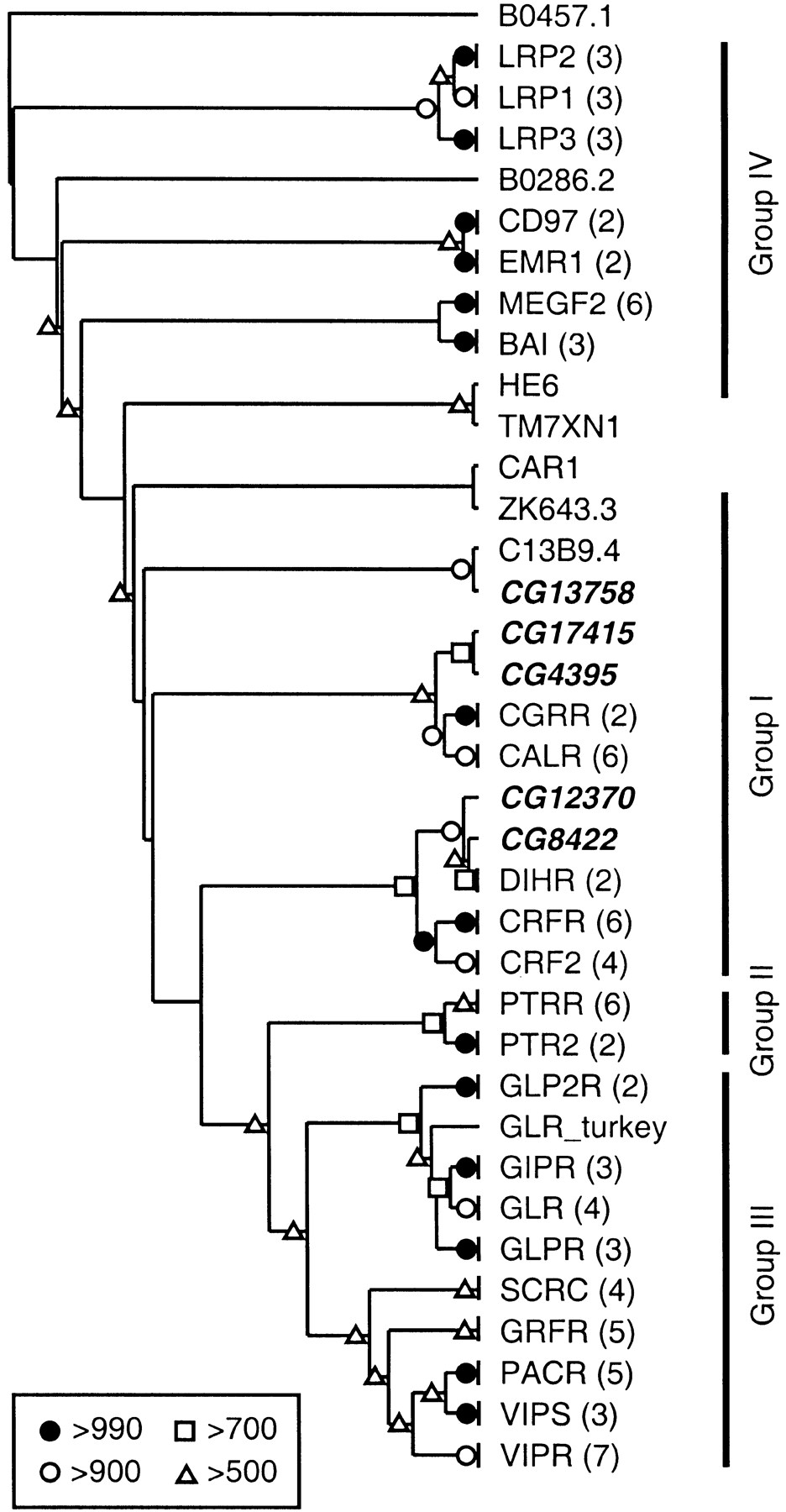
Unrooted neighbor-joining tree for the Family B receptors. The location of the tree midpoint is ambiguous and is therefore not indicated. Bootstrap scores, omitted branches, and Drosophila GPCRs are indicated as in Fig. 1. The four groups of Family B receptors are indicated with vertical bars. (BAI) brain-specific angiogenesis inhibitors 1–3; (CALR) calcitonin receptor; (CAR1) cyclic AMP receptor 1; (CD97) leucocyte antigen CD97; (CGRR) calcitonin gene-related peptide type 1 receptor; (CRF2) corticotropin releasing factor (CRF) receptor 2; (CRFR) CRF receptor 1; (DIHR) diuretic hormone receptor; (EMR1) cell surface glycoprotein EMR1; (GIPR) gastric inhibitory polypeptide receptor; (GLP2R) glucagon-like peptide 2 receptor; (GLPR) glucagon-like peptide 1 receptor; (GLR) glucagon receptor; (GRFR) growth hormone releasing hormone receptor; (HE6) G protein-coupled receptor HE6; (LRP1–3) calcium-independent alpha-latrotoxin receptors (latrophilins) 1–3; (MEGF2) seven-pass transmembrane proteins CELSR1–2 and MEGF2; (PACR) pituitary adenylate cyclase activating polypeptide (PACAP) type I receptor; (PTR2) parathyroid hormone receptor; (PTRR) parathyroid hormone/parathyroid hormone-related peptide receptor; (SCRC) secretin receptor; (TM7XM1) human EGF-TM7 like protein; (VIPR) vasoactive intestinal polypeptide (VIP) receptor 1; (VIPS) VIP receptor 2. The remaining non-Drosophila sequences are orphan GPCRs from Caenorhaloditis elegans.



