


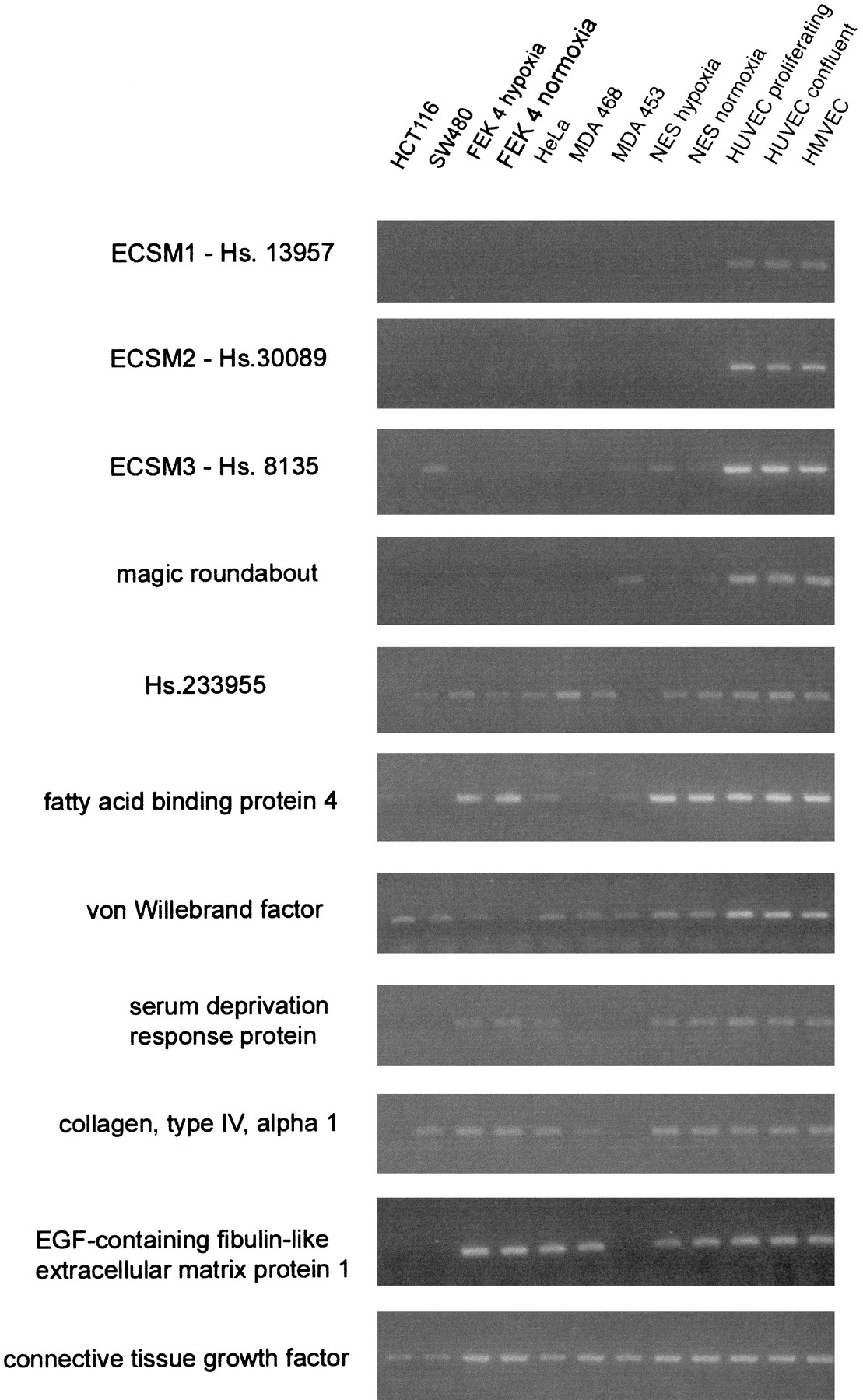
Experimental verification by reverse transcription polymerase chain reaction (RT-PCR). Candidate endothelial-specific genes predicted by the combination of the UniGene/EST screen and xProfilerserial analysis of gene expression (SAGE) differential analysis (Table8) were checked for expression in three endothelial and nine nonendothelial cell cultures. Endothelial cultures were as follows: HMVEC (human microvascular endothelial cells), HUVEC (human umbilical vein endothelial cells) confluent culture, and HUVEC proliferating culture. Nonendothelial cultures were as follows: normal endometrial stromal (NES) cells grown in normoxia and NES grown in hypoxia, MDA 453 and MDA 468 breast carcinoma cell lines, HeLa, FEK4 fibroblasts cultured in normoxia and FEK4 fibroblasts cultured in hypoxia, SW480, and HCT116, the last two being colorectal epithelium cell lines.ECSM1 and ECSM2 showed complete endothelial specificity, whereas ECSM3 and magic roundabout were very strongly preferentially expressed in the endothelium. Interestingly, all these novel genes appear more specific than the benchmark endothelial-specific gene, von Willebrand factor.


