

Research
Polycomb misregulation in enterocytes drives tissue decline in the aging Drosophila intestine
- First Published November 17, 2025
Research
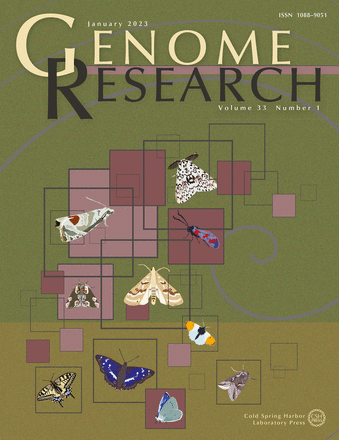
Active enhancers strengthen insulation by RNA-mediated CTCF binding at chromatin domain boundaries
- First Published January 17, 2023



Research
CENPT bridges adjacent CENPA nucleosomes on young human α-satellite dimers
- First Published July 6, 2016

Method
An extended set of yeast-based functional assays accurately identifies human disease mutations
- First Published March 14, 2016
Research
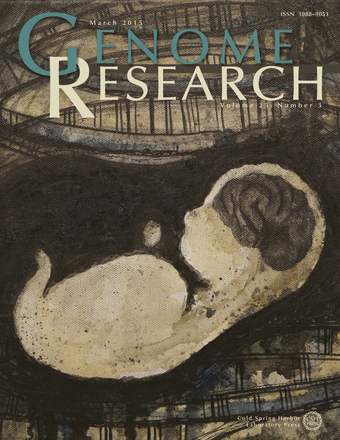
Asymmetric nucleosomes flank promoters in the budding yeast genome
- First Published December 9, 2014

Research
High-resolution mapping defines the cooperative architecture of Polycomb response elements
- First Published March 25, 2014

Method
Cell-type-specific nuclei purification from whole animals for genome-wide expression and chromatin profiling
- First Published January 4, 2012

Research
Changes in H2A.Z occupancy and DNA methylation during B-cell lymphomagenesis
- First Published August 13, 2010

Resource
Large-scale RACE approach for proactive experimental definition of C. elegans ORFeome
- First Published October 2, 2009

Resource
Analysis of the human E2 ubiquitin conjugating enzyme protein interaction network
- First Published June 23, 2009

Methods
Shifted Transversal Design smart-pooling for high coverage interactome mapping
- First Published May 15, 2009

Methods
Genome-wide profiling of salt fractions maps physical properties of chromatin
- First Published December 16, 2008


RESOURCE
Closing in on the C. elegans ORFeome by cloning TWINSCAN predictions
- First Published April 1, 2005
LETTER
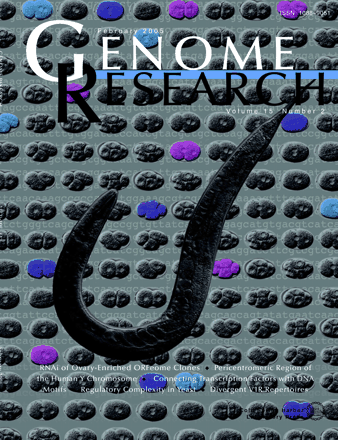
New genes with roles in the C. elegans embryo revealed using RNAi of ovary-enriched ORFeome clones
- First Published February 1, 2005

PERSPECTIVE
ORFeome Cloning and Systems Biology: Standardized Mass Production of the Parts From the Parts-List
- First Published October 15, 2004
Insight/Outlook
Academia-Industry Collaboration: An Integral Element for Building “Omic” Resources
- First Published October 15, 2004
LETTER
C. elegans ORFeome Version 3.1: Increasing the Coverage of ORFeome Resources With Improved Gene Predictions
- First Published October 15, 2004
RESOURCE
Human ORFeome Version 1.1: A Platform for Reverse Proteomics
- First Published October 15, 2004
Methods
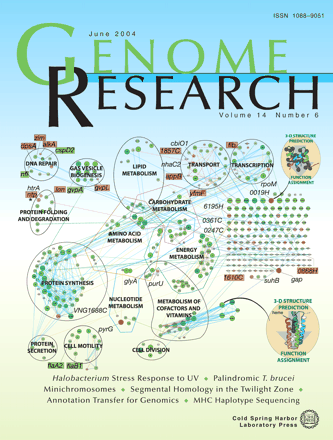
Annotation Transfer Between Genomes: Protein–Protein Interologs and Protein–DNA Regulogs
- First Published June 1, 2004

RESOURCE
Large-Scale Discovery of Induced Point Mutations With High-Throughput TILLING
- First Published March 1, 2003

METHODS
Identification of Potential Interaction Networks Using Sequence-Based Searches for Conserved Protein-Protein Interactions or “Interologs”
- First Published December 1, 2001

METHODS
Drosophila Genomic Sequence Annotation Using the BLOCKS+ Database
- First Published April 1, 2000
METHODS
A Genetic Strategy to Eliminate Self-Activator Baits Prior to High-Throughput Yeast Two-Hybrid Screens
- First Published November 1, 1999