


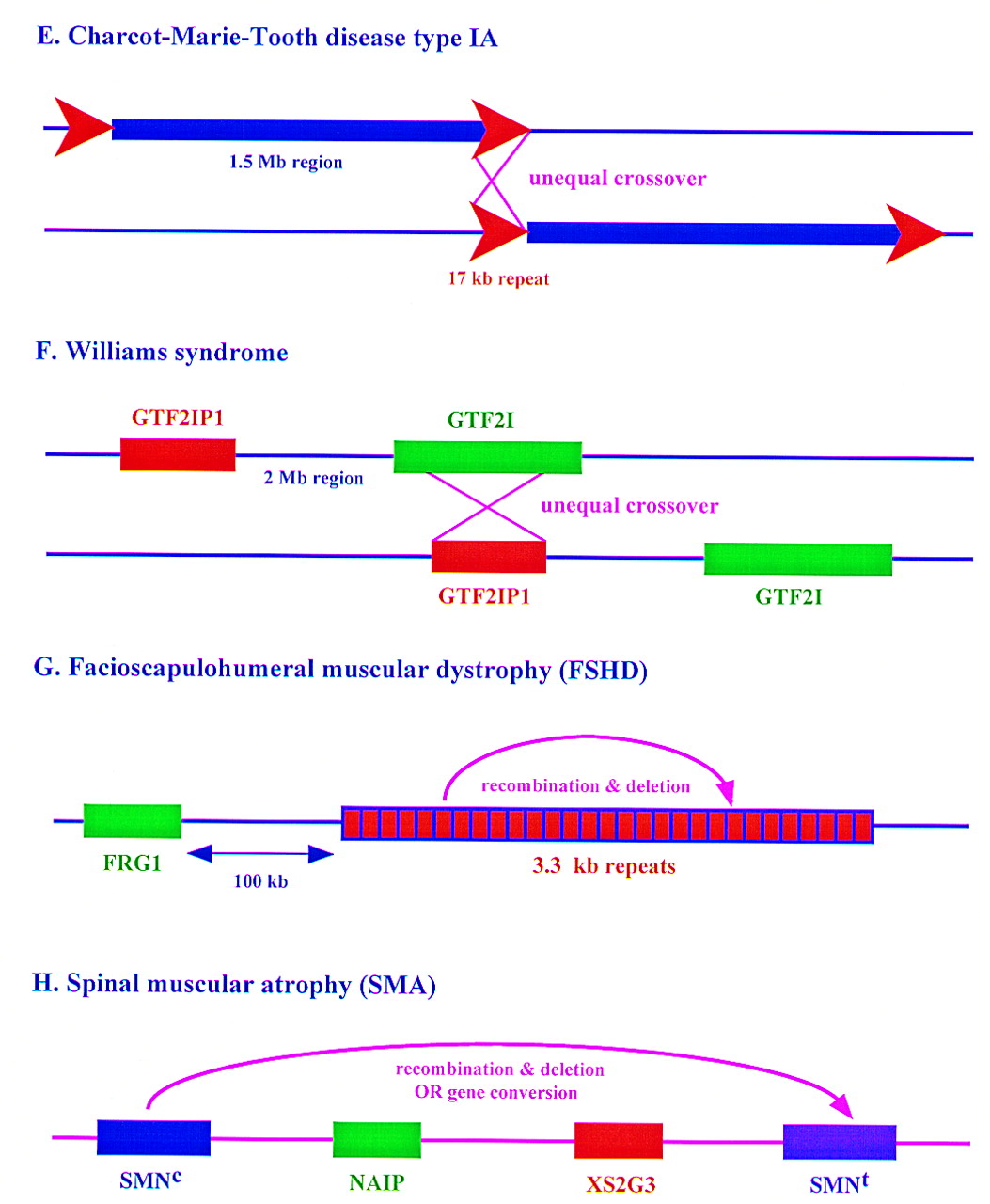
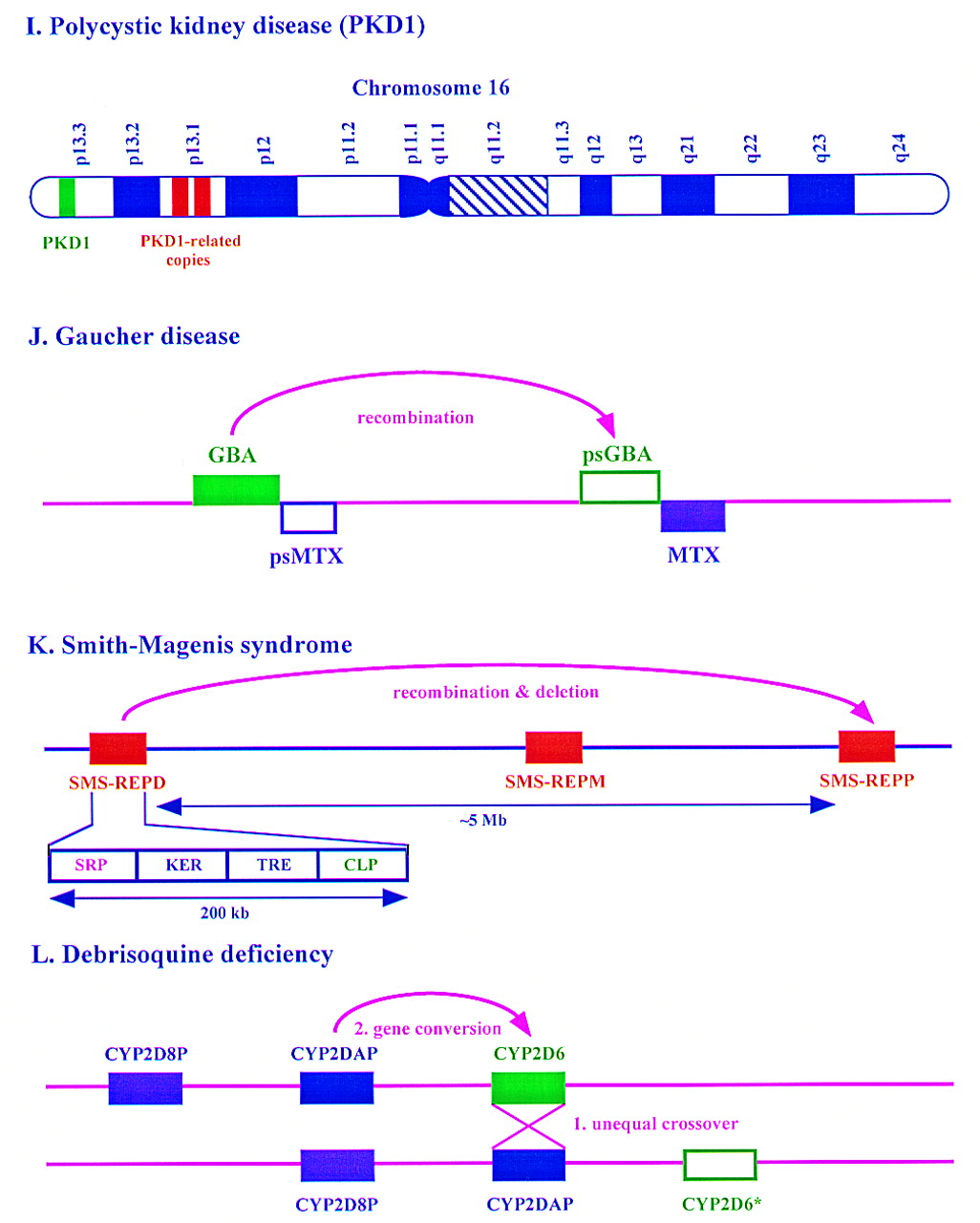
Figure 3.
Probable recombination mechanisms between duplicated sequences in well-characterized autosomal diseases. These recombinations resultin in (A) α-thalassemia; (B) β-thalessemia; (C) 21-hydroxylase deficiency; (D) glucocorticoid-remediable aldosteronism; (E) Charcot-Marie-tooth disease type IA; (F) Williams syndrome; (G) facioscapulohumeral muscular dystrophy; (H) spinal muscular atrophy; (J) Gaucher disease; (K) Smith-Magenis syndrome, and (L) debrisoquine deficiency. Also shown is the physical relationship of duplicated sequences homologous to the polycystic kidney disease region (I).


