


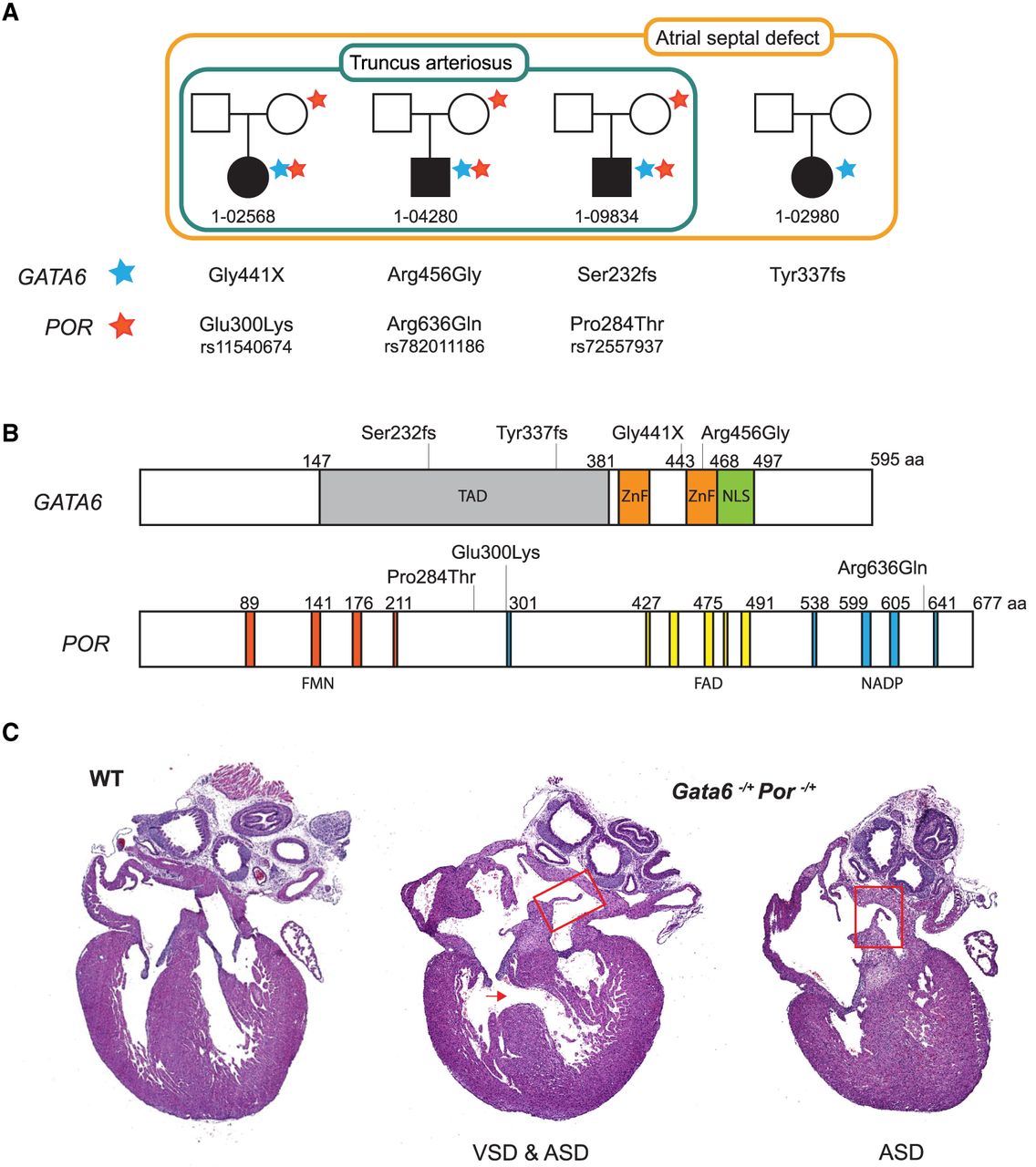
Evidence of a genetic interaction between GATA6 and POR in CHD. (A) Trio pedigrees for probands with de novo GATA6 mutation. All four probands had atrial septal defects (ASDs; larger box), whereas only three patients also had the more severe truncus arteriosus (TA) phenotype (smaller box), all of whom carry a predicted-damaging inherited mutation in POR. Amino acid changes to GATA6 and POR are shown for each proband below. (B) Expected consequence of damaging variants in GATA6 and POR protein structures. Functional domains of proteins are annotated and color-coded. (TAD) Transactivation domain, (ZnF) zinc finger domain, (NLS) nuclear localization signal, (FMN) flavin mononucleotide (FMN) binding domain, (FAD) flavin adenine dinucleotide (FAD) binding domain, (NADP) nicotinamide adenine dinucleotide phosphate (NADP) binding domain. (C) Representative histological images are shown. Gata6−/+; Por−/+ compound heterozygous mice exhibit ventricular septal defects (VSDs) and/or ASDs.



