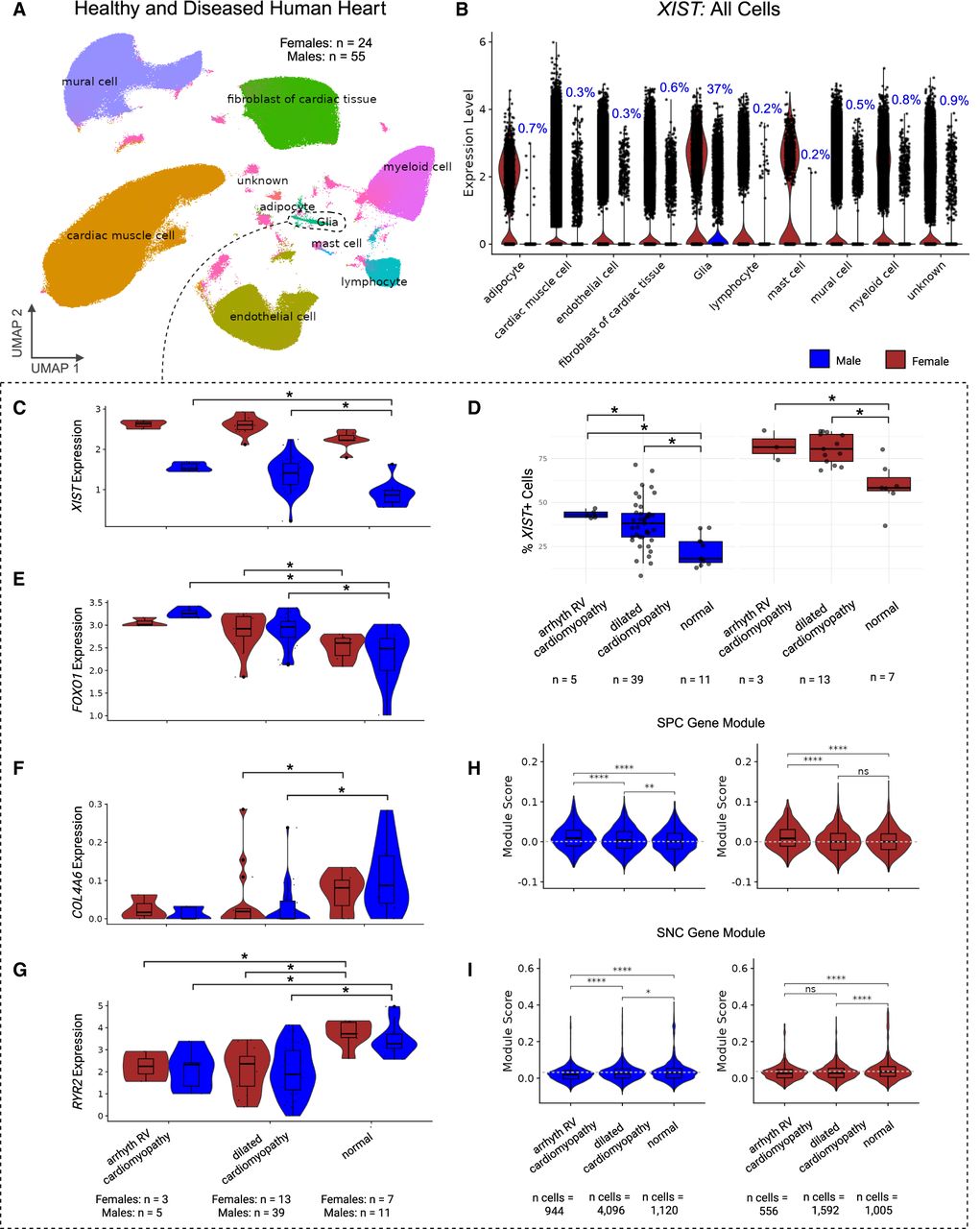
XIST expression in arrhythmogenic and dilated cardiomyopathy. (A) UMAP of 881,081 heart nuclei from snRNA-seq data performed on 61 heart failure patients and 18 healthy controls (Reichart et al. 2022). Cells originally labeled “neural” were renamed to “glia” based on expression of glial markers (Supplemental Fig. S14). (B) Normalized XIST expression across all nuclei, grouped by cell type and split by sex. For males, the percentages of cells expressing XIST are shown at the top. (C–I) Cells were subset by glia cell–type annotation and grouped based on arrhythmogenic (arrhyth) RV cardiomyopathy, dilated cardiomyopathy, and normal (healthy) annotations and sex. Normalized XIST (C), FOXO1 (E), COL4A6 (F), and RYR2 (G) expression after pseudobulking glial cells by donor. (D) The percentage of glial cells that express XIST for each sample by disease group and sex. (H,I) Module scoring was performed on SPC (E) and SNC (I) genes from Figure 4. Asterisks indicate a significant difference using Fisher's exact test (D) or DESeq2 negative binomial test (C,E–I).