


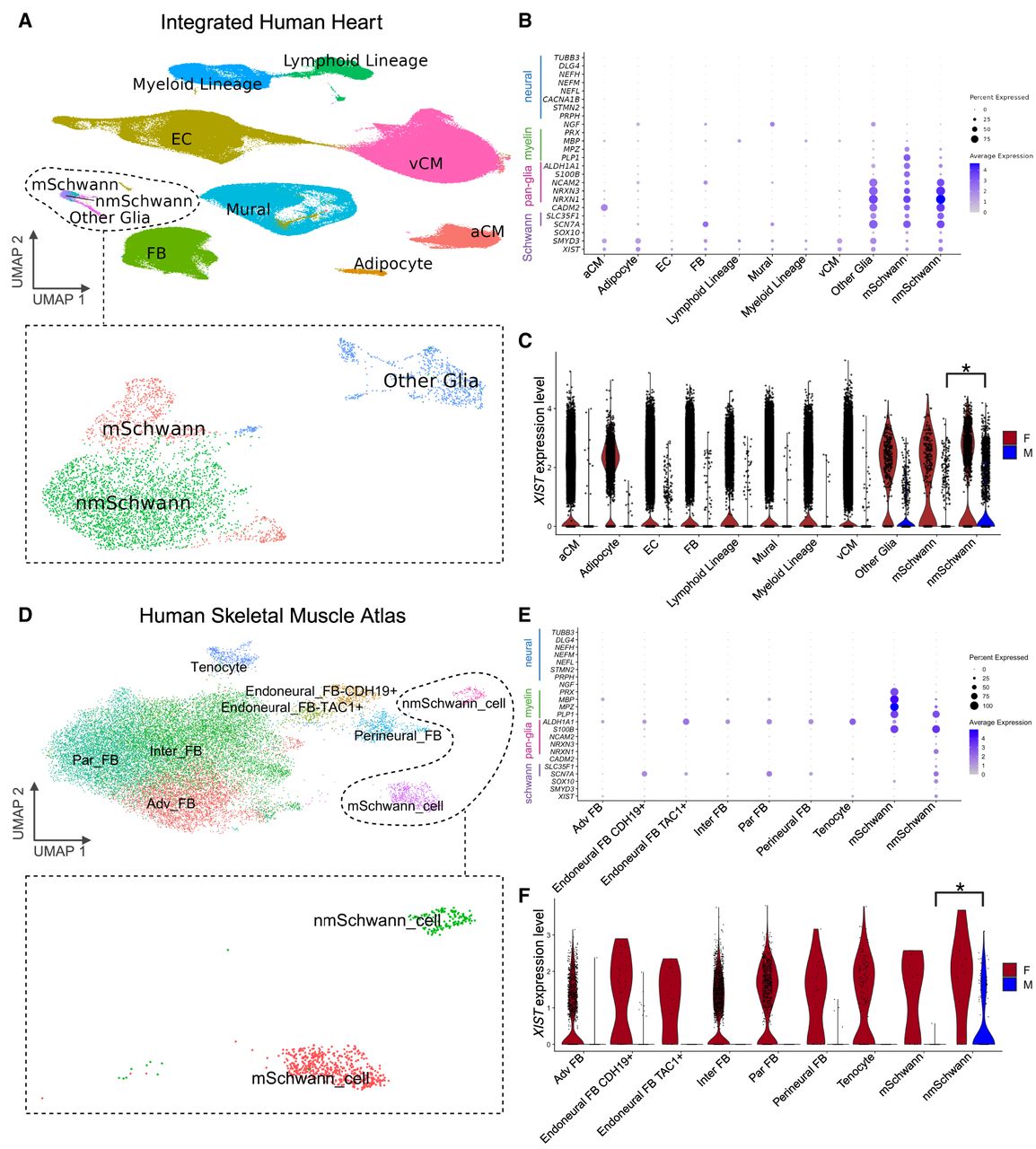
High XIST expression in nonmyelinating Schwann cells from male human heart and skeletal muscle tissue. (A) Clusters of 510,171 human heart cells from 11 male and nine female individuals. Cells within the dashed box are glia, which are colored by subtypes. (EC) Endothelial cells, (FB) fibroblasts, (aCM) atrial cardiomyocytes, (vCM) ventricular cardiomyocytes, (mSchwann) myelinating Schwann, (nmSchwann) nonmyelinating Schwann. (B,E) A variety of positive and negative markers used to identify male and female myelinating and nonmyelinating Schwann cells. (C,F) Seurat-normalized XIST expression across all cells, grouped by cell types and split by sexes. The asterisk represents a significant difference in expression between male nonmyelinating (nm) and myelinating (m) Schwann cells. (D) Clusters of 20,611 skeletal muscle fibroblast and neural cells from eight male and four female individuals, colored by cell annotations provided by the original authors.



