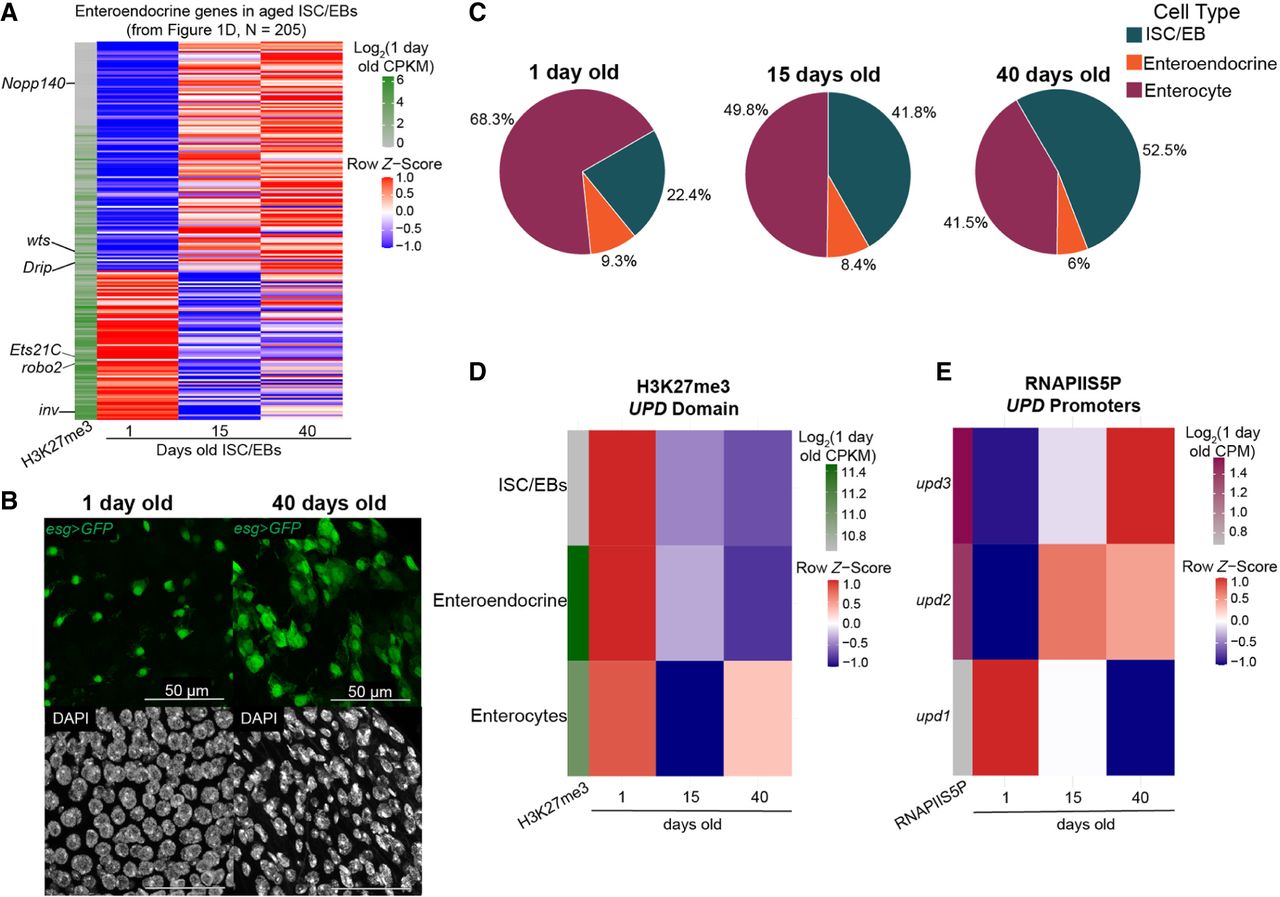
Stem cells display overproliferation and derepression of lineage-specifying genes and JAK/STAT ligands. (A) Row z-score-normalized heatmap of H3K27me3 counts of ISC/EBs for enteroendocrine genes defined in Figure 1D. The first column is the log2-transformed CPKM for 1-day-old tissue for each gene. (B) Immunofluorescence image of the gut in a young (1-day-old) and old (40-day-old) esgGal4/CyO; UAS-GFP/TM6B female. GFP (green) marks stem cells and EBs; gray, DAPI. (C) Pie charts of the proportion of each cell type per age. Significance was assessed by Monte Carlo permutation test (10,000 permutations). Observed enrichment was greater than expected by chance (P < 0.0001). (D) Row z-score-normalized heatmap of H3K27me3 counts over the unpaired domain, which encompasses three genes encoding JAK/STAT ligands. The first column is the log2-transformed counts for 1-day-old tissue for each promoter. ISC/EBs have the lowest H3K27me3 level of the three cell types in 1-day-old tissue and lose H3K27me3 signal with age, indicating derepression. Row z-scoring is used to present directionality of the change in signal with age. (E) Row z-score-normalized heatmap of RNAPIIS5P counts over promoters of the upd1, upd2, and upd3 genes. The first column is the log2-transformed counts for 1-day-old tissue for each promoter. upd2 and upd3 gain RNAPIIS5P signal in aged tissues, which is consistent with previous reports of these ligands. Row z-scoring is used to present directionality of the change in signal with age.