


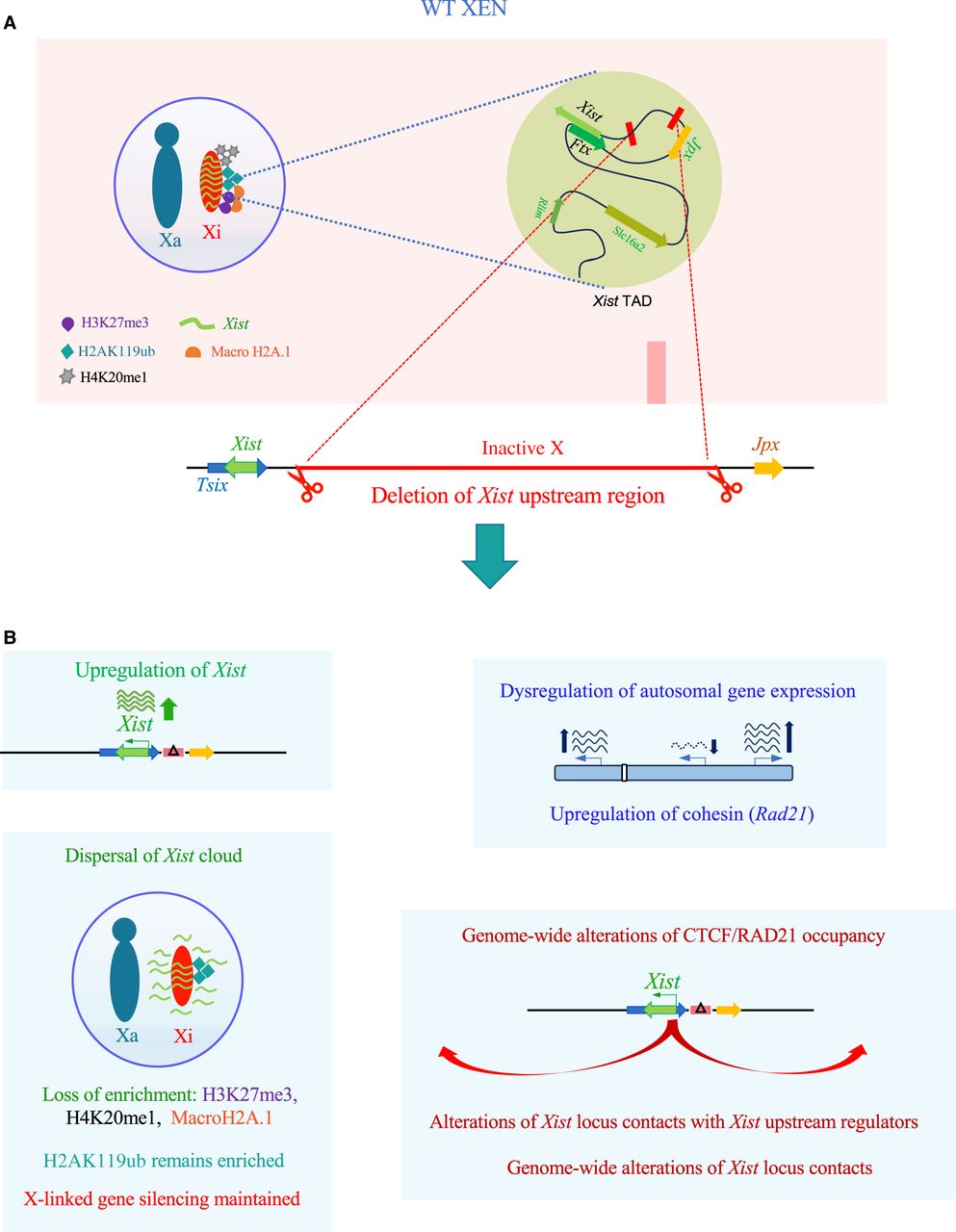
Deletion of Xist upstream sequence leads to diverse outcomes. (A) Model representing inactive X in XEN cells coated with Xist along with different repressive chromatin marks: H3K27me3, H2AK119ub, H4K20me1, and MacroH2A.1. Right side schematic showing the topological contacts of Xist with its upstream regulator. (B) Model showing that Xist upstream deletion on the inactive X leads to diverse outcomes such as (1) upregulation of Xist, (2) dispersal of Xist coating, loss of enrichment of repressive chromatin marks: H3K27me3, H4K20me1, and MacroH2A.1, (3) dysregulation of autosomal gene expression including upregulation of cohesin (Rad21), (4) genome-wide alterations of CTCF/RAD21 occupancy, (5) alterations of Xist locus contacts with Xist upstream regulators, and (6) genome-wide alterations of Xist locus contacts.



