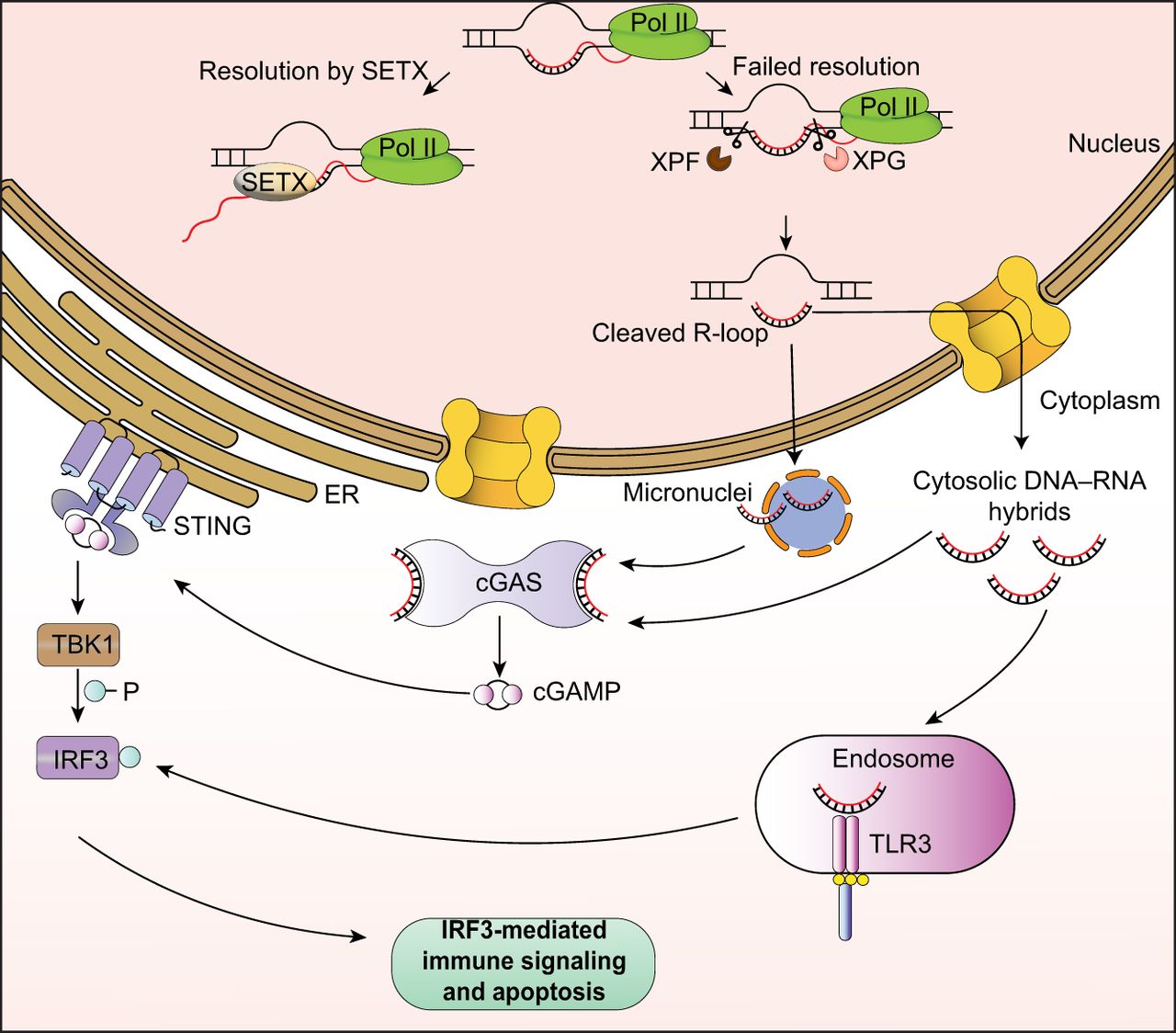
Figure 3.
Mechanisms of R-loop-mediated inflammatory immune responses. Genomic R-loops that cannot be resolved by helicases such as senataxin may be cleaved by XPG and XPF endonucleases. Cleaved DNA–RNA hybrids can be exported into the cytoplasm or form micronuclei. Cytosolic hybrids or hybrids released from ruptured micronuclei can bind to cGAS or TLR3 receptors in the cytosol or endolysosome, respectively. Activation of cGAS triggers innate immune signaling and apoptosis through the cGAS/STING/TBK1/IRF3 axis.