


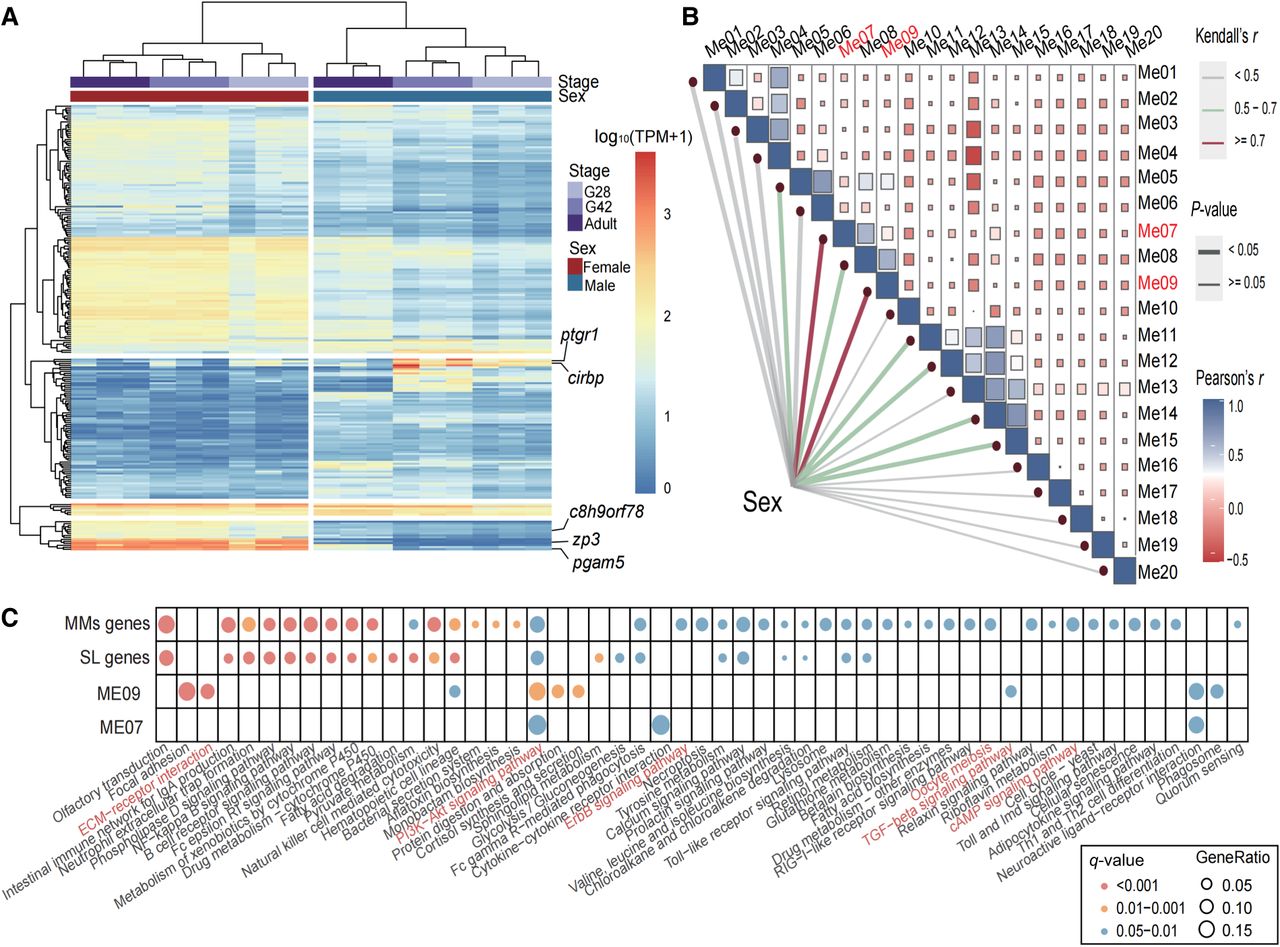
Candidate genes and pathways correlated with sex development and differentiation in L. boringii. (A) Heatmap and the hierarchical clustering of SL gene expression from gonad tissues in three late development stages (G28, G42, Adult). Five candidate genes (zp3, pgam5, c8h9orf78, ptgr1, and cirbp) exhibiting high sex-specific expression across multiple periods are labeled in the heatmap. (B) Two key modules are highly correlated with sex (Kendall's r > 0.7, P < 0.05). Rows and columns correspond to modules, and each cell represents the corresponding correlation (Pearson's r) of module to module. The color and thickness of the lines represent the correlation (Kendall's r) and significance (P-value) between sex and modules. (C) KEGG functional enrichment of genes with genetic differences (MM genes and SL genes) and expression differences (Me07 and Me09 modules).



