


Cover image
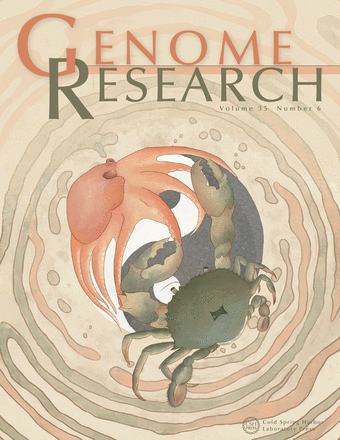
The image illustrates the intricate relationship between master regulator TP53 (octopus), with its “hands” in many different pathways, and cancer (crab), in the context of transposable elements (TEs), as they practice tai chi on a yin-yang background. In this issue, short- and long-read RNA sequencing is used to characterize the TE transcriptomic landscape (full length transcripts are represented by the long ripples) and detect TE loci with TP53-activated promoter activity in cancer cell lines. Thus, although traditionally TP53 is a tumor suppressor, TE-derived promoters may offer cancer cells an escape from classic p53 pathways. (Cover art is illustrated by hand on iPad by Qinglin Zeng, Washington University School of Medicine, St. Louis, MO. Ideas were generated collectively by Xuan Qu, Qinglin Zeng, Yonghao Liang, and Ting Wang. [For details, see Qu et al., pp. 1456–1471.])

