


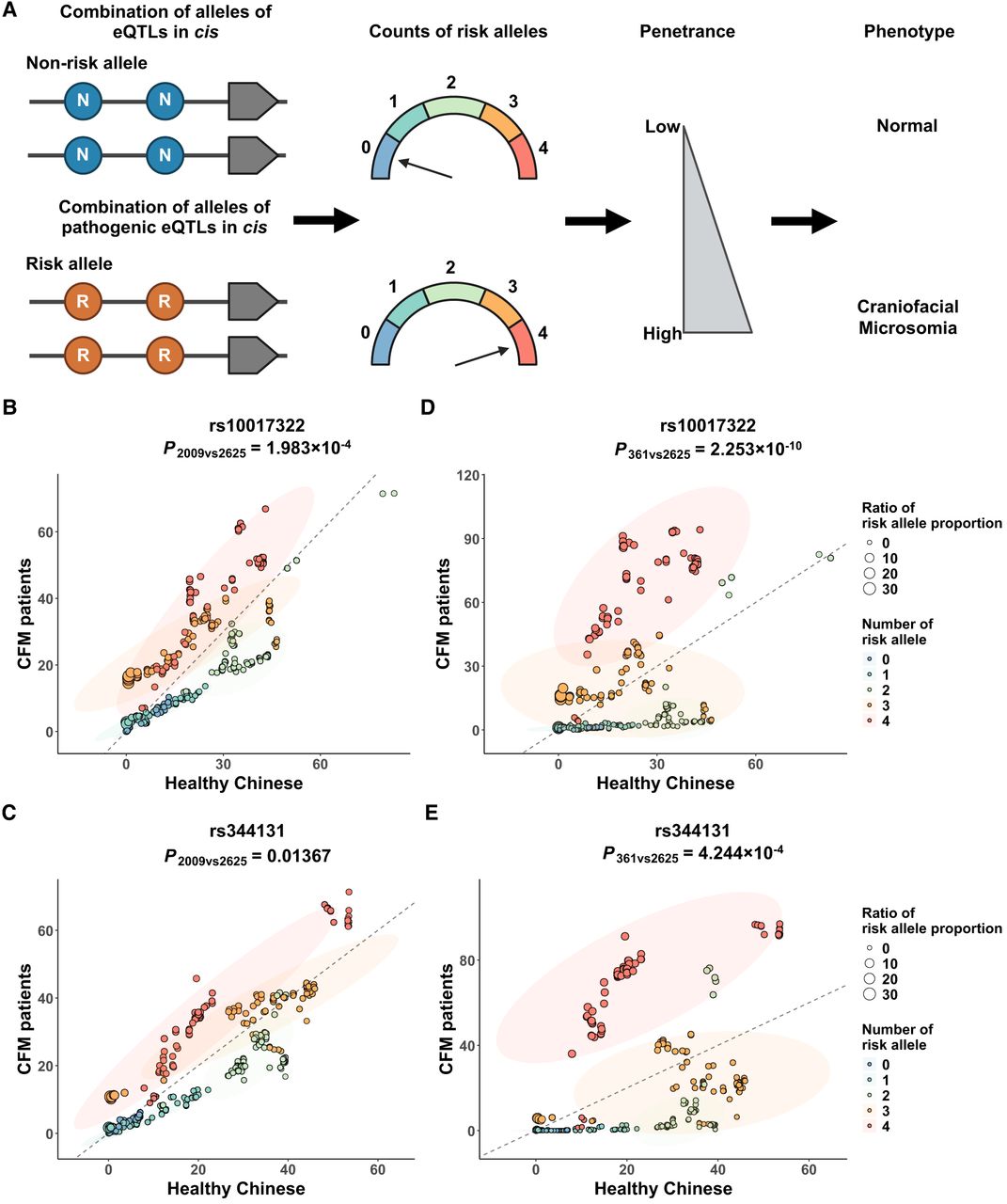
Patterns of haplotype combinations involving putatively pathogenic eQTLs. (A) Conceptual diagram hypothesizing that the combination of risk alleles from SHROOM3 eQTLs correlates with the CFM phenotype. The greater the number of risk alleles carried, the higher the likelihood of being a CFM patient. (B,C) Risk allele combinations involving the putatively pathogenic eQTL rs10017322/rs344131 and other SHROOM3 eQTLs in 2009 Chinese CFM patients and 2625 healthy Chinese individuals. Carriers of four risk alleles show a significant enrichment (P = 0.0001983) in CFM patients. (D,E) Risk allele combinations as in B,C but analyzed in 361 CFM patients who strongly contribute to the SHROOM3 signal compared with 2625 healthy Chinese. Individuals carrying four risk alleles demonstrate a more significant enrichment (P = 2.253 × 10⁻¹⁰) in CFM patients. Ratio of risk allele proportion indicates the proportion of the risk allele compared with CFM patients and healthy Chinese.



