


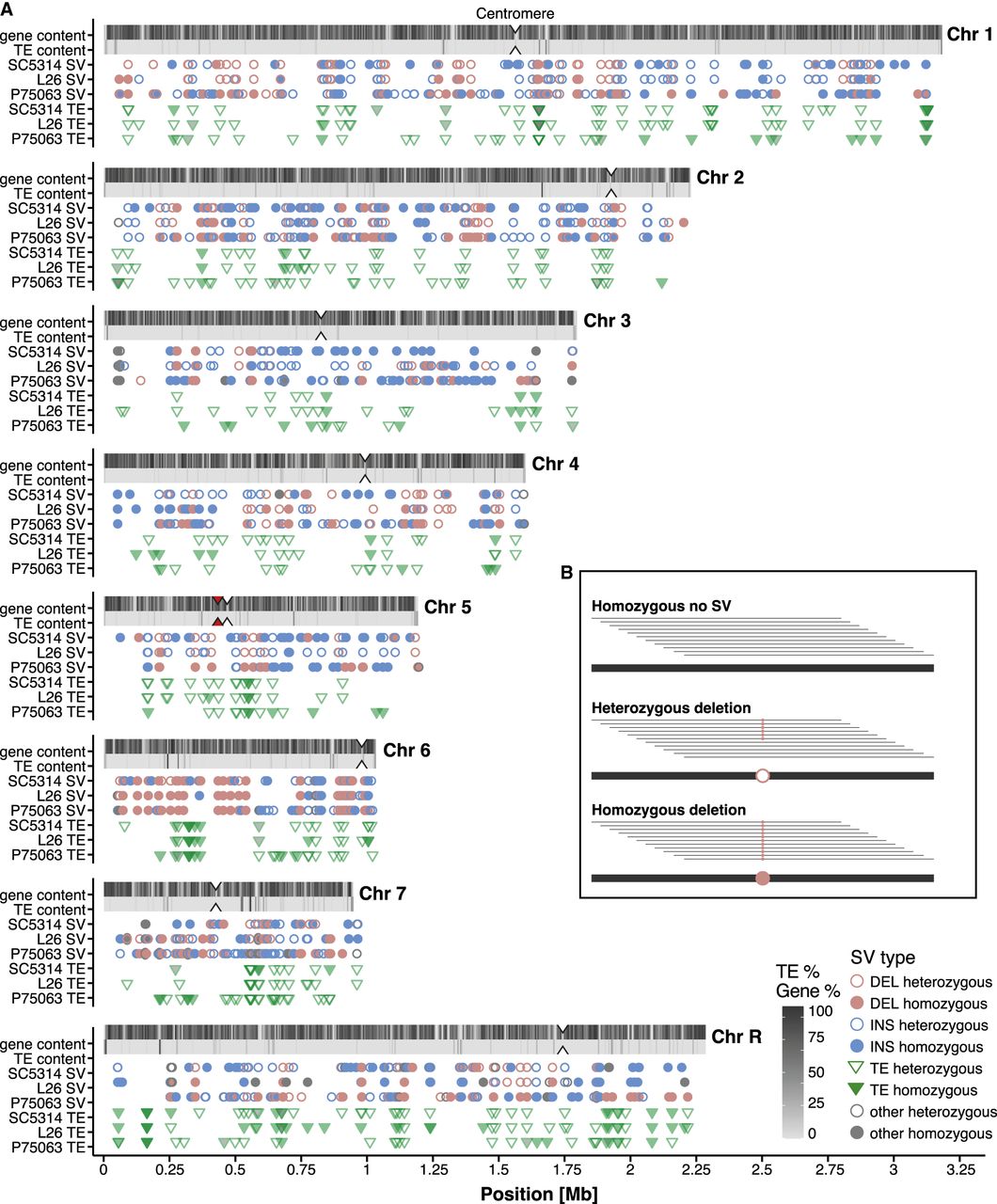
Long-read sequencing reveals dynamic genome-wide SVs in three clinical isolates. (A) Genome-wide genomic landscape: Gene content and TE content in 5000 bp windows of the C. albicans reference genome. Distribution of SVs in SC5314, L26, and P75063. Colors indicate the SV type in comparison with the reference genome: green—(TE) transposable element; red—(DEL) deletion; blue—(INS) insertion; gray—other types of SV (inversions, duplications, translocations). The fill represents zygosity (filled symbol = homozygosity, unfilled symbol = heterozygosity). Centromeres are marked with white notches and the mating type locus with a red notch in Chr 5. (B) Schematic example of heterozygous and homozygous SV definitions.



