


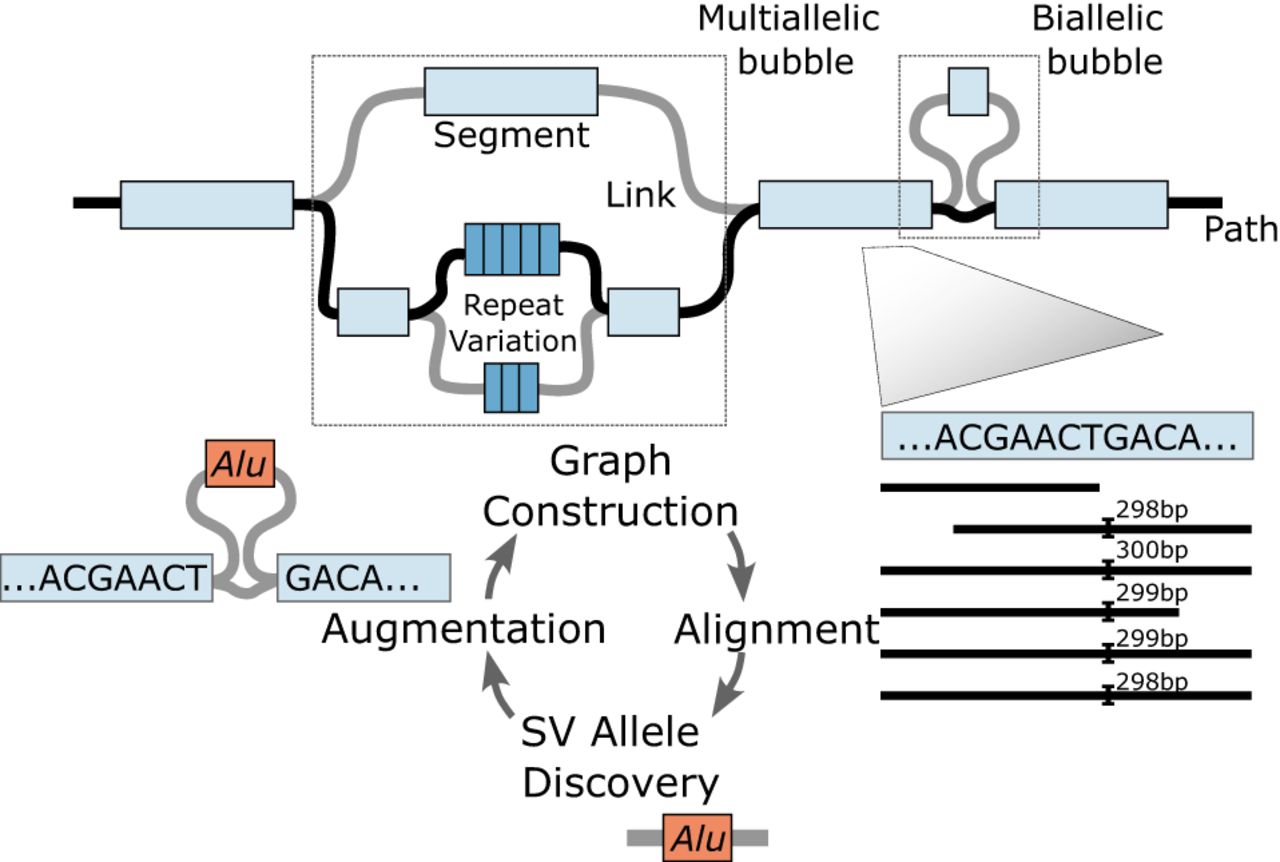
Pangenome graphs require methodological developments for scalable graph construction, accurate long-read alignments, graph-based variant discovery, and flexible graph augmentation. The upper graph shows a small portion of a pangenome graph with segments representing nucleotide sequences and links delineating possible paths through the graph (one possible haplotype path shown in black). Biallelic bubbles have two possible paths, while multiallelic bubbles with more than two paths pose significant graph construction challenges, especially for highly polymorphic and multiallelic variable number of tandem repeats (Li et al. 2020). Population-scale long-read sequencing efforts enable iterative cycles of alignments to a pangenome graph to facilitate genetic variant discovery (exemplified by a new Alu element insertion) with subsequent graph augmentation using new alleles.



