


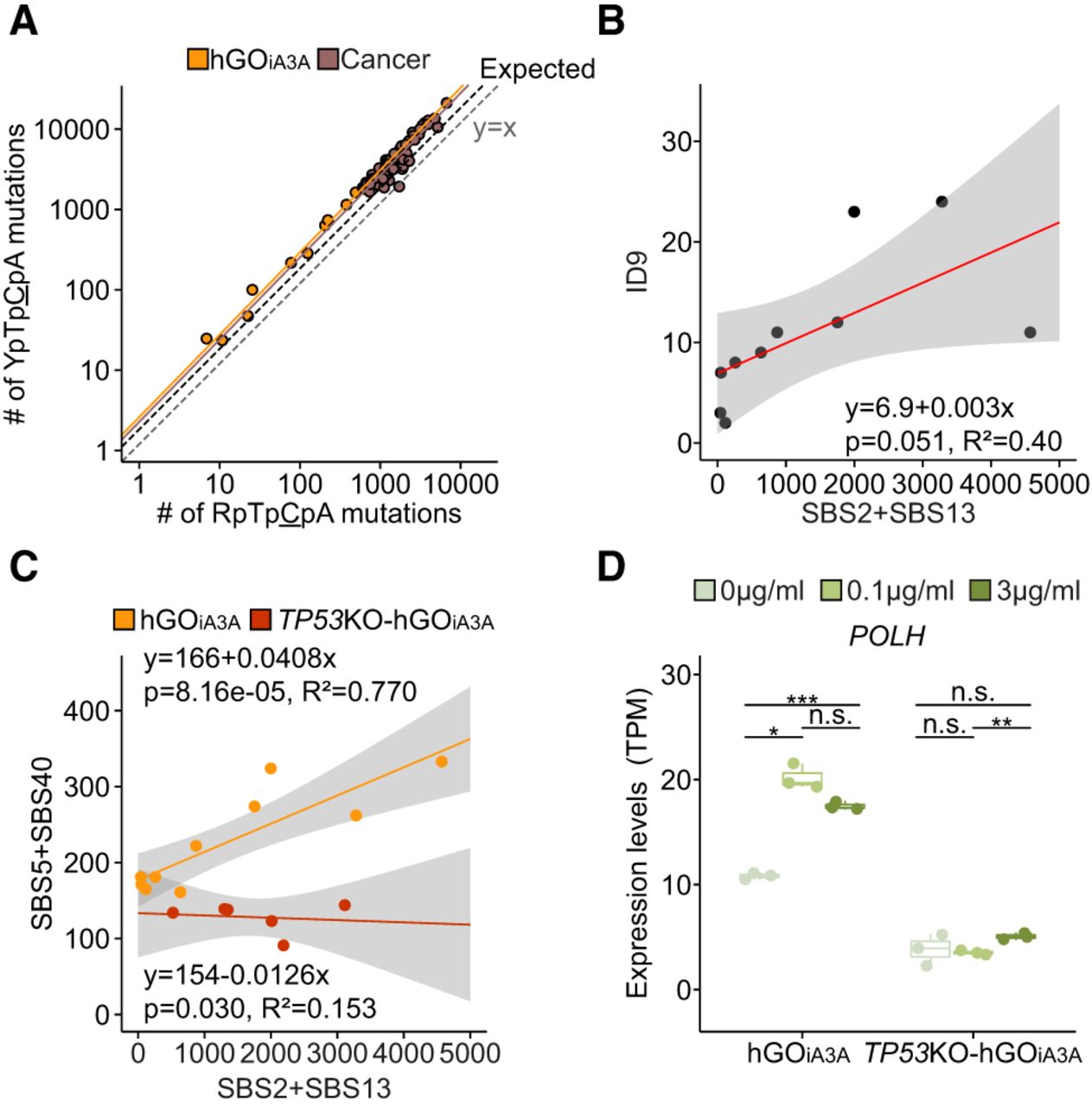
Characteristics of A3A-associated mutational signatures. (A) Context preference of A3A between YpTpCpA and RpTpCpA context in hGOiA3A lines and APOBEC-associated mutations in hypermutant cancer samples. Only PCAWG cancer samples with a combined APOBEC-associated clonal mutational burden (SBS2+SBS13) greater than 5000 were selected (n = 63) among eight cancer types with a high prevalence of APOBEC mutational activity: lung adenocarcinoma (n = 15), breast adenocarcinoma (n = 12), bladder urothelial carcinoma (n = 11), head-and-neck squamous cell carcinoma (n = 13), lung adenocarcinoma (n = 6), uterine corpus endometrial carcinoma (n = 3), esophageal adenocarcinoma (n = 2), and stomach adenocarcinoma (n = 1). Dashed black line, expected; orange line, hGOiA3A; dark brown line, cancer. (B) Correlation between A3A-associated base substitutions and ID9 contributing indels among hGOiA3A lines. (C) Associations between A3A-associated (SBS2 and SBS13) and age-associated (SBS5 and SBS40) SNVs among hGOiA3A lines and TP53KO-hGOiA3A clones. (D) Changes in POLH gene expression (translesion synthesis DNA polymerase) following A3A induction in hGOiA3A and TP53KO-hGOiA3A lines.



