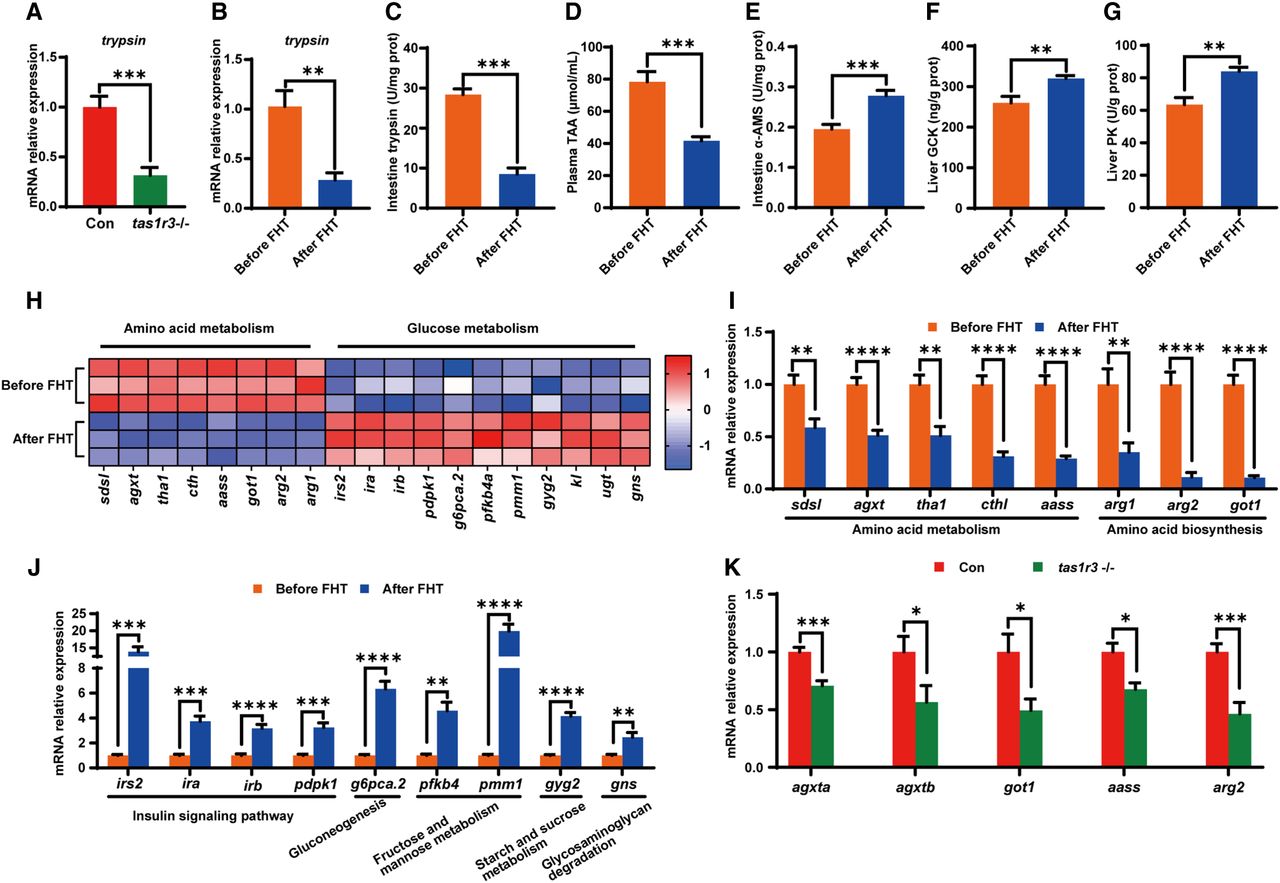
Feeding preference affects metabolic traits in fish. (A) Relative expression of hepatic trypsin in wild-type control or tas1r3-deficient zebrafish (n = 8). (B) Relative expression of hepatic trypsin in grass carp before and after the FHT from carnivores of chironomid larvae to herbivores of H. verticillate (n = 6). (C–G) Intestinal trypsin activity (n = 6), plasma TAA (n = 6), intestine α-AMS (n = 6), and hepatic GCK (n = 4), and PK activities (n = 4) of grass carp before and after the FHT from carnivory to herbivory. (H) Heat map of hepatic differentially expressed genes (DEGs) associated with amino acid and glucose metabolism in grass carp before or after the FHT from carnivory to herbivory. (I,J) qPCR validation of RNA-seq results for amino acid and glucose metabolism in grass carp before or after the FHT from carnivory to herbivory (n ≥ 4). (K) Relative expression of hepatic genes related to amino acid metabolism in wild-type control or tas1r3-deficient zebrafish (n ≥ 6). (*) P < 0.05, (**) P < 0.01, (***) P < 0.001, (****) P < 0.0001.