


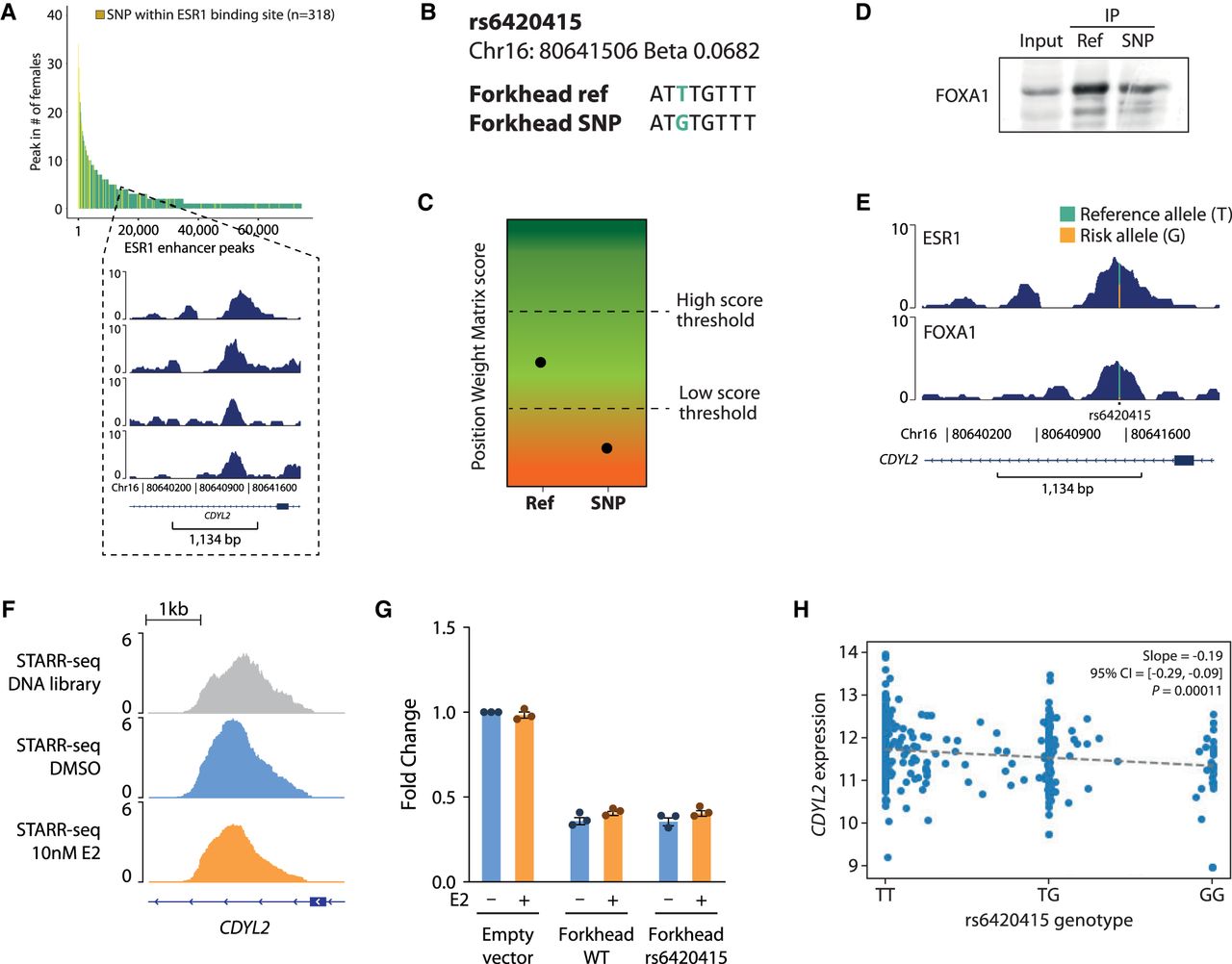
rs6420415 affects CDYL2 expression via reduced FOXA1 binding by impacting the forkhead motif. (A) Snapshots of ESR1 peak intersecting the coordinate of rs6420415. The peak, positioned in an intron of CDYL2, was found in four female patients. (B) Forkhead motif at this peak, in reference allele and rSNP format. (C) Predicted score of position weight matrix for reference allele and rSNP forkhead motif by SNP2TFBS (Kumar et al. 2017). (D) FOXA1 western blot of pulldown by 50-bp biotin-labeled oligos containing the WT or rs6420415 variant of the forkhead motif. (E) Distribution of reads in the ESR1 and FOXA1 ChIP-seq peak performed on tumor tissue from the same breast cancer patient, at the locus surrounding rs6420415. (F) Snapshot of STARR-seq normalized signal at the CDYL2 locus. (G) Luciferase reporter assay in MCF-7 cells stimulated or not by estradiol (E2) for the CDYL2 locus enhancer activity containing or not the rs6420415 variant. Bar plot represents the fold change of luciferase expression over the untreated empty vector condition. (H) TCGA gene expression of CDYL2, which rs6420415 is predicted to affect, by homozygous or heterozygous genotype for rs6420415.



