


Cover image
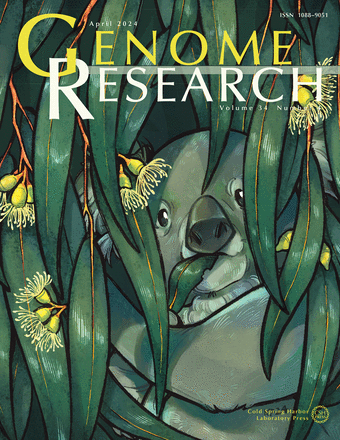
Eucalyptus trees, commonly known as gum trees, are widespread throughout the Australian landscape. Containing over 800 species, Eucalyptus trees are adapted to diverse environments, provide habitat to a rich biodiversity of Australian wildlife, and are key to maintaining healthy ecosystems. A small number of species, such as Eucalyptus viminalis (manna gum), illustrated here, are the food source for koalas. A recent study across 33 Eucalyptus trees has revealed that their genomes exhibit a fascinating interplay between maintaining a stable structure and undergoing structural variations. These variations are driven by insertions, deletions, duplications, translocations, and inversions, which can shuffle genetic elements and accumulate genome divergence over time. The study provides valuable insights into how the architecture of plant genomes evolves, highlighting the interplay between stability and change. (Cover illustration by Kasey Pham, drawn and colored by hand in ProCreate for iPad. [For details, see Ferguson et al., pp. 606–619.])

