


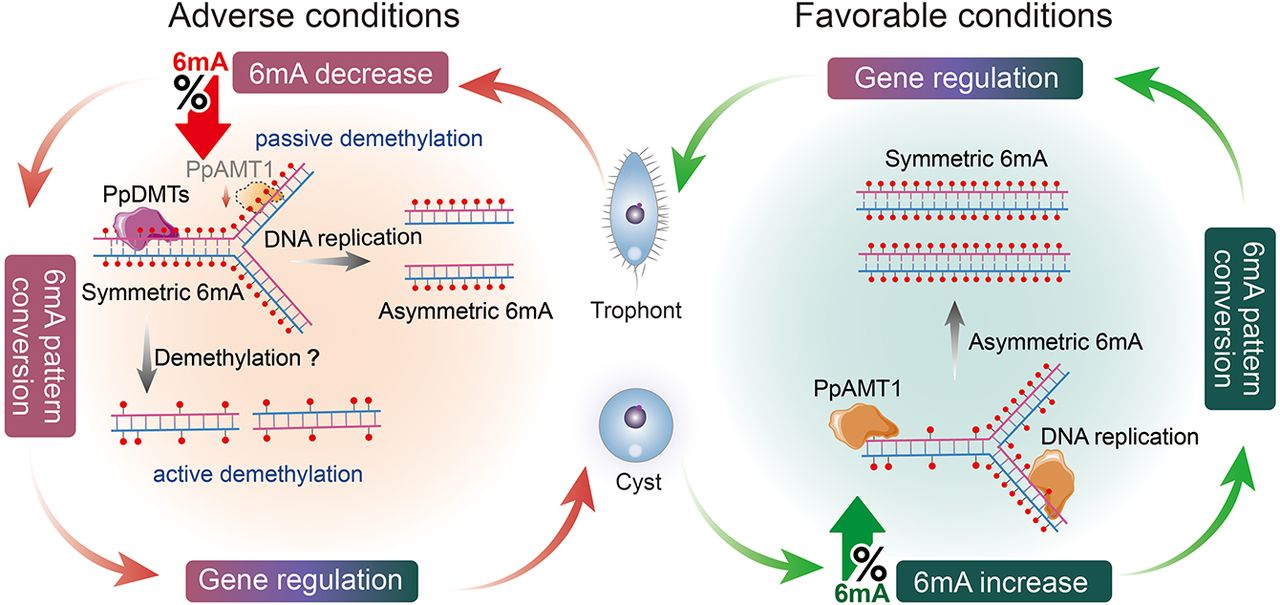
Proposed model of 6mA regulation in the encystment–excystment cycle. Encystment (left) is induced under unfavorable conditions such as starvation. During this process, 6mA levels are decreased and symmetric 6mA sites are converted to asymmetric and/or unmethylated sites, which results in gene expression alteration and promotes cyst formation. The global 6mA change is likely a combined effort of passive demethylation coupled with DNA replication and/or active demethylation by an unidentified demethylase (PpDMT), along with the reduced activity of the PpAMT1 methyltransferase. Excystment (right) occurs under favorable conditions. 6mA levels are increased and asymmetric 6mA sites are converted to symmetric sites, catalyzed by PpAMT1. The rapid conversion of 6mA sites facilitates the expression of excystment-related genes and helps cysts to recover their mobile state rapidly.



