


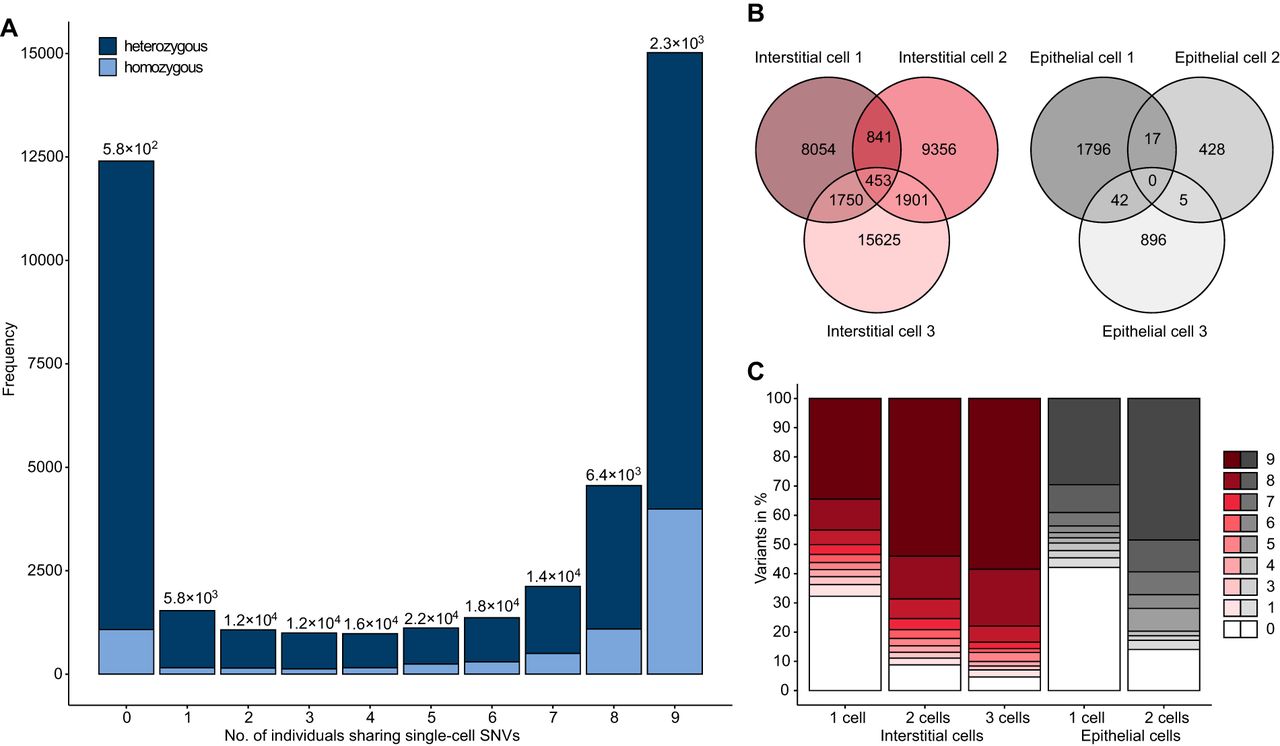
Figure 3.
Indicators of positive selection among Hydra single-cell SNVs. (A) Distribution of hetero- and homozygous single-cell SNVs by their prevalence in the nine individuals. Numbers at the top of the columns represent the observed versus expected ratio of homozygous to heterozygous mutations based on the respective mutation frequency of heterozygous mutations in the genome (see Supplemental Table S7 for details). (B) Venn analysis of single-cell SNVs in I cells and E cells. No overlap was detected between I cells and E cells. (C) Prevalence of single-cell SNVs in 1–9 individuals examined.



