


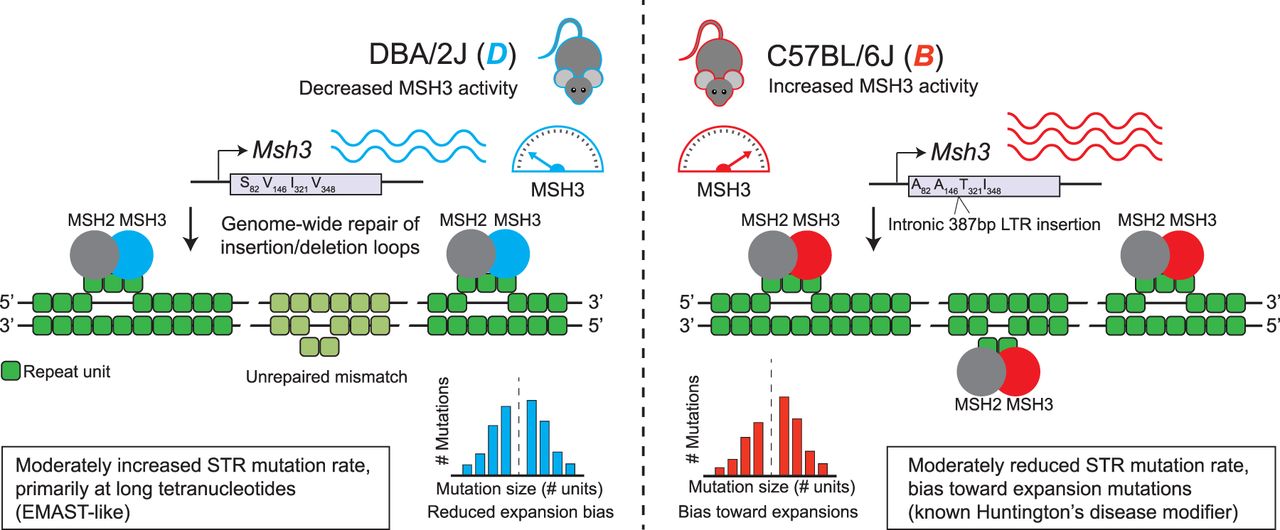
Schematic overview of proposed mechanisms for the expansion propensity QTL. BXD mice carrying the B haplotype (right) at the Chr 13 QTL locus tend to have higher Msh3 expression than those carrying the D haplotype (left). The B and D Msh3 variants also differ by four missense mutations (amino acid letter changes and positions are shown), as well as an intronic 387 bp LTR insertion only present on B (note the gene is not drawn to scale). MSH3 and MSH2 form the heterodimer MutSbeta, which recognizes strand misalignments, such as those formed by STRs (repeat units shown in green), across the genome during DNA replication. Mice with the D haplotype have slightly increased mutation rates, particularly at longer tetranucleotides, whereas mice with the B haplotype have reduced mutation rates but an increased propensity toward expansion mutations.



