


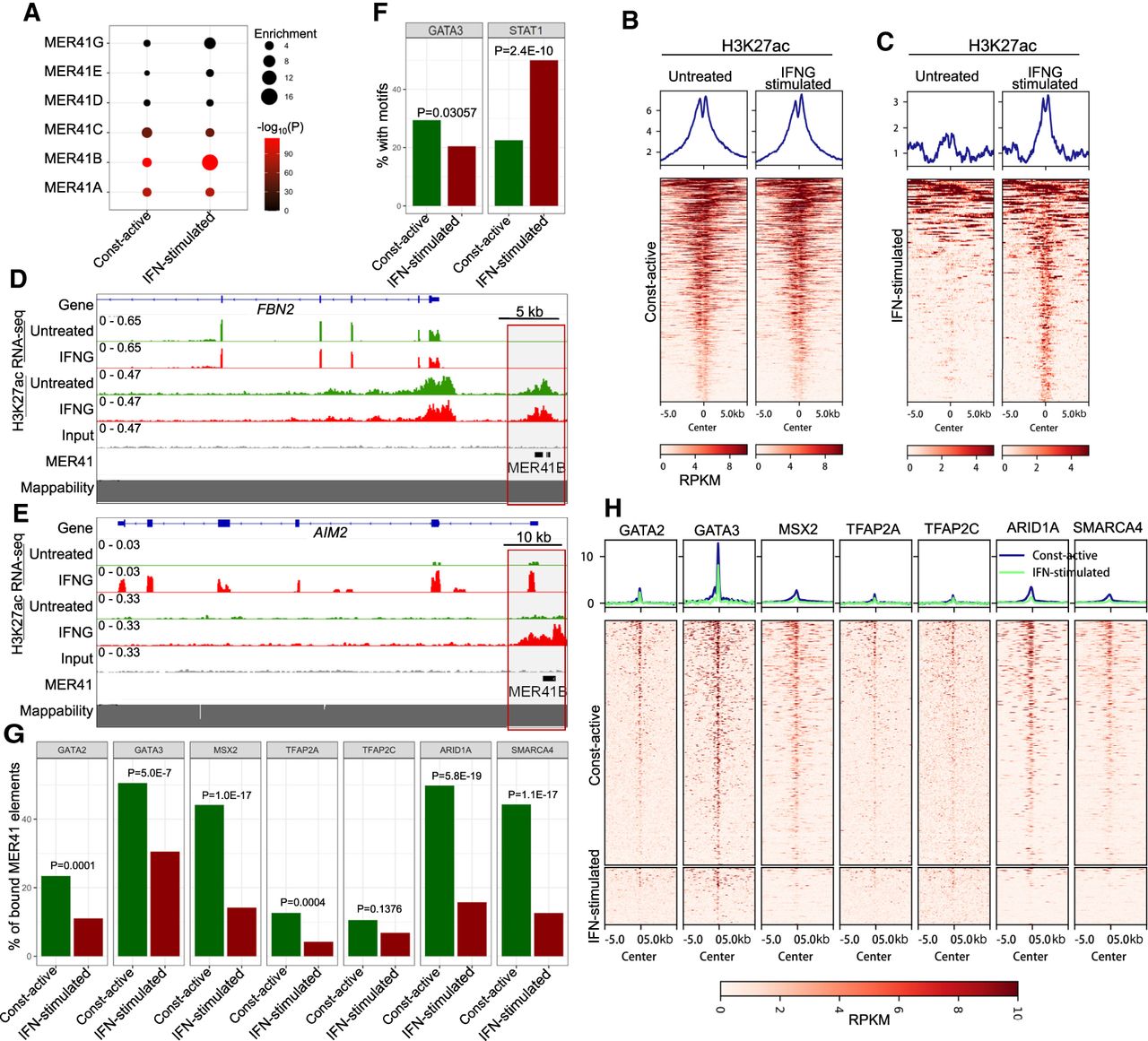
Characterization and comparison of the MER41-enhancers that are constitutively active or IFN-stimulated in human TSCs. (A) Enrichment of MER41 subfamilies in the two groups of MER41-enhancers that are constitutively active or IFN-stimulated in human TSCs. (B,C) Heatmaps show the H3K27ac intensity flanking the two groups of MER41-enhancers with or without IFNG stimulation. (D) Frequency of the motifs for GATA3 and STAT1 in constitutively active or IFN-stimulated MER41-enhancers, respectively. P-values calculated by using Fisher's exact test are indicated. (E,F) Representative IGV tracks show the alterations of gene expression and H3K27ac occupancy flanking the MER41-enhancers adjacent to FBN2 and AIM2, respectively. The color gradients indicate the RPKM values (ChIP – Input) calculated from the ChIP-seq data. (G) Bar plots for the binding frequency of GATA2/3, MSX2, and cofactors on the two groups of MER41-enhancers. P-values calculated by using Fisher's exact test are indicated. (H) Heatmaps show the binding intensity of GATA2/3, MSX2, and cofactors on the two groups of MER41-enhancers. The color gradients indicate the RPKM values (ChIP – Input) calculated from the ChIP-seq data.



