


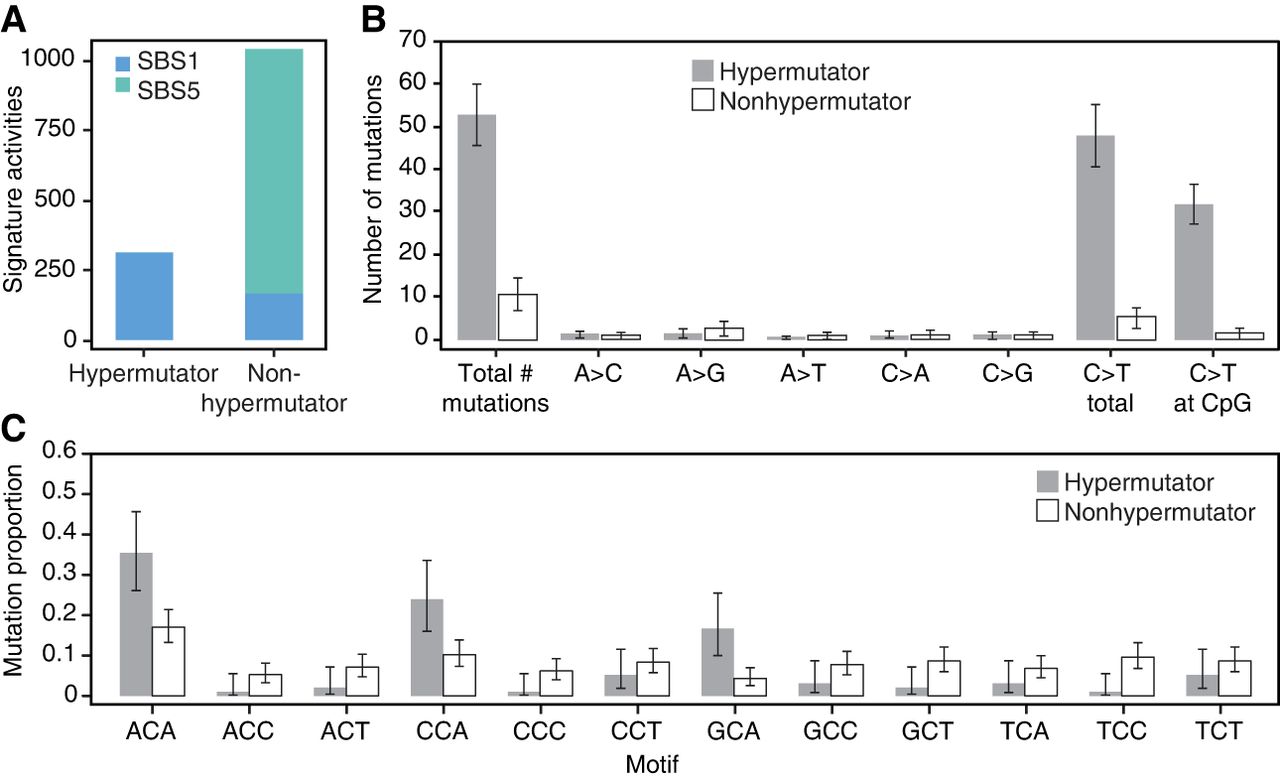
Mutation signature analysis of MBD4 germline mutations. (A) Unlike germline mutational signatures in control individuals, which are mostly signature 5 with a smaller proportion of signature 1, the majority of mutations in the hypermutated offspring were attributed to signature 1 with very small contribution from signature 5. (B) Of the six possible substitution types, C > T was the only based substitution with a significant excess in offspring of 26537 (hypermutator) compared with offspring from the control families (nonhypermutator). Most of these C > T changes were in a CpG context, consistent with the known function of MBD4 in repairing spontaneous methyl-cytosine deamination. (C) The remaining excess of C > T changes were observed at CpA positions (P = 3 × 10⁻⁴ for contrast of hypermutator vs. control by Poisson regression).


