


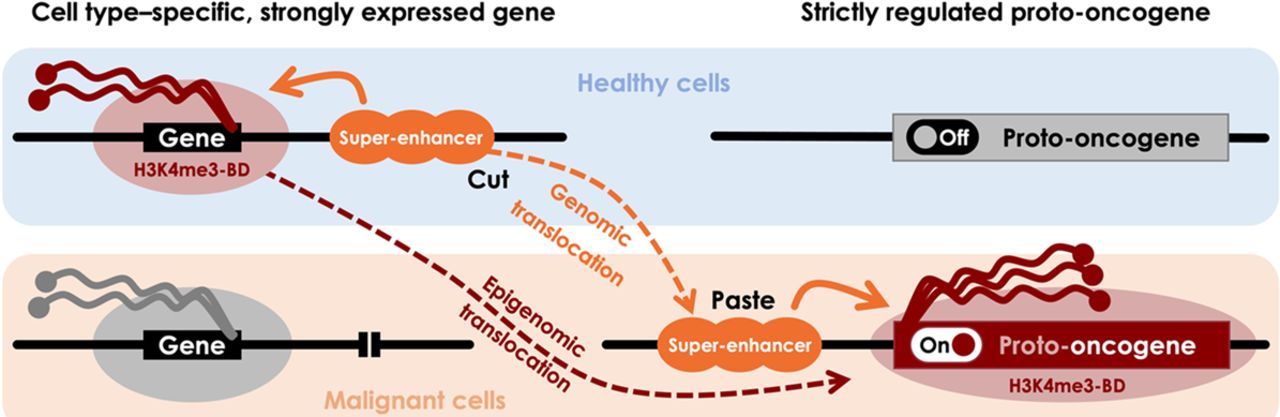
Scheme of epigenomic translocation model. In healthy cells, a cell-identity or tumor suppressor gene is expressed by regulation of a super-enhancer that generates an H3K4me3 broad domain (H3K4me3-BD), allowing rapid and consistent activation of the transcriptional machinery (upper left). Proto-oncogenes are strictly regulated to control important physiological processes including the cell cycle (upper right). During a genomic translocation event, a super-enhancer is juxtaposed close to a proto-oncogene, resulting in oncogenic activation (bottom right). Relocation of the super-enhancer brings the transcriptional machinery, including the H3K4me3-BD. This epigenomic signature disappears at the original locus (bottom left).



