


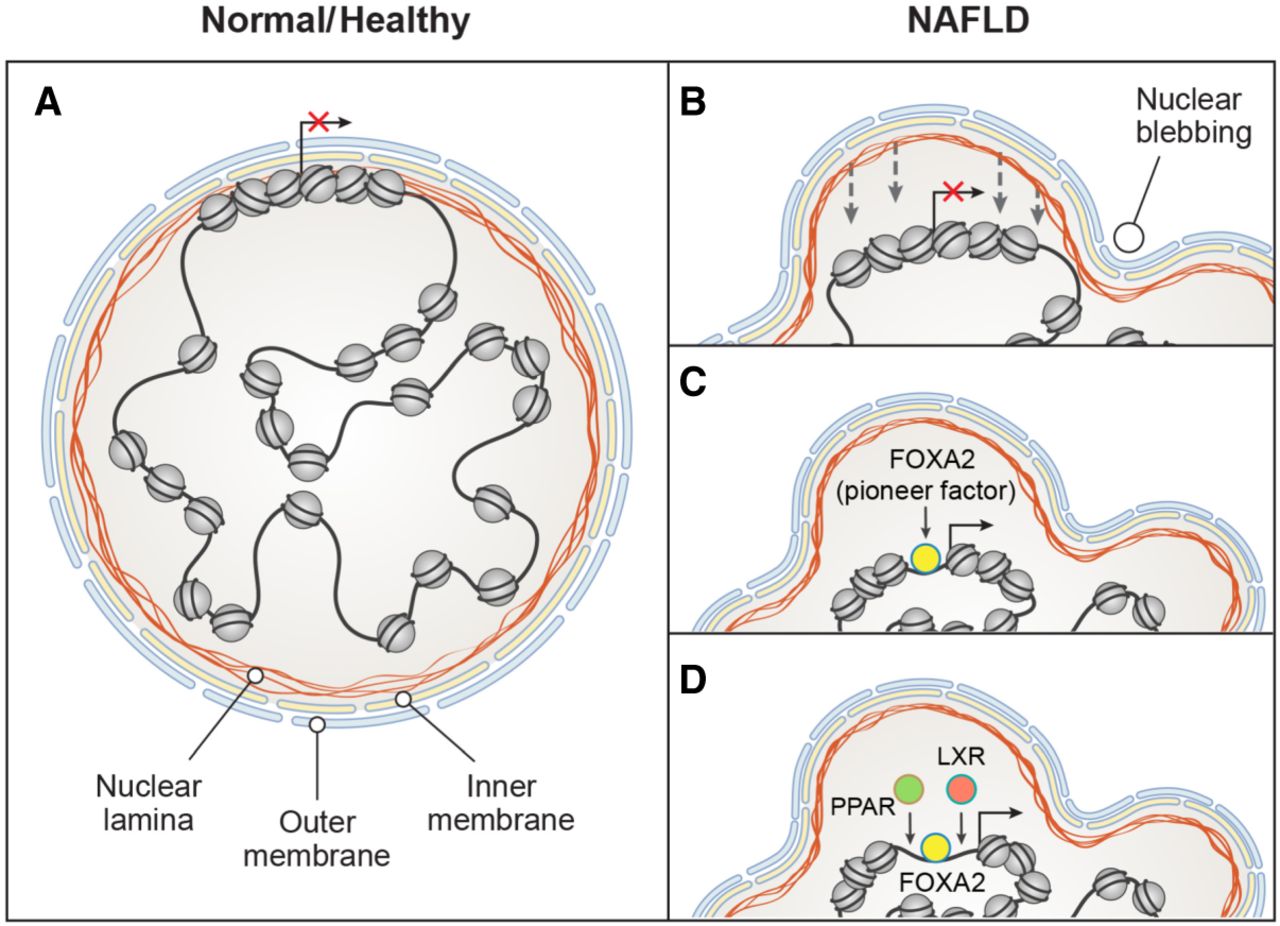
A model relating chromatin regulation at the nuclear lamina and binding of pioneer factors in NAFLD. (A) In normal healthy conditions, repressed regions that should not be expressed in a given tissue are sequestered and tethered to the nuclear lamina. (B) Disturbance in nuclear architecture, either owing to a genetic mutation or environment (diet), leads to portions of heterochromatin to detach from the nuclear lamina, as well as destabilization of the nuclear membrane and nuclear blebbing. (C) Condensed heterochromatin that is no longer attached to the nuclear lamina can be bound by pioneer factors such as FOXA2. Sequences associated with the lamina as well as forkhead binding motifs are A/T-rich. (D) Binding of FOXA2 opens previously repressed chromatin, facilitating recruitment of additional factors, such as PPAR and LXR, and activation (or derepression) of gene expression. We observe activation of LXR- and PPAR-dependent gene expression in livers of mice on WD. Also, LXR and PPAR pathways are enriched at loci bound by redistributed FOXA2 in NAFLD patients.


