


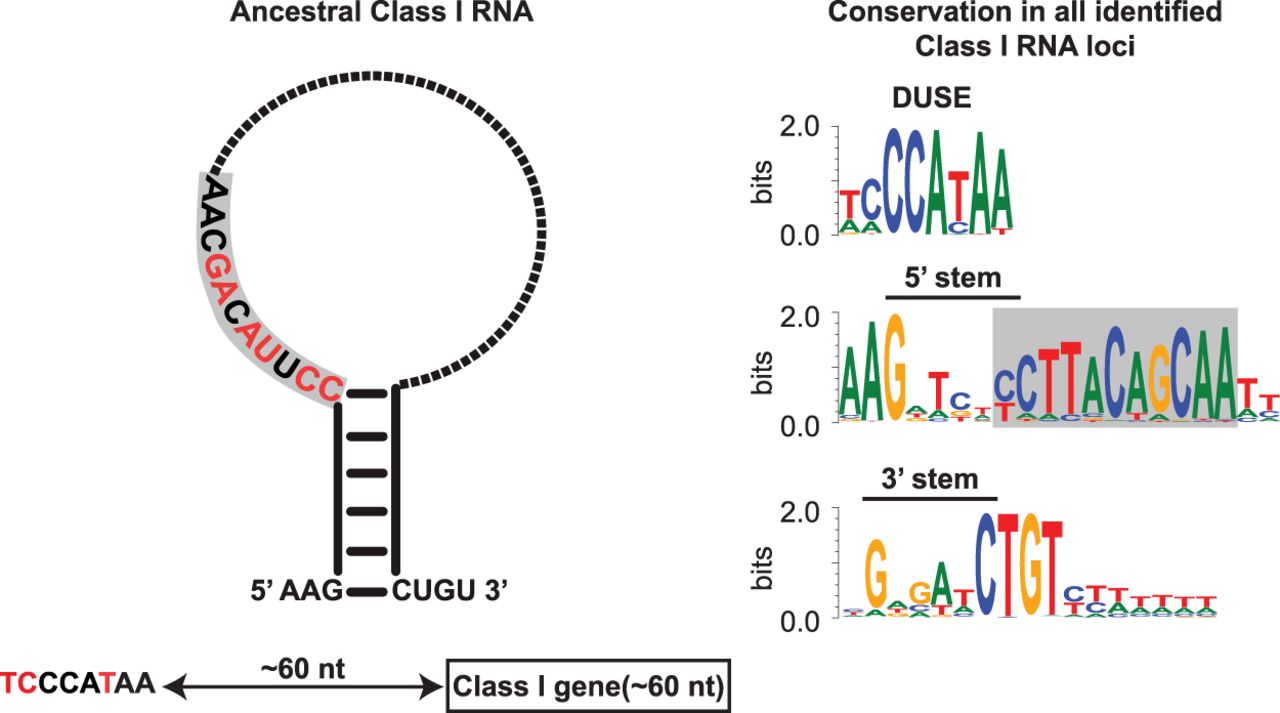
Ancestral Class I RNA and conserved key features. (Left) Schematic representation of the ancestral Class I RNA transcript. The putative promoter element DUSE and its distance to the Class I RNA gene is indicated below the Class I RNA structure. Strongly conserved features, nucleotides and base-paired stem, are colored black, whereas red denotes more variable positions (based on data presented in Fig. 3). The dotted part of the loop indicates highly variable sequence. (Right) Sequence logos of alignments of conserved sequence motifs from all identified and curated Class I RNAs. Only DUSE identified at the correct distance were included in the alignment. The 11-nt motif is boxed in gray in both the ancestral Class I RNA (left) and sequence logo (right).



