


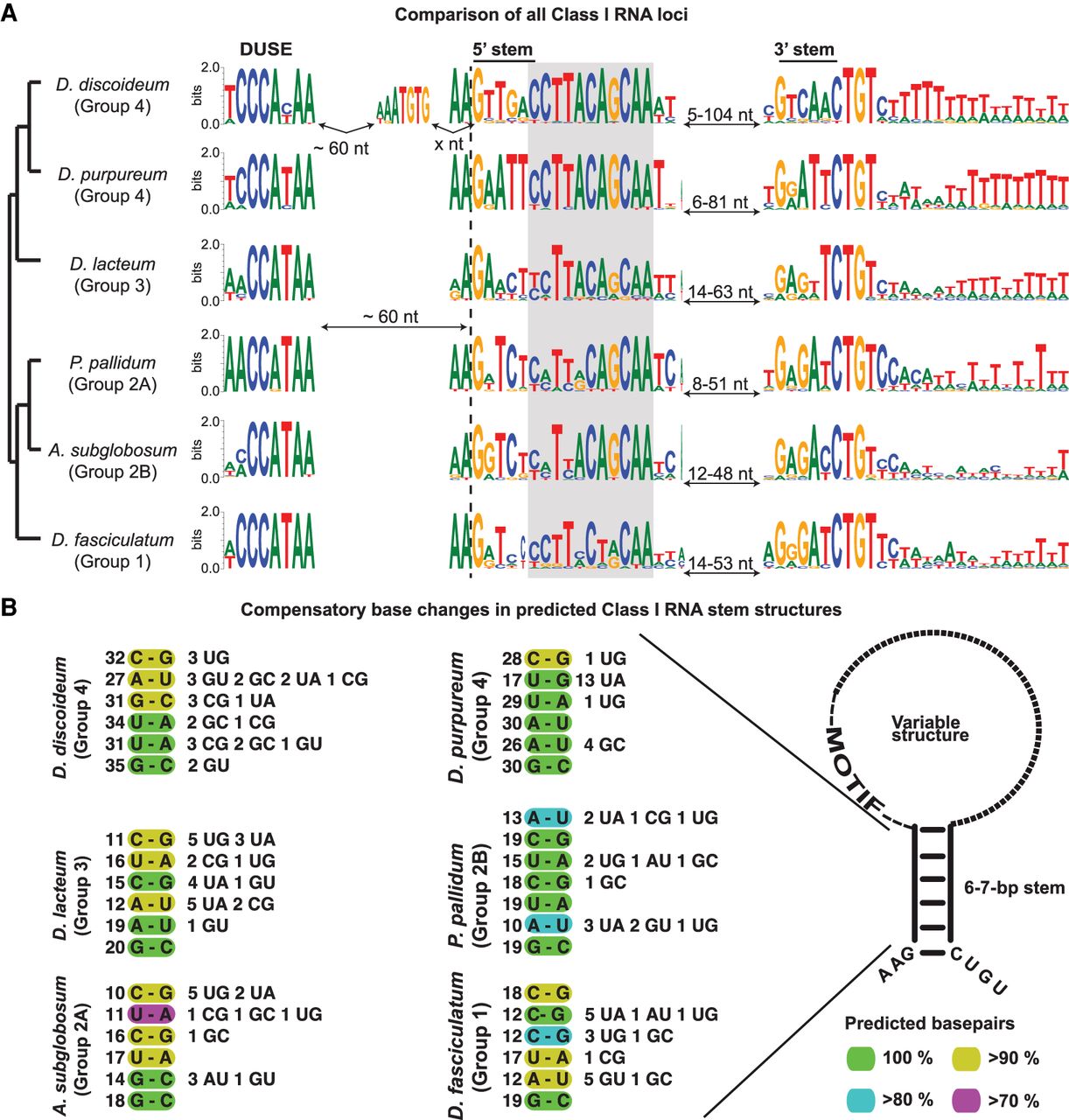
Conserved characteristics of Class I RNAs. (A) Sequence logo representing species-specific alignments of conserved features of Class I RNA loci. DUSE indicates the putative promoter element, and the 5′ and 3′ stem sequences of the conserved stem structure are indicated. The conserved 11-nt sequence motif adjacent to the 5′ part of the stem is boxed in gray. The dashed vertical line denotes the predicted start of the Class I RNAs based on the CM search. The sequence logo between DUSE and the 5′ stem motif for D. discoideum represent the TGTG box. Numbers of nucleotides correspond to the distances between indicated motifs. (B) Displayed are nucleotides representing the most common base pair for each position (numbers to the left) of the conserved stem structure for each organism (color key down right). Numbers to the right represent less common nucleotide combinations predicted to base pair. The few combinations of nucleotides not predicted to base pair are not shown. Schematic structure of Class I RNA is presented to the right.



