


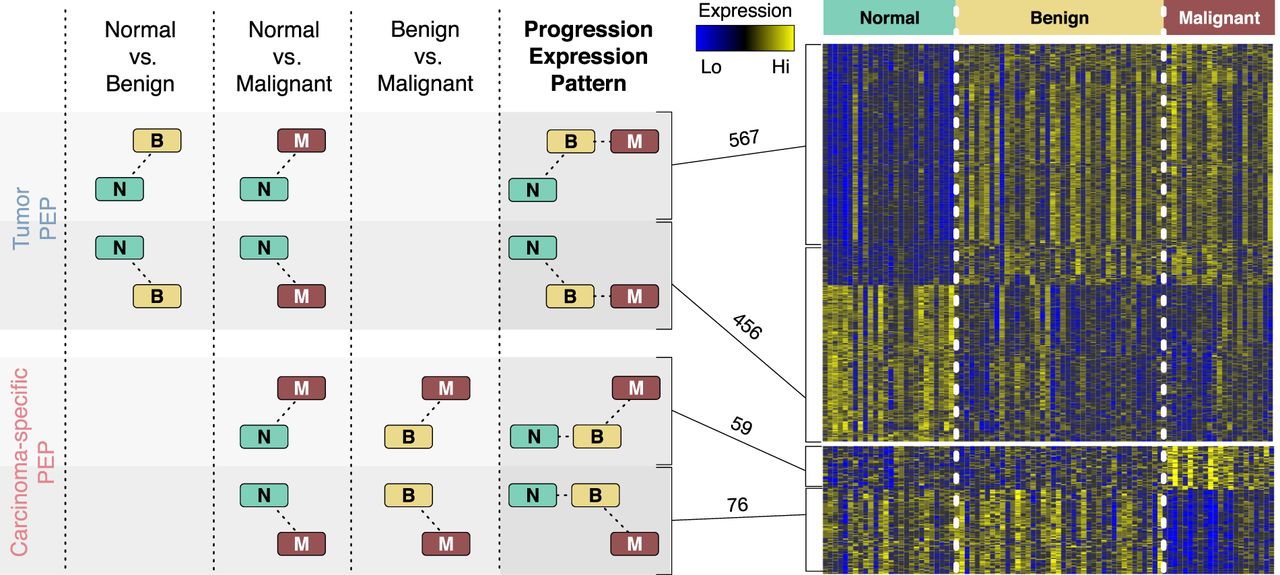
Identification of progression expression patterns. Progression expression patterns (PEPs) are identified using differential expression analysis between histological groups: (top) Tumor PEP, 1023 genes; (bottom) Carcinoma-specific PEP, 136 genes. The diagrams illustrate how each PEP pattern is defined. For example, Tumor PEP includes genes up-regulated in tumors (significantly differentially expressed both between normal and benign samples and between normal and malignant samples). The heatmap shows the expression patterns for these genes, with patterns divided into up- and down-regulated (e.g., Tumor PEP includes 567 genes significantly up-regulated in tumors and 456 genes significantly down-regulated in tumors).



