


Cover image
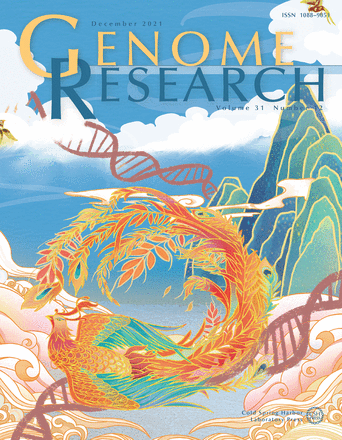
According to Greek mythology, the Phoenix is an immortal bird that regenerates periodically. Similarly, the birth and death of transposable elements (TEs) in the genome occur throughout eukaryotes and contribute to complex genome evolution. More than 85% of the wheat genome is composed of TEs, which participate in host transcriptional regulation via embedded transcription factor binding sites (TFBSs) that can be captured from the host genome. A significant proportion of wheat TFBSs comes from degraded TEs, which may be further captured and used by other TEs in the next regulatory innovation cycle, increasing the adaptability of the host. This is analogous to the rebirth of the Phoenix after suffering. In the illustration, the Phoenix on the DNA double helix represents TE-embedded TFBSs. Its tail is reminiscent of wheat. The insertion and degeneration of TEs next to the wheat-specific stress-responsive genes (mountain) rewire the regulatory network related to the evolution and adaptation of the wheat genome. (Cover illustration by Yuanyuan Wu, yyandesign{at}outlook.com. [For details, see Zhang et al., pp. 2276–2289.])

