


Cover image
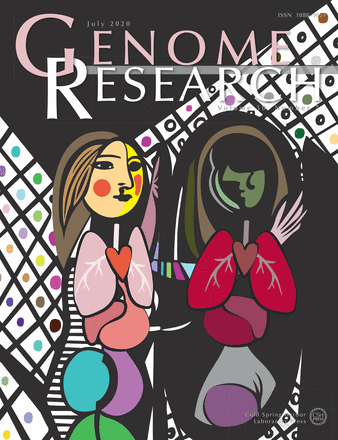
Cubism is an early-20th-century avant-garde art movement in which objects are disassembled into components that are then reassembled in abstracted form. In Pablo Picasso's Cubist masterpiece, “Girl before a Mirror,” a young woman is painted with bright colors, while the colors are darker and more somber in her reflection. In one interpretation, the woman sees herself as an older, sicker woman. In this stylized version, internal organs have been superimposed. The young woman's organs (left) are reflected in the mirror with altered colors (right), symbolizing the changes in histological phenotypes occurring with age and disease. In this issue, and as part of the ENCODE Project, the transcriptomes of human primary cells from multiple organs are profiled, and it is determined that most cells in the human body belong to five major cell types, which act as elemental building blocks from which tissues and organs are “assembled.” The number of genes specific to each major cell type is relatively small, and this provides an alternative to histological methods to define cell types. Based on the expression of these genes, the authors estimated the cellular enrichments of tissues, and found these enrichments reflect phenotypic traits and change with age, sex, and disease states. (Cover artwork by Alejandra Arámburo Galván, ale.aramburogalvan{at}gmail.com, linkedin.com/in/aaramburo/. [For details, see Breschi et al., pp. 1047–1059.])

