


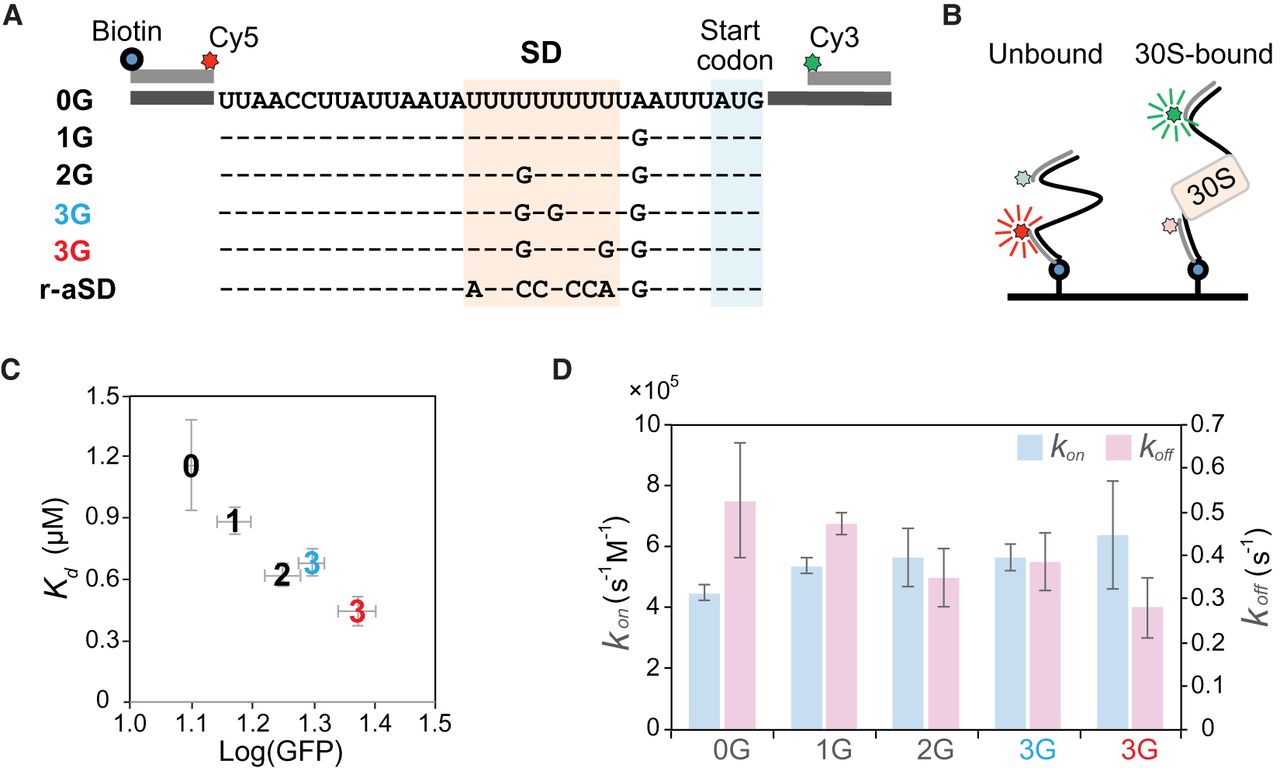
In vivo and in vitro characterization of synthetic RBS. (A,B) Determining the RBS-30S subunit binding kinetics by single-molecule fluorescence resonance energy transfer (FRET). RBSfepB is modified to generate six synthetic RBS bearing 0–3 guanines in the 11-nt SD region. Each RBS in A is tagged with biotin, Cy3, and Cy5 dyes and attached to a slide surface (B). The sequence of RBS devoid of guanine (0G) is shown as the consensus. Upon binding with the 30S subunit, the distance between Cy3 and Cy5 dyes is increased, causing reduced FRET signals. (C) Correlation (Pearson's r = −0.962, P < 0.05) between the in vivo fitness (Log[GFP]) and the in vitro dissociation constants (Kd). (D) The RBS-30S subunit association (kon) and dissociation rates (koff). (C,D) RBS is indicated according to the abbreviations in A, and bars show the standard deviations of three independent measurements. The SD region of the negative control (r-aSD) contains the reverse sequence of aSD. Since no apparent binding event is detected, the Kd, kon, and koff of r-aSD cannot be determined and are not shown here.



